FREE ASSISTANCE FOR THE INQUISITIVE PEOPLE














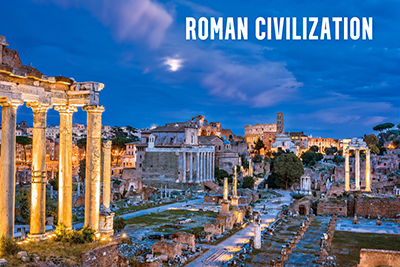
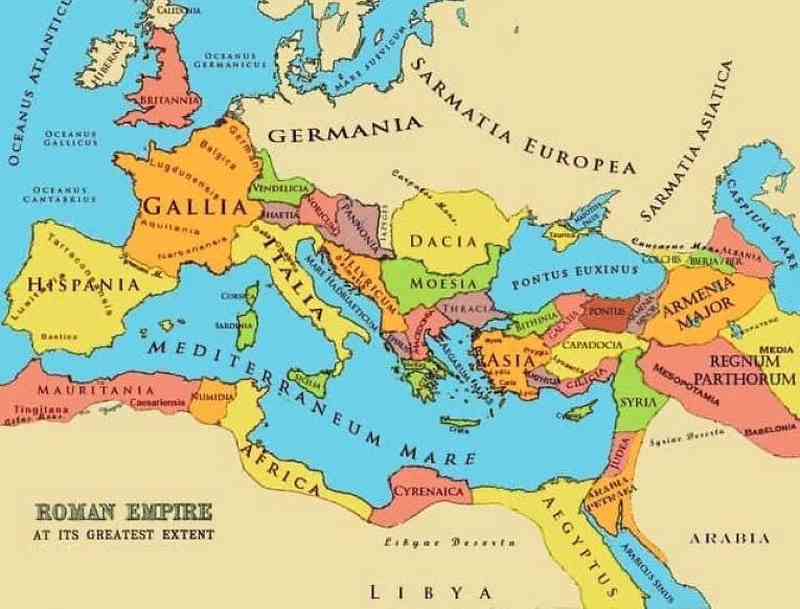
Ancient Roman civilization began with the legendary foundation of Rome along the River Tiber in central Italy, by Romulus and Remus in 753 BC, and evolved from a monarchy to a republic and eventually a vast empire through a combination of treaties with its neighbours and military strength, covering vast regions across three continents: Europe, North Africa, and the Middle East, which included Britain and all of continental Europe west of the Rhine and south of the Danube, most of Asia west of the river Euphrates, northern Africa, and the islands of the Mediterranean. However, ultimately the vast Roman Empire collapsed with the fall of the Western Roman Empire, when Romulus Augustus, the last Western Roman Emperor, was overthrown by Odoacer, a leader of a Germanic tribe, on 4 September 476 AD.
Based on the key political events of its long history, the history of ancient Rome is divided into three periods, namely the Roman Kingdom (753-509 BC), the Roman Republic (509-27 BC), and the Roman Empire (27 BC-476 AD). Unfortunately, the history of the Roman Kingdom, as well as the subsequent early part of the Roman Republic, are mostly anecdotal, speculative and mythical, since historical writing at Rome began only after Rome had emerged as a major power of the ancient world with its conquest of Italy. But the history of the Roman Kingdom began long before that, starting with its legendary foundation of Rome by Romulus, and its rise from the Palatine Hill settlements, the Iron Age hut settlements of 10th-century BC. However, contrary to the traditional story about the foundation of Rome in 753 BC by Romulus, after he killed his brother Remus, modern historians maintain that Romulus, Rome’s first king according to tradition, was the invention of later ancient historians, and his name was designed to explain the origin of Rome’s name. Nevertheless, the names of the other six next kings, beginning from the Sabine Numa Pompilius, are authentic, though few reliable details were known about their reigns.
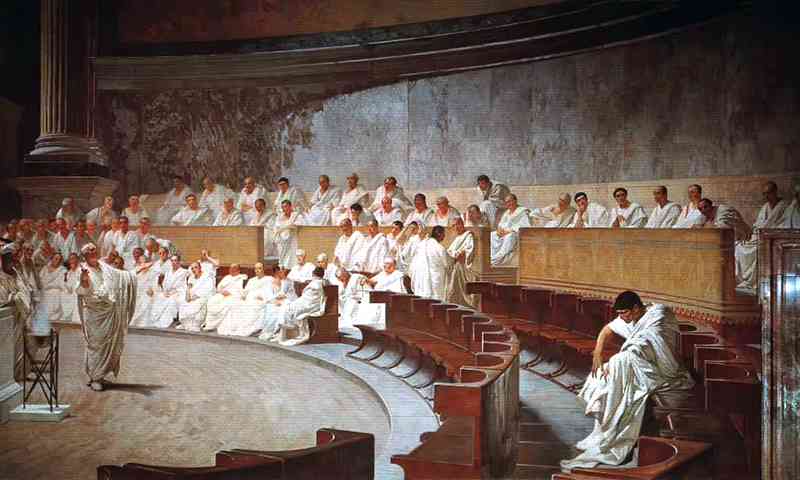
The Roman Republic began around 509 BC following the overthrow of the last Etruscan king, the cruel tyrant Tarquinius Superbus, and expulsion of the Tarquin family from Rome by a popular uprising, sparked by the rape of noblewoman Lucretia, and her subsequent suicide. The revolution ended the Roman monarchy, replaced by a Republic, a new system of government designed to prevent a single ruler from gaining too much power, consisting of the Consul, Assembly and the Senate. The Consul was composed of two magistrates, elected annually, who held executive power, commanded the army, and presided over the Senate. Lucius Junius Brutus and Lucius Tarquinius Collatinus were chosen as the first two consuls in 509 BC. The Assembly was the representative body where citizens could vote on laws and elect officials, while the Senate was an advisory council of elite patricians who controlled state finances and foreign policy. Notably, although the Senate only offered advice, in actual practice it wielded enormous power because of the collective prestige of its members.
During the early years of the Republic, Rome's patrician aristocrats were the dominant force in politics and society, who initially formed a closed group of about 50 large, wealthy and powerful families, called Gentes, and completely took control of Rome's magistracies, state priesthoods, and senior military posts. On the other hand, the vast majority of Roman citizens, known as Plebeians, comprising commoners of various social degrees, who formed the backbone of Rome's economy, as farmers, artisans, traders, and tenants, had little direct political influence, and had no access to high religious and civil office, but were subjected to be summoned for military service in wartime. The Roman Republic lasted for nearly 500 years, but historians believe the fall of the Roman Republic began in 59 BC, when Julius Caesar, Pompey the Great, and Marcus Licinius Crassus formed an alliance to rule Rome.
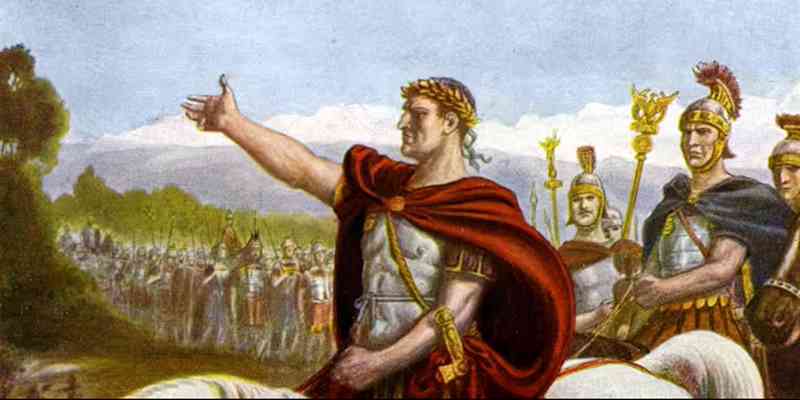
However, by that time, the common people had become disgusted and agitated because of the acute economic problems in the city of Rome, worsened by corruption and bribery within the government, leading to long-lasting political instability and social unrest in 133 BC, during which crime became widespread in Rome, as there was no official police force. Consequently, the wealthy had to hire private armies for protection, but many of those private armies took the opportunity of the prevailing chaotic situation to rob and harm people rampantly. At the same time, the Roman Republic faced three major slave rebellions between 135 and 71 BC, known as the Servile Wars. Among the three, the third war that began in 73 BC, led by a Roman slave, a subsequent Thracian gladiator named Spartacus, and named as the Gladiator War and the War of Spartacus by the Roman philosopher Plutarch, was much larger in scale and had a bigger impact. All these events, along with the rise of Julius Caesar, who named himself dictator for life, eventually led to the end of the Roman Republic in 27 BC, when Octavian, the sole Roman Leader, took the name Augustus, which event is usually taken by historians as the beginning of the Roman Empire.
At the age of 36, Augustus established the Julio-Claudian dynasty in Rome, and ruled for 56 years, supported by his great army and by a growing cult of devotion to the emperor, and when he died, the Senate elevated Augustus to the status of a god. The Julio-Claudian dynasty boosted Rome's status as the central power in the Mediterranean region, but assumed absolute power and started the destruction of republican values by diminishing the political influence of the senate and boosting the Equestrian class. The dynasty included the unpopular Tiberius, the tyrannical, sadistic and cruel Caligula, Claudius, best known for his conquest of Britain, and the tyrannical, self-indulgent, and debauched Nero, believed by many as the instigator of the Great Fire in Rome, who ultimately committed suicide on 9 June 68 AD.
In the chaotic year following Nero’s death, there was rapid and violent changes in the leadership, as four emperors ruled one after another successively, known as the Year of the Four Emperors (68-69 AD). Eventually, Vespasian came to the power and reigned from 69 to 79 AD, establishing the Flavian Dynasty. He brought stability back after a period of civil war and gained the people’s loyalty through his effective management of the recovery efforts after the devastating eruption of Vesuvius, destroying Pompeii and Herculaneum. Thereafter, a new golden age began in the history of Rome during the rule of Trajan, who expanded the empire’s borders to its largest extent in history, while his successor, Hadrian, who reigned from 117 to 138 AD, built Hadrian’s Wall, which helped to secure the border of the empire and also improved internal stability through his administrative reforms. However, the decline of the Roman Empire began with the rule of Commodus, who reigned from 180 to 192 AD, marked by poor leadership, and eventually, Rome collapsed under the weight of its vast empire. Due to the difficulty of ruling such a vast empire from Rome, the empire was split in 285 AD into two parts, comprising the Western Roman Empire and the Eastern Roman Empire, also known as the Byzantine Empire, ruled from Constantinople, which is now Istanbul in modern-day Turkey. Although the Byzantine Empire lasted for nearly another thousand years, the Western Empire, centred around Rome, began to weaken due to civil wars, plagues, financial issues, and attacks by various groups. Finally, a leader of a Germanic tribe, named Odoacer, overthrew Romulus Augustus, the last Western Roman Emperor on 4 September 476 AD, spared the life of the teenage emperor, but forced him to abdicate, and declared himself King of Italy, bringing an inglorious end to the long, glorious history of ancient Rome.
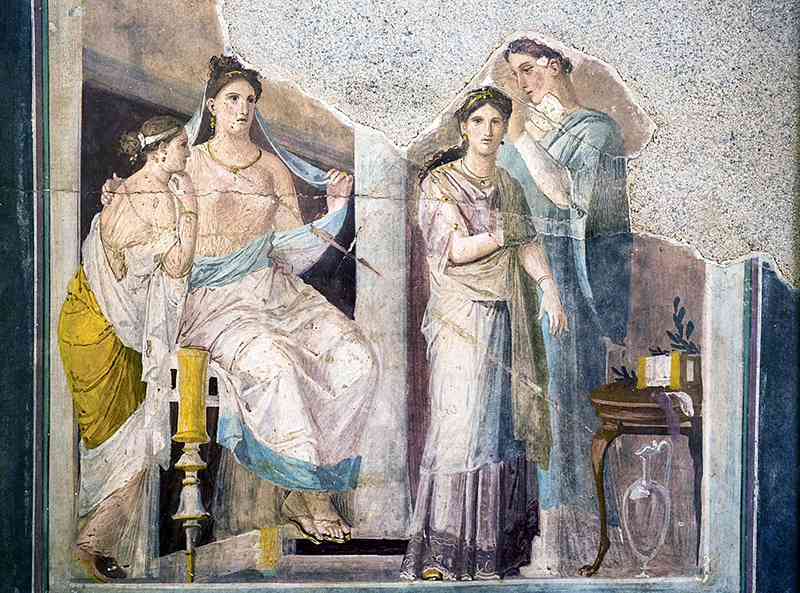
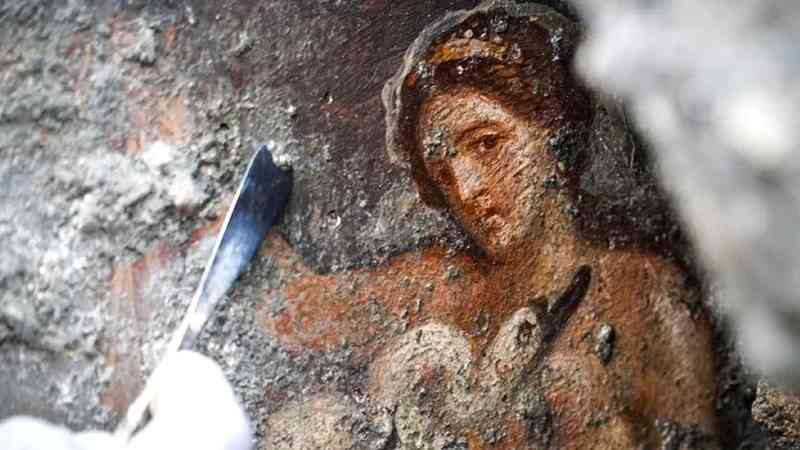
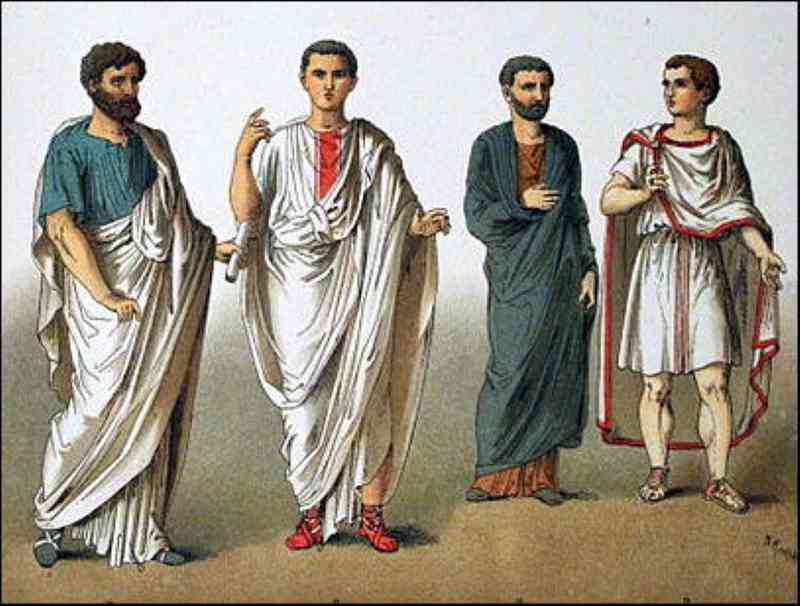
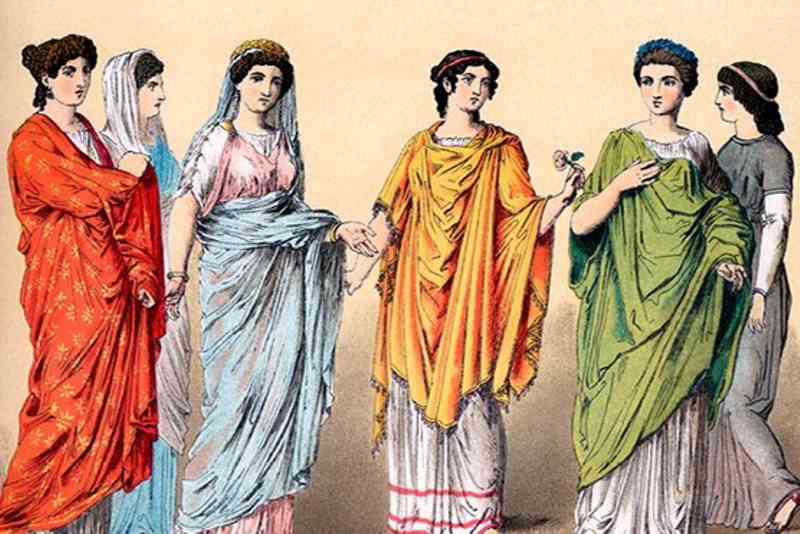
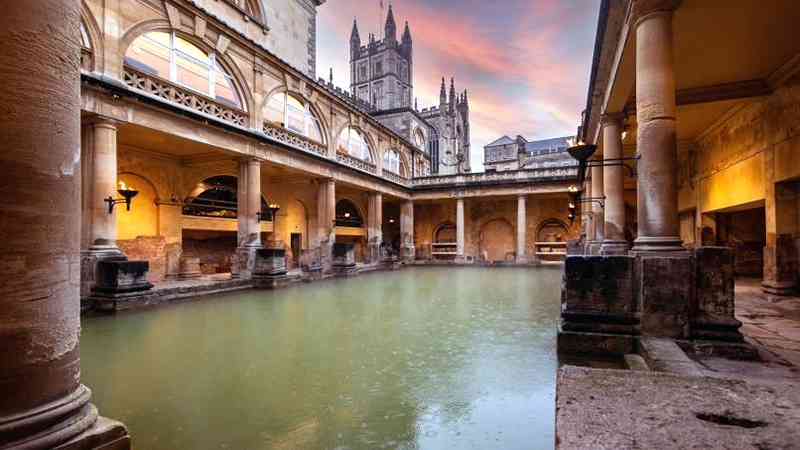
As stated earlier, primarily Roman society was composed of two main groups, the wealthy elite landlords called the patricians, and the commoners known as the plebeians, comprising the farmers, artisans, craftsmen, and merchants, who were strictly second-class citizens and were not allowed to marry Patricians. However, the system changed in 445 BC with the passing of the Lex Canuleia, permitting marriage between patricians and plebeians, although political equality was not achieved. The. Conflict of the Orders finally ended in 287 BC, when Roman society was divided into five distinct social categories. The three higher classes included the Patricians, representing the aristocracy, the Plebeians, comprising people from various respected and profitable trades, like the farmers, plumbers, artisans, teachers, contractors, architects, and thirdly, the Equites, who were originally part of the royal cavalry, socially inferior to the senatorial class, and ran the banks, collected taxes, operated import-export of goods, and managed trade houses as well as the slave trade. The remaining two classes included the freedmen, the former slaves, who had either purchased their freedom or been set free by their former owners, and the slaves, belonging to the lowest class in society, who had no rights and were treated as property of their masters. Wealthy Roman citizens enjoyed relaxing and cleaning themselves at Roman baths; some even had vacation homes in Pompeii and Herculaneum.
A family in ancient Rome, based on a nuclear structure, was a strictly hierarchical, patriarchal unit led by the head of the household, often a father or grandfather, who held absolute legal authority over his wife, children, extended relatives and the slaves. Marriages were typically arranged to foster alliances, with divorce and remarriage being common. However, women were not generally held in high regard in Rome, and although they could inherit property from their father's estate, they could not hold public office or vote. But interestingly, Female gladiators, known as gladiatrix, existed in Ancient Rome, and evidence suggests that they were trained, fought, and were sometimes respected for their skill, much like their male counterparts.

The Romans believed in many gods and their major deities included the Capitoline Triad, a central group of three supreme deities composed of Jupiter, the king of gods, Juno, wife of Jupiter and patroness of women, Minerva, the daughter of Jupiter and goddess of wisdom, alongside others like Mars, god of war and Venus, goddess of love, sex and beauty. Temples, regarded as the abode of gods, also functioned as treasuries, and storage for public records.
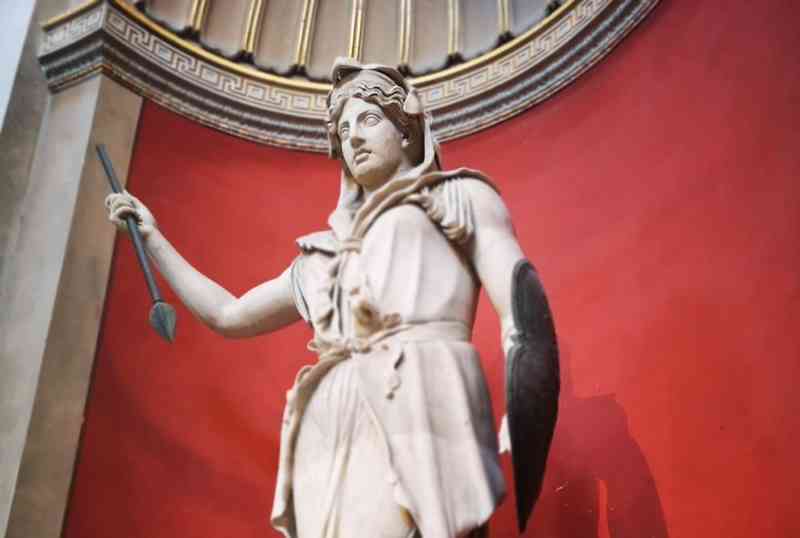
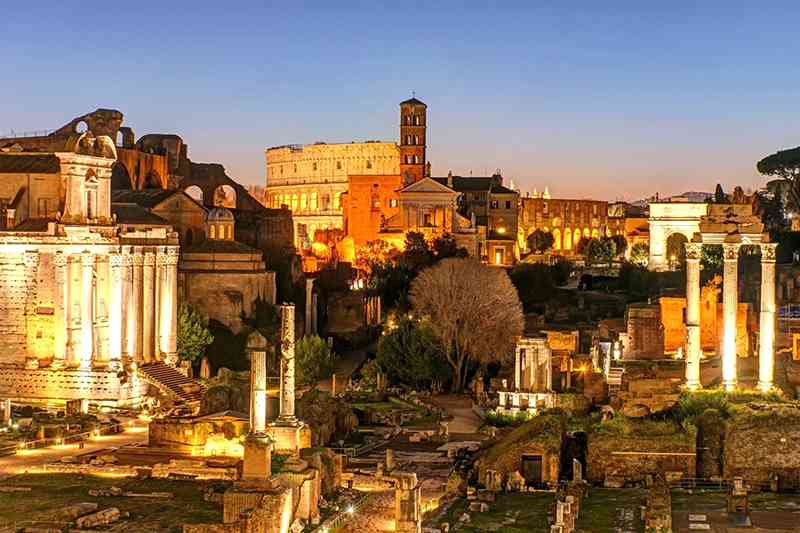
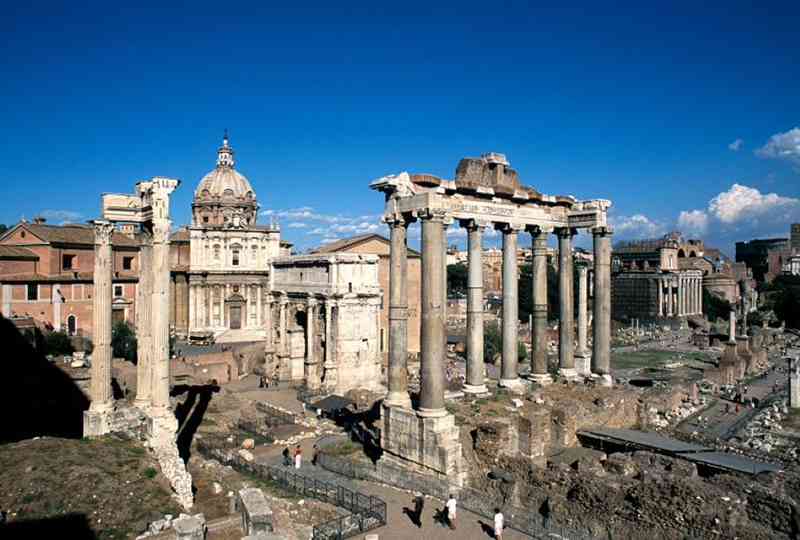
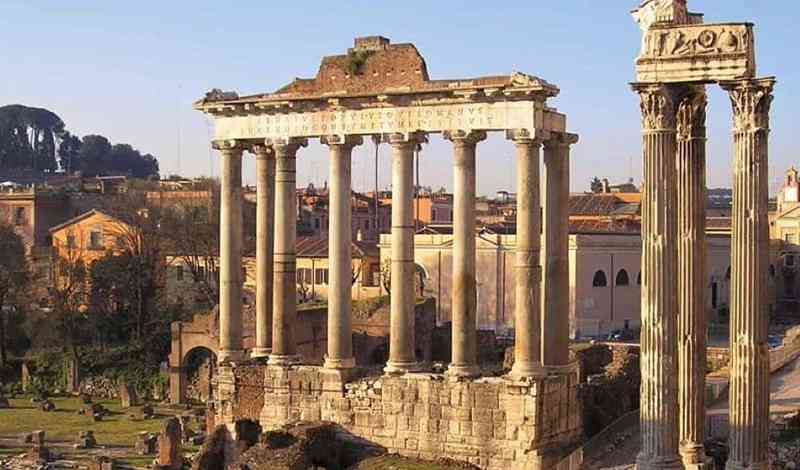
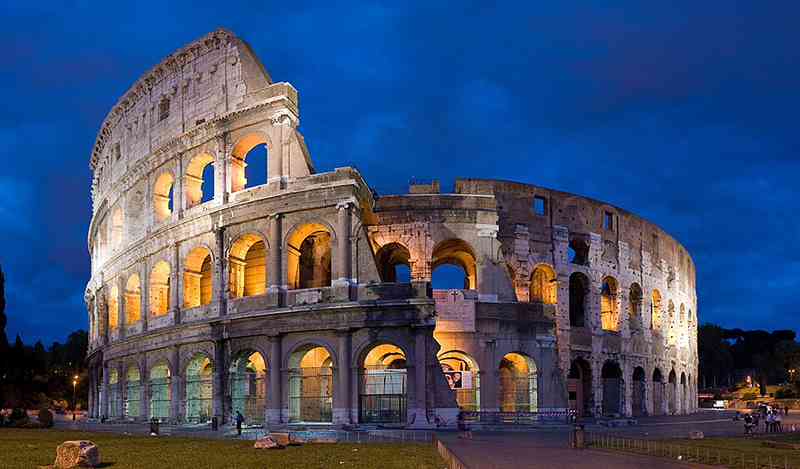
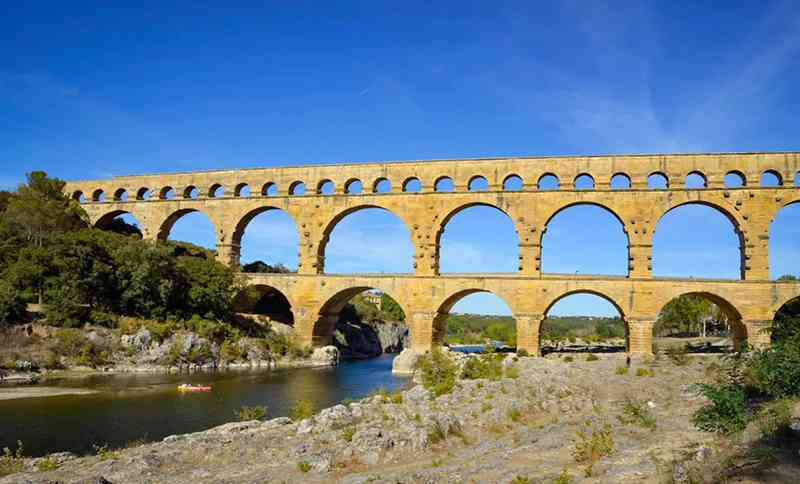
The ancient Romans excelled in architecture by innovating the use of concrete, arches, vaults, and domes, allowing for greater weight distribution than previous beam-and-column methods, to create massive and durable public structures like the Colosseum, a massive, 1st-century amphitheatre built with travertine and concrete, featuring complex barrel and groin vaults, Pantheon, famous for its massive, 141 feet (43 m) diameter unreinforced concrete dome, which remains the largest in the world, and Forum, the central hub of Roman public life, containing temples like the Temple of Saturn and administrative buildings. Walls of the buildings were usually adorned with frescoes, while mosaics were commonly used to decorate the floors with colourful scenes. The Romans also constructed the Pont du Gard, a 1st-century Roman aqueduct bridge in France, built without mortar, displaying a three-tier arch system, carrying water over 50 km (31 mi) to the Roman colony of Nemausus. The Baths of Caracalla, a massive public bathing complex in Rome, highlights the Roman skill in creating immense, vaulted interior spaces, while roads, bridges, and harbours facilitated empire-wide connectivity, along with defensive structures like the Aurelian Wall, a line of city walls built between 271 AD and 275 AD in Rome. Roman art was influenced by Greek and Etruscan, but it laid the foundation for Western art, influencing the Renaissance and future movements.
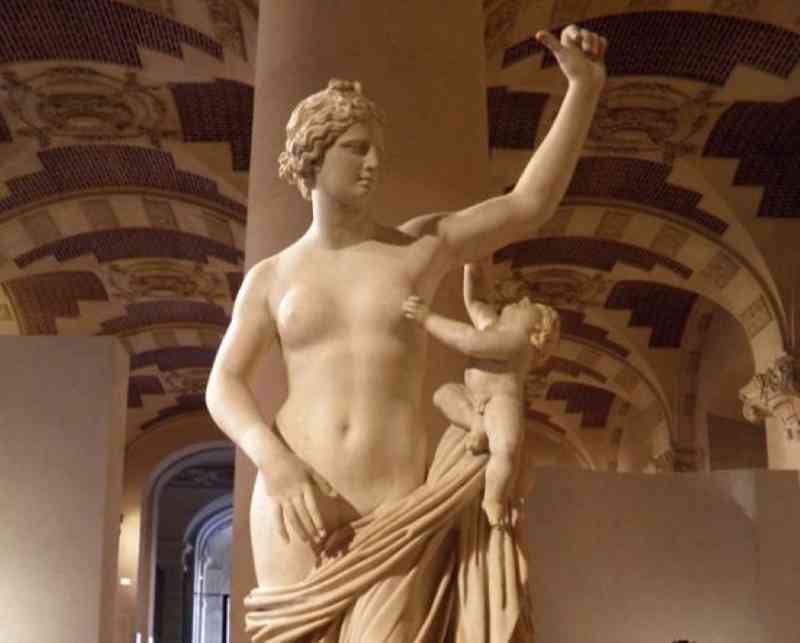
Notably, originally, Roman hours were counted from dawn to dawn, and the Roman week had eight days. Later, the seven-day-week was officially adopted during the reign of Constantine (AD 306 to 337). Simultaneously, the Roman year originally had ten months from March to December, and the 12-month calendar created by the Romans, known as the Julian calendar, was implemented by Julius Caesar in 45 BC to correct the chaotic, drifting lunar-based Roman Republican calendar.