FREE ASSISTANCE FOR THE INQUISITIVE PEOPLE













The Aztec Civilization that flourished in central Mexico from the 14th to the 16th century, and ultimately covered a huge area from modern northwestern Mexico to the Central American country of El Salvador, was the last great powerful Mesoamerican Civilization that lasted for around 200 years, before the conquest of the Spanish conquistadors in 1521. It is believed that around the year 1300, a nomadic group who called themselves Mexica, migrated from the mythical land of Aztlan to what would become modern-day Mexico. But as the area was already well populated by other groups, they settled on the uninhabited islands in Lake Texcoco, establishing their capital city, Tenochtitlan, on an island in the year 1325. The Aztec people included different ethnic groups of Central Mexico, and several small city-states had formed in the Valley of Mexico by 1400 BC, some of which joined to form alliances, political confederations, or empires. Finally, the Aztec Empire, a confederation of three city-states, also known as the Triple Alliance or the Tenochca Empire, was formed in 1427, as an alliance of Tenochtitlan or Mexico Tenochtitlan, the capital city of Mexica or Tenochca; Texcoco, located on the eastern bank of Lake Texcoco and to the northeast of the Aztec capital Tenochtitlan; and Tlacopan or Tacuba, a part of the former Tepanec Empire, with its capital in Azcapotzalco, located on the western shore of Lake Texcoco.
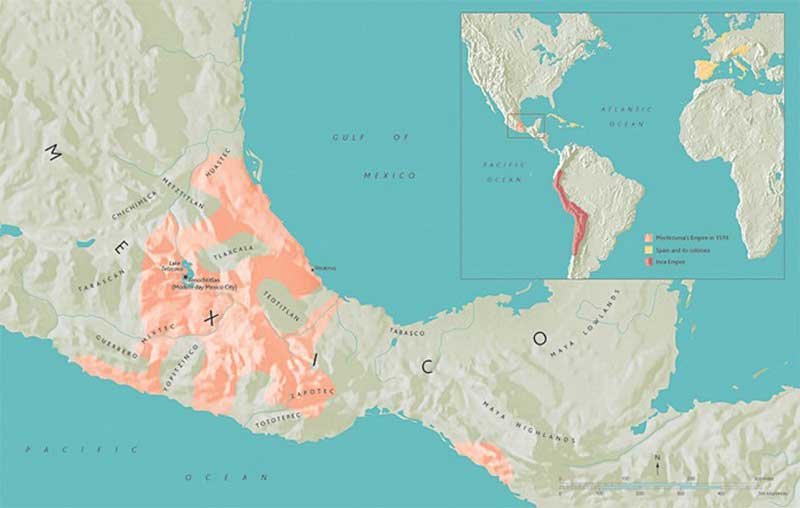
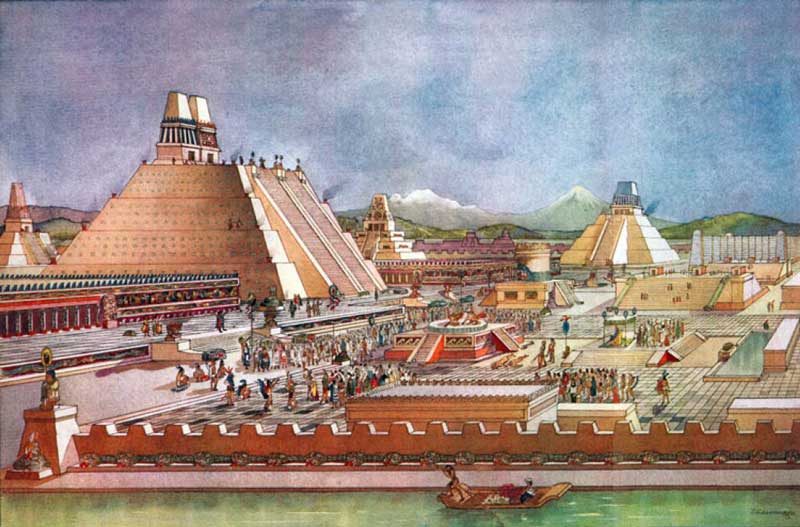
Tenochtitlan was on an island in a lake, and the Aztec people turned the marshy land into floating farms called Chinampas, by placing square fences made of intertwining branches in the swamp, and creating artificial islands above the waterline. They also arranged to bring fresh water into the city with long stone channels called aqueducts, for watering grains and gardens, private homes and city fountains, and establishing the foundations of their capital city, Tenochtitlán, in 1325 AD. In addition to mutant corn like maize, typical Aztec crops included beans, squashes, potatoes, tomatoes, chilli peppers and avocados that made them possible to feed the growing population. Apart from that, the Aztec people also supported themselves through fishing and hunting local animals such as rabbits and armadillos, snakes and wild turkey. Gradually, Tenochtitlán became a huge trading centre with goods flowing in and out, such as gold and greenstone, cotton, cacao beans, and tobacco, tools, weapons and pottery, and eventually, the ruler of Tenochtitlán became the supreme ruler of the Alliance, and the city established itself as the capital of the Aztec Empire.
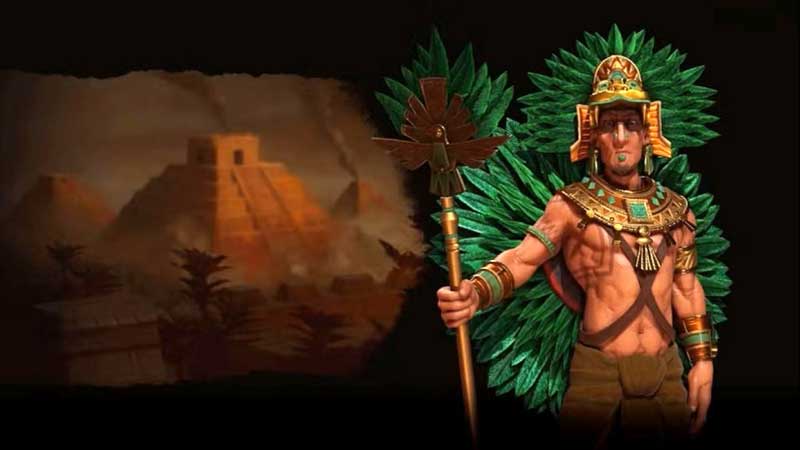
The Aztec Empire started to expand its boundary from 1430 with the aid of its military power. Boosted by the compulsory enlistment of all adult males, along with men supplied from allied and conquered states, added with the elite members of the Aztec society, known as Eagle and Jaguar warriors, the Aztec army swept aside all their rivals to expand the Aztec Empire to cover most of northern Mexico, an area of some 135,000 square kilometres. Equipped with sharp obsidian sword-clubs, known as macuahuitls, spears or dart throwers, called atlatls, or bow and arrows, the Aztec warriors were protected by padded cotton armours, and carried wooden or reed shields covered in hides. In addition to that, the Elite warriors also wore spectacular feathered and animal skin costumes and headdresses to signify their rank.
With the Teteuhctin, the local ruler at the top, the Aztec society was divided into several social statuses, headed by the pipiltins or nobles, the highest and most privileged social class, who held positions in the government, military, and priesthood. The pipiltins were followed by the macehualtins or the commoners, the largest part of the population, which included farmers, artisans, and labourers who worked the land, paid tribute, and provided labour for the state and nobles, while the mayeque or the serfs, and finally the slaves or tlacohtins, belonged to the lowest class of the Aztec society.
The Aztec faith shared many aspects with other Mesoamerican religions, notably including the rite of human sacrifice of the Maya Civilization. They believed in many gods, of which the two principal gods were Huitzilopochtli, the war and sun god, and Tlaloc, the rain god, and the Templo Mayor, the main temple in Tenochtitlán was dedicated to both of them, each of which had a shrine at the top of the pyramid with separate staircases. Other important Aztec gods include Quetzalcoatl, the feathered serpent god, Tezcatlipoca, a central Aztec deity associated with the night sky, hurricanes, obsidian, and conflict, Xiuhtecuhtli, the god of fire, creator of all life, and protector of kings and warriors, Mictlantecuhtli, the Aztec god of death and ruler of Mictlan, the underworld, often depicted with a skull for a face, and many more.
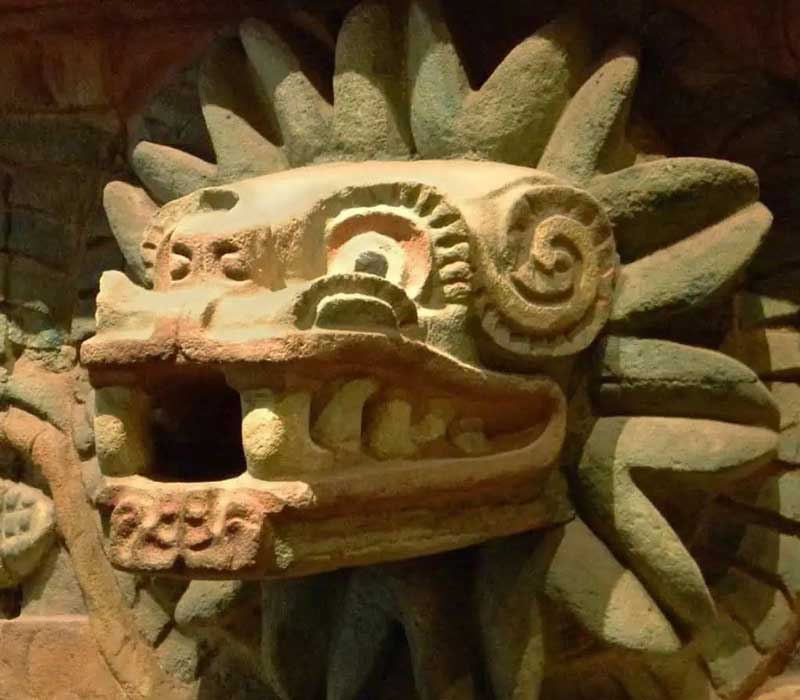
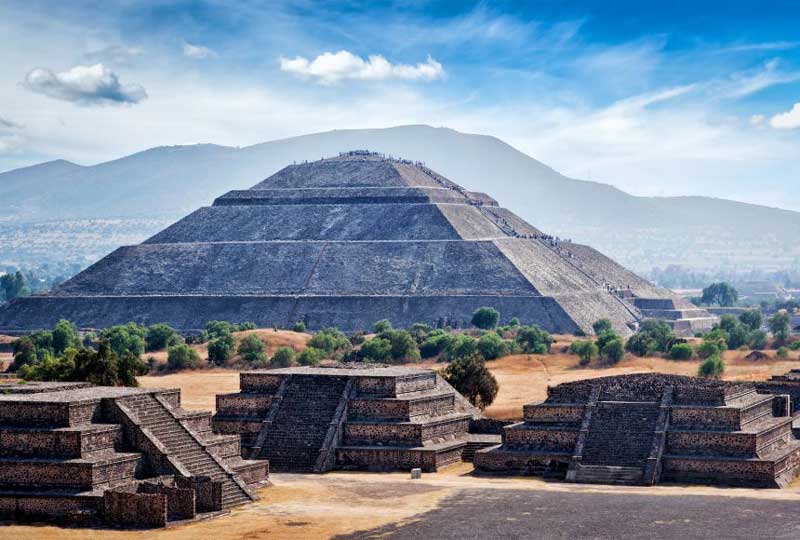
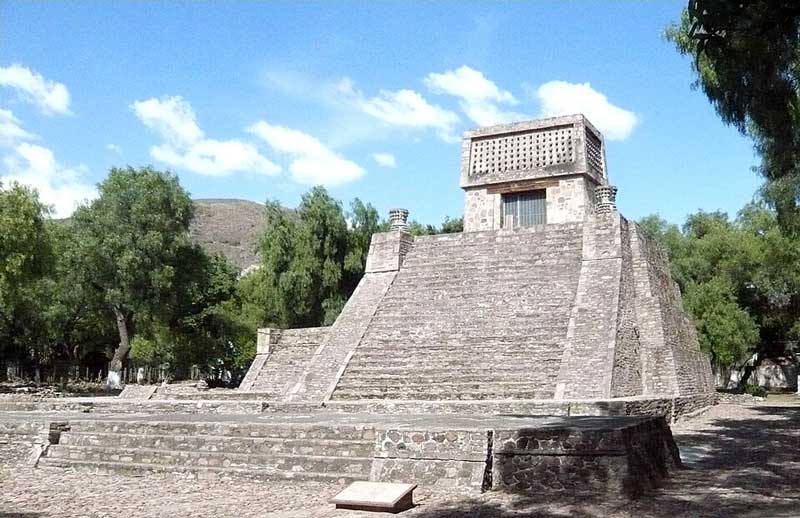
The monumental structures of the Aztec temple-pyramids, often topped with a temple dedicated to a specific deity, and used for religious ceremonies and worship, were also frequently used for human sacrifices, as well as for the burial of kings and other important figures. Apart from the Templo Mayor in the Aztec capital, the other temple-pyramids include the large Pyramid of the Sun and Moon in Teotihuacan, and the great pyramid of Cholula, the largest pyramid in the world by volume.
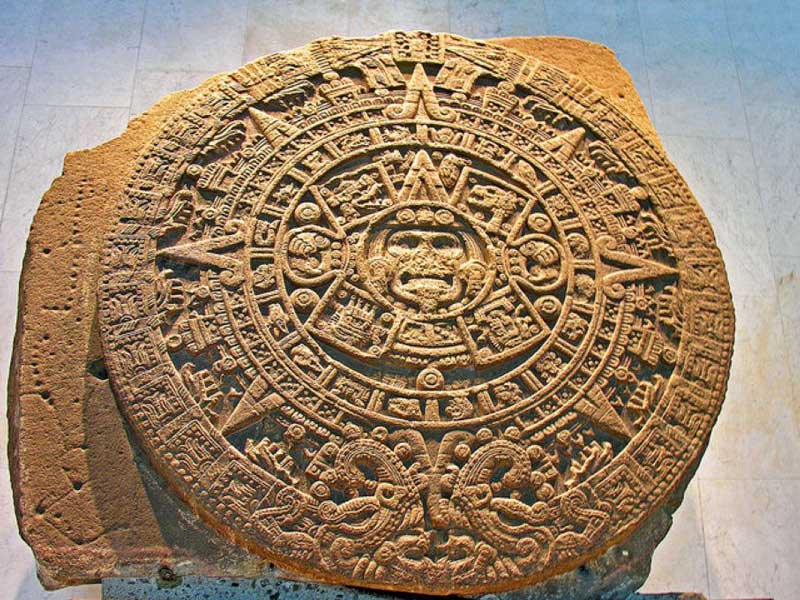
Strangely, the Aztecs maintained a variety of calendars relating to the timing of ceremonies in honour of their deities. They followed Tonalpohualli, the Aztec calendar of 260 days, combining a cycle of 20 day signs, each ruled by a specific deity, with a cycle of numbers 1 to 13, resulting in 260 unique combinations. There was also the Aztec Solar calendar of 365 days, known as Xiuhpōhualli, consisting of 18 months, each complete with 20 days, plus an unlucky 5-day period, for a total of 365 days, used for agricultural purposes. The huge sculpture of the Aztec sun stone, measuring 12 feet (3.6 m) in diameter and 39 inches (98 cm) thick, weighing 24,590 kg (54,210 lb), and housed in the National Museum of Anthropology, Mexico, famously depicts the 20 day signs of the calendar cycle and probably the sun god, Tonatiuh, at the centre.
However, the Aztec empire always had to deal with minor rebellions which had always been swiftly crushed. But the tide began to turn, with the arrival of the Spanish conquistadors in November 1515, led by Hernando Cortés, when Montezuma II, the leader of the Aztecs, greeted him as a guest of honour with valuable gifts, according to Aztec custom. However, things soon turned sour, when a small group of Spanish soldiers were killed at Tenochtitlan while Cortés was away at Veracruz. The incident presented an opportunity for the various city-states that resented Aztec rule, to form alliances and fight for their independence by taking side with the Spanish forces. Cortés returned ten months later, and aided by the local allies, laid siege to the Aztec capital from the middle of May 1521, until they finally collapsed and surrendered on the fateful day of 13 August 1521, ravaged by lack of food and disease. In the aftermath, Tenochtitlan was sacked, its monuments were destroyed, and thousands of Aztecs were murdered by the Spaniards, while Montezuma died in custody under uncertain circumstances, signalling the dramatic and brutal collapse of the Aztec Civilization.