FREE ASSISTANCE FOR THE INQUISITIVE PEOPLE















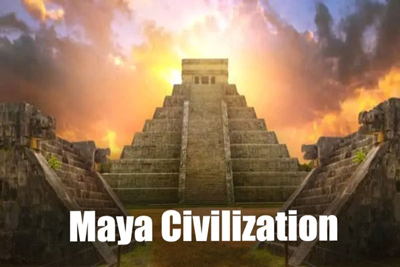
The Maya civilization, an advanced Mesoamerican culture known for its complex but accurate calendar system, sophisticated hieroglyphic writing, advanced mathematics, including the concept of zero, and monumental stone architecture like pyramid temples, flourished particularly during the Classical Period (roughly 250-900 AD) across a huge area, what is now within Central America and southern North America (Mexico). However, unlike a single unified empire, like the Akkadian or the Aztec Empire, the Maya civilization consisted of several independent city-states, though some, like Tikal in modern Guatemala, achieved significant power. Strangely, most of the major cities of the Maya, like Tikal and Bonampak, were abandoned by 900 AD, signalling the decline of the classic Maya Civilization, and although no explanation for the mass exodus from the cities to outlying rural areas has been determined, climate change, overpopulation, drought, famine, warfare, and environmental stress might have caused the dramatic decline. Finally, the arrival of the Spaniards by the early 16th century forced the Maya people to shift to living in villages as agriculturalists, maintaining their distinct traditions, culture, and languages.
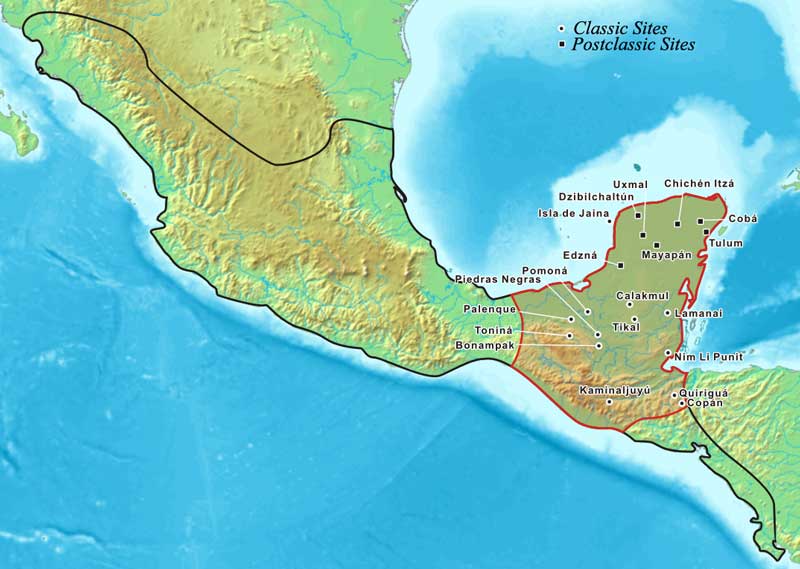
Maya occupation, likely migrated from North America, at Cuello in modern Belize has been carbon dated to around 2600 BC, but settlements were established around 1800 BC in the Soconusco region in the southwestern corner of the Mexican state of Chiapas, bordering Guatemala, nestled between the Sierra Madre de Chiapas Mountains and the Pacific Ocean, a historically significant agricultural area. However, during its prime time, the Maya lived in three separate sub-areas with distinct environmental and cultural differences, which include the northern Maya lowlands on the Yucatan Peninsula and the southern lowlands in the Peten district of northern Guatemala, Belize, and parts of Tabasco and Chiapas of the Mexican states, along with the western part of Honduras and El Salvador.
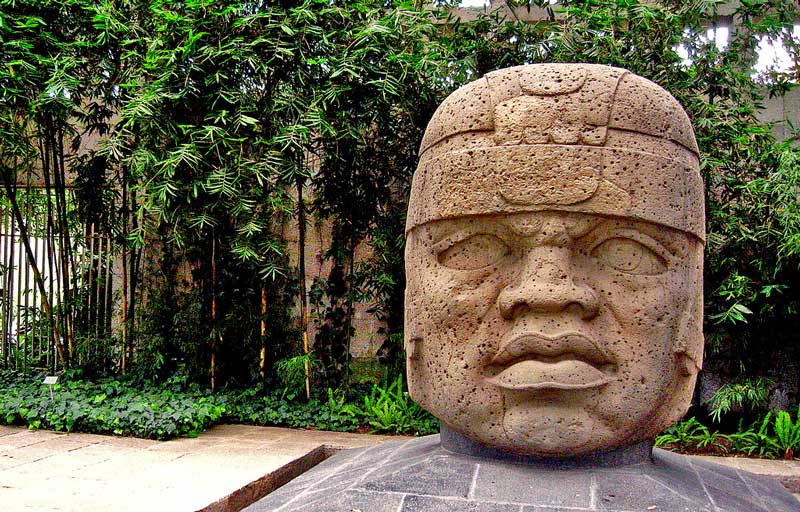
Traditionally, the Maya civilization is traditionally divided into three broad periods with several subdivisions, of which the Preclassic Period (2000–250 AD) witnessed the development of early settlements and agriculture, and also the rise of the Olmecs, the first major Mesoamerican civilization during the middle of the period. The famous Olmec Heads strongly suggest highly sophisticated skill in sculpture, and the first indications of Shamanic religion, while the enormous size of Olmec ruins gave birth to the idea that the land was once populated by people with gigantic structures. The Preclassic Period was followed by the Classic Period (250-900 AD), which is often regarded as its golden age, and is largely defined as the period during which the lowland Maya raised dated monuments using the Long Count calendar and demonstrated significant intellectual and artistic development, along with advancements in writing and mathematics. However, the Postclassic Period (900-1539 AD) witnessed the decline of the Classic Maya civilization, leading to the abandonment of major cities, significant cultural transformations, and the rise of new political structures that continued until the Spanish conquest. Interestingly, the word Maya comes from the city of Mayapan, the last capital of a Maya Kingdom in the Post-Classical Period.
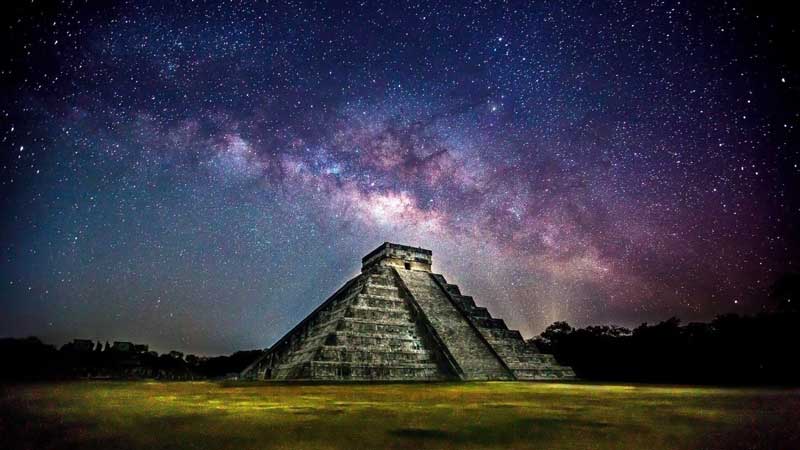
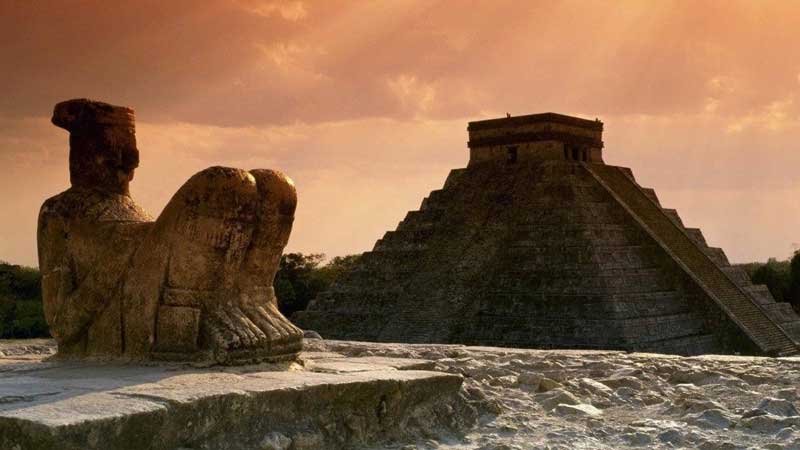
Excavations of several Maya archaeological sites have unearthed a number of palaces and plazas, temples and pyramids, along with courts for playing the Maya ball game, named Ulama, and numerous individual structures of thatched-roof huts, home to a significant number of people, mostly engaged in agriculture. Although the Maya farmers practised the primitive slash-and-burn agriculture, they also displayed evidence of more advanced farming methods like irrigation and terracing. However, despite being traditionally engaged in agriculture, later they also started trading, and became engaged in long-distance trade across greater Mesoamerica and beyond, which consequently proved to be a key component in the development of the Maya civilization in general. But the newly formed Maya cities, surrounded by the numerous thatched-roof huts of the farmers, were not methodically planned and were subject to irregular expansion, with the haphazard addition of palaces and plazas, temples and other buildings. Nevertheless, the centres of all the Maya cities, containing sacred precincts, pyramid temples and other important structures, were often separated from the general residential areas by walls. The Maya temples were raised on platforms, most often upon a stepped pyramid, decorated with elaborate reliefs and inscriptions. But unlike the Egyptian pyramids, the Mesoamerican pyramids have flat tops, mostly containing temples on the top, and stairs ascending their faces. The temple shrines located on the top of the pyramids and containing one to three rooms, were dedicated to one of the important Maya deities, mostly to one of the patron gods of the city, or a divinised ancestor, although most of the freestanding pyramids were shrines honouring powerful ancestors.
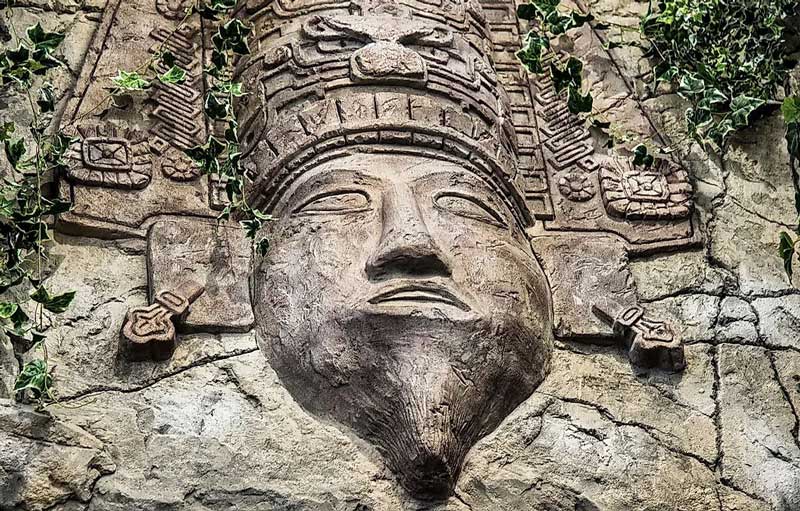
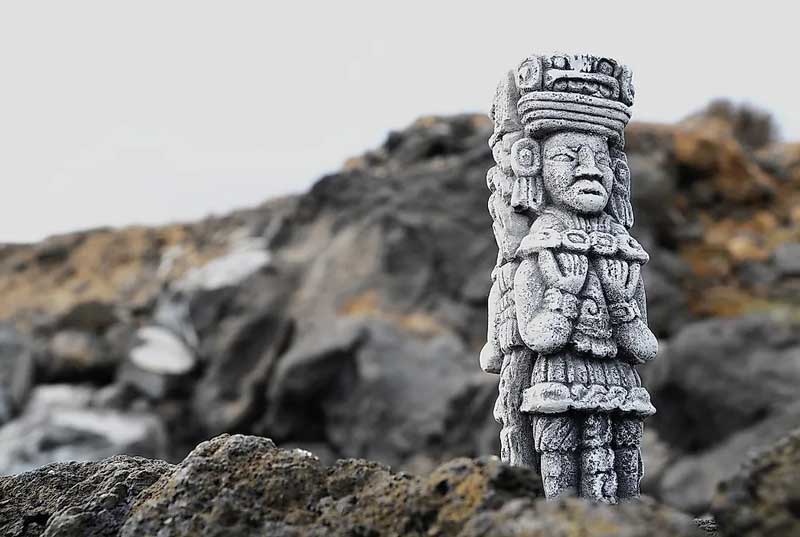
The Maya worshipped many gods and goddesses, each associated with specific aspects of nature, human life, or cosmic forces, and each deity had four manifestations, associated with the cardinal directions, each identified with a different colour. Itzamná, depicted as the creator god in Maya mythology, also embodied the cosmos, and was simultaneously a Sun God. However, he is also Kʼinich Ahau, the day sun in one of his aspects, and the Night Jaguar or the Jaguar God of the Underworld, as a night sun aspect, representing the sun in its journey through the underworld. Traditionally, the Maya kings frequently identified themselves with Kʼinich Ah, which perhaps could be connected to his proven association with terrestrial fire, recognisable by a loop over the nose, jaguar ears, and fangs. Kukulkan, the Feathered Serpent god, was a powerful figure in later Mayan periods, symbolising the connection between earth and sky, while Chaac was the god of rain, lightning, and storms, often depicted with an axe. Other important Maya deities included Ixchel, the moon goddess, in addition to fertility, childbirth, pregnancy, medicine, Ah Puch, one of the multiple death gods, and many more. The Maya believed in animism, that all things possessed a soul, and also believed in a universe connected by a world tree and a complex cycle of creation and destruction, often symbolised by the underworld and the Milky Way. During the worship, apart from the offering of candles, flowers and liquor, the offering of blood, in the form of sacrificing a living creature, was viewed as the most important Maya ritual, which culminated in human sacrifice. However, according to scholars, during the Postclassic period, the most common form of human sacrifice was heart extraction, influenced by the rites of the Aztecs in the Valley of Mexico.
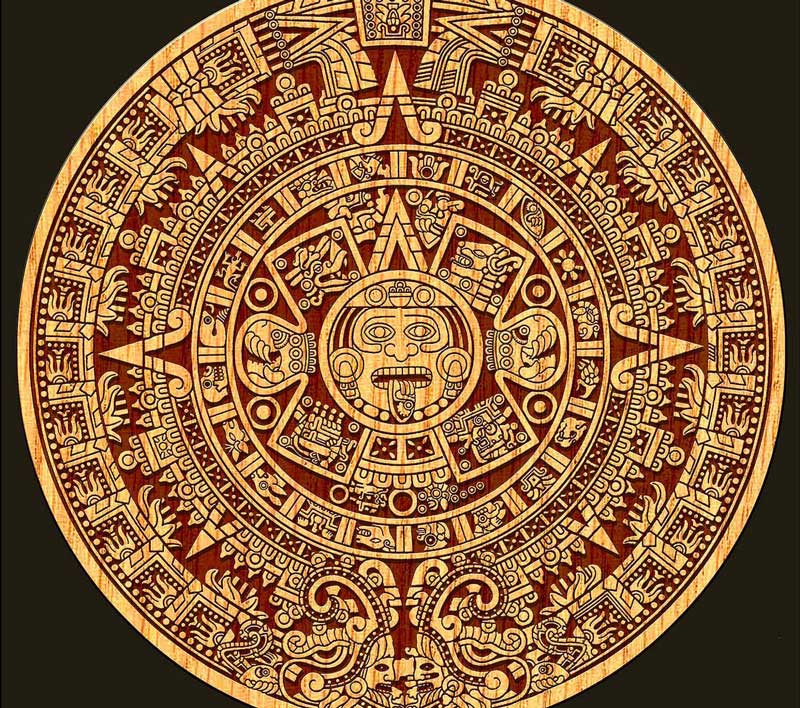
Guided by their religious rituals, the Maya also made significant advances in mathematics and astronomy, including the concept and use of the zero and the development of complex calendar systems of interconnected cycles, which is considered a cultural marvel and continues to be studied by scholars today. Their calendar, primarily consisting of the 260-day Tzolkin or the Divine Calendar, and the 365-day Haab or the Civil Solar Calendar, were put together to form a huge 52-year Calendar Round, corresponding to 18,980 days, or 52 years. The calendar was crucial for tracking agricultural cycles, religious ceremonies, and also a testament to their advanced mathematical and astronomical knowledge, incorporating observations of celestial bodies like the sun, moon, and Venus.
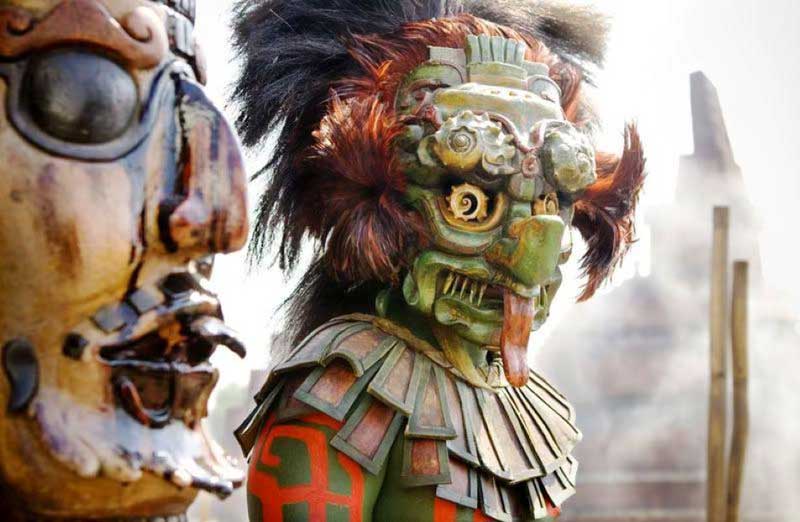
Known for their advancements in writing, mathematics, astronomy, calendar systems, architecture, and agriculture, the Maya also made various artworks in different styles, such as sculpture, architecture, ceramics, murals and masks. The Maya Society had a distinct class system featuring a semi-divine king and priests at the top, supported by nobles, non-noble elites like merchants and artisans, and the vast majority of the population who were commoner farmers. However, the farmers had a clear division of labour between men and women, where the men were engaged in farming and taking care of building huts, while the women took care of all the domestic needs. Nevertheless, although the Postclassic Period witnessed the decline of the Classic Maya civilization, the descendants of the people of the ancient Maya Civilization, residing primarily in Mexico, Guatemala, Belize, Honduras, and El Salvador, still speak over 28 distinct Maya languages and maintain their cultural heritage while adapting to modern life.