FREE ASSISTANCE FOR THE INQUISITIVE PEOPLE










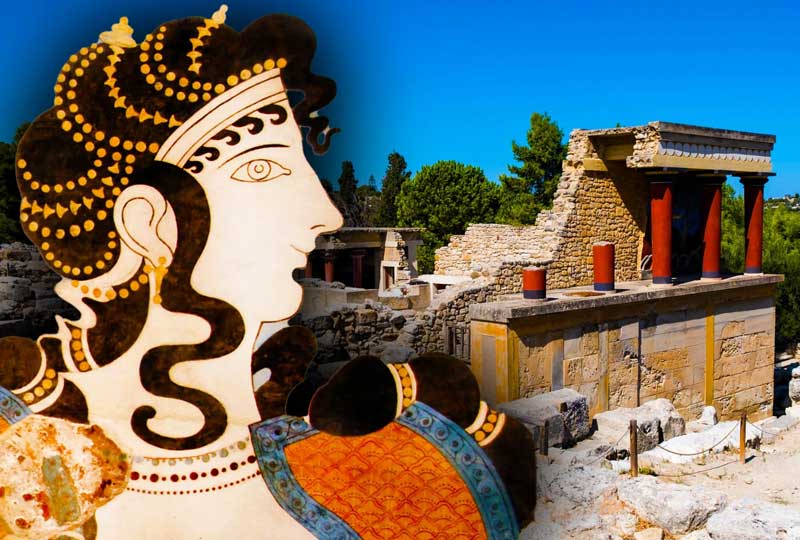
The Minoan civilization that flourished on the island of Crete, the largest island in Greece, during the Middle Bronze Age and later came in contact with other cultures across the Aegean Sea, forming a unique hybrid culture, is often regarded as the first civilization in Europe. Marked for their advanced urban planning, sophisticated art, and extensive trade networks, the Minoan culture reached its peak during 1600 BC, but after 1450 BC, it came under the cultural and political domination of the mainland Mycenaean Greece, who destroyed the palace culture on Crete and established a new order on the island, forming a cultural fusion that lasted until around 1100 BC. Nevertheless, despite everything, the Minoan culture made a significant contribution to the development of Western European civilization, especially in the Mycenaean culture of the Greek islands and mainland, before it mysteriously collapsed. Ruins of the magnificent monumental architecture of the Minoans, as evident from the ruins of Minoan palaces at Knossos and Phiastos, decorated with vibrant wall frescoes, depicting both religious and natural scenes, including goddesses, are reflective of a matriarchal religion and signify the highly sophisticated culture of the Minoan civilization. Apart from that, their elaborately decorated artistic items like pottery and seals, figurines, and elegant stone vases with vibrant decorations of marine life represent a perfect portrayal of the Minoan civilizations and cultures that have long since faded into the shadows of time.
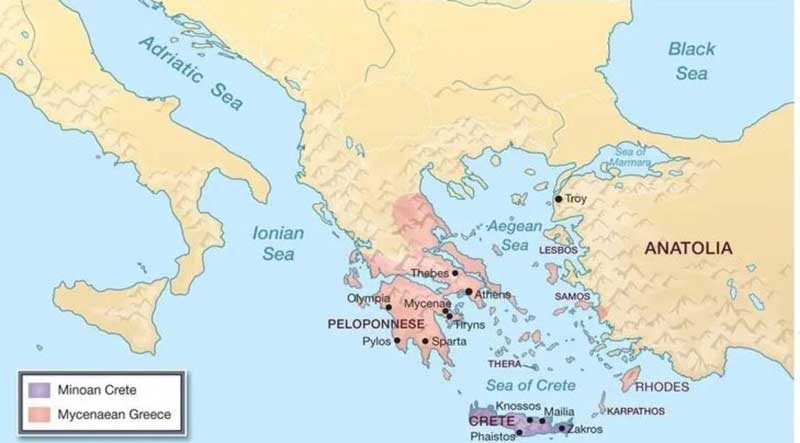
It is traditionally believed by many that the term Minoan originated from the name of the Greek god Minoan, son of Zeus and Europa, as well as the mythological king of Crete. However, the British archaeologist Sir Arthur Evans, who excavated at Knossos from 1900 to 1905, confirmed it as the possible site of the legendary palace of King Minos, the dynastic ruler of Bronze Age Knossos. As the oldest evidence of modern human habitation on the Island of Crete is pre-ceramic Neolithic farming community, he broadly divided the island's Bronze Age into three distinct phases, which include the Early Minoan (3000-2100 BC), marked by the early development of the society from localised clan-based villages to a more urbanised society of later periods. The period is also marked by the appearance of the first painted ceramics, when the settlements grew in size and spread from fertile plains towards the higher, mountainous lands.
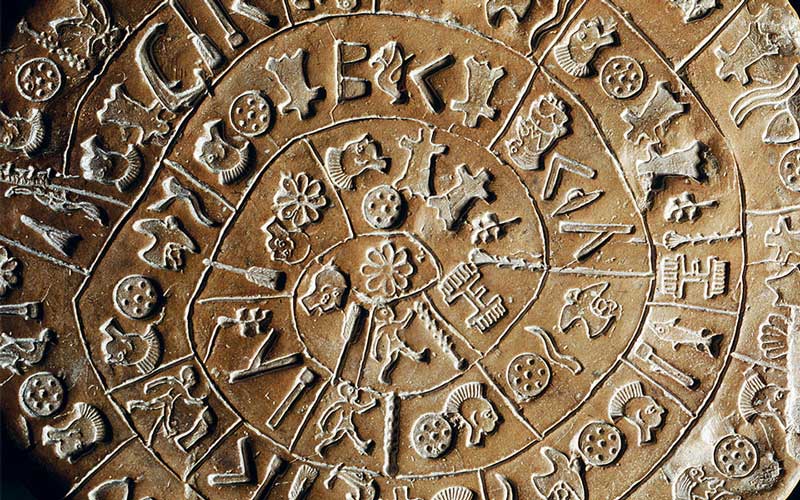
After the Early Minoan, came the Middle Minoan (2100-1600 BC), which is also termed an international era, when probably due to the invention of sailing vessels, equipped with masts to support sails to be propelled by wind, trade was intensified, as the Minoan ships began sailing beyond the Aegean to Egypt and Syria, displaying increased international influence. At the same time, settlements began to grow much bigger in size, and monumental buildings started to take shape at sites that would later become huge palaces. The Minoan writing systems, termed Cretan hieroglyphs, which were later discarded in favour of Linear A, were also created and developed during the Middle Minoan, which ended later, during the Late Minoan, with mass destruction, possibly due to earthquakes.
Unfortunately, the Late Minoan (1600-1100), which followed the Middle Minoan, witnessed one of the largest and most disastrous volcanic explosions in recorded history, in the form of the catastrophic eruption of the Thera Volcano, resulting in unprecedented destruction throughout the island when the city of Knossos was burnt, except for the palace. However, the Late Minoan witnessed profound social and political changes due to the increase of mainland influence, reflecting the rise of Greek-speaking elite in the Minoan society. The changes coincided with the collapse of the wider Late Bronze Age, when coastal settlements were mostly abandoned for safe locations on higher mountainous ground, which continued the aspects of Minoan culture until the beginning of the Early Iron Age.
However, although establishing an absolute chronology about the Minoans is difficult, an alternative system proposed by Greek archaeologist Nikolaos Platon, focusing on the events occurred in and around the major Minoan palaces, divided the phases of Minoan history into four periods termed Prepalatial, Protopalatial, Neopalatial, and Postpalatial.
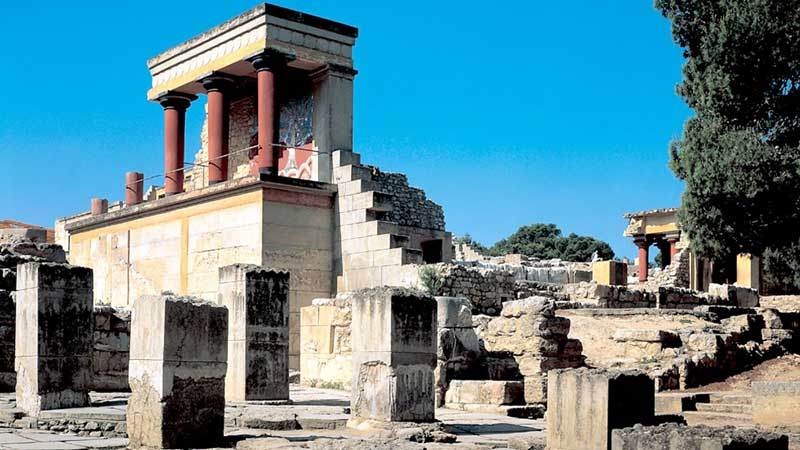
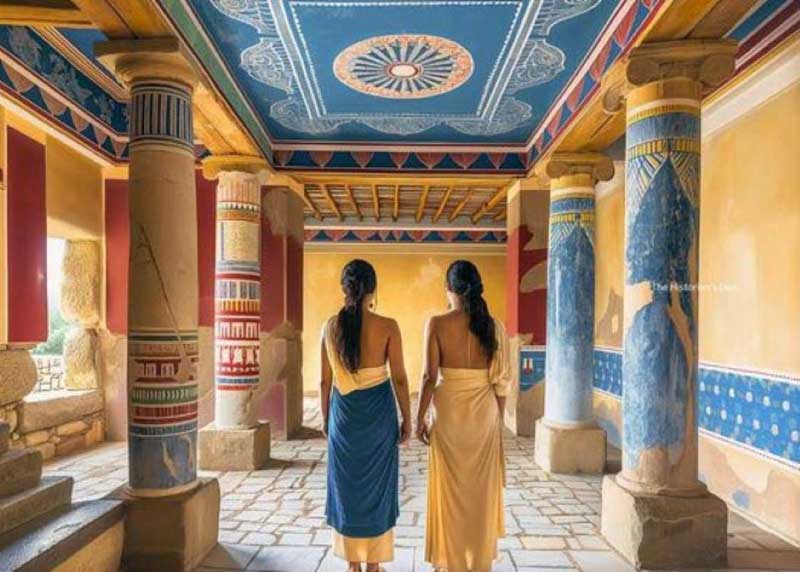
Several Minoan settlements containing ruins of archaeological interest are found all over the Mediterranean island of Crete, among which some important sites deserve mention. However, perhaps the most important among them is Knossos, a Bronze Age archaeological site in Crete, dominated by the complex of the monumental Palace of Minos, which apart from serving as a royal residence, also served the purpose of a religious centre, as well as the seat of regional administration. Possibly built around 1900 BC, the palace was renovated and expanded several times over the next five centuries until its final destruction around 1350 BC. Apart from Knossos, Phiastos was another large city of Minoan Crete, marked by the remains of another Minoan palace. The other important sites in the island include, among others, Kommos, a harbour town serving Phaistos and containing civic buildings mirroring the palatial architecture, and Kato Zakros, also known as Zakro, a sea-side palatial site located in the far east of the island. Spreading over several thousand square metres and reaching up to four storeys high, the Colossal structures of the Minoan palaces, with its ceilings supported by tapered wooden columns and decorated with majestic colonnades, vibrant murals, along with lightwells, contained huge storehouses, large courtyards for public spectacles or religious processions, and extensive drainage systems. Significantly, despite the absence of any sort of fortifications in the settlements suggesting a relatively peaceful co-existence between the different settlements, sporadic disturbance of absolute peace cannot be ruled out due to the presence of weapons like swords, daggers, and arrowheads, along with defensive gear like armours and helmets. Evidence of frequent guardhouses and watchtowers along the Minoan roads also supports the suggestion of sporadic disturbances.
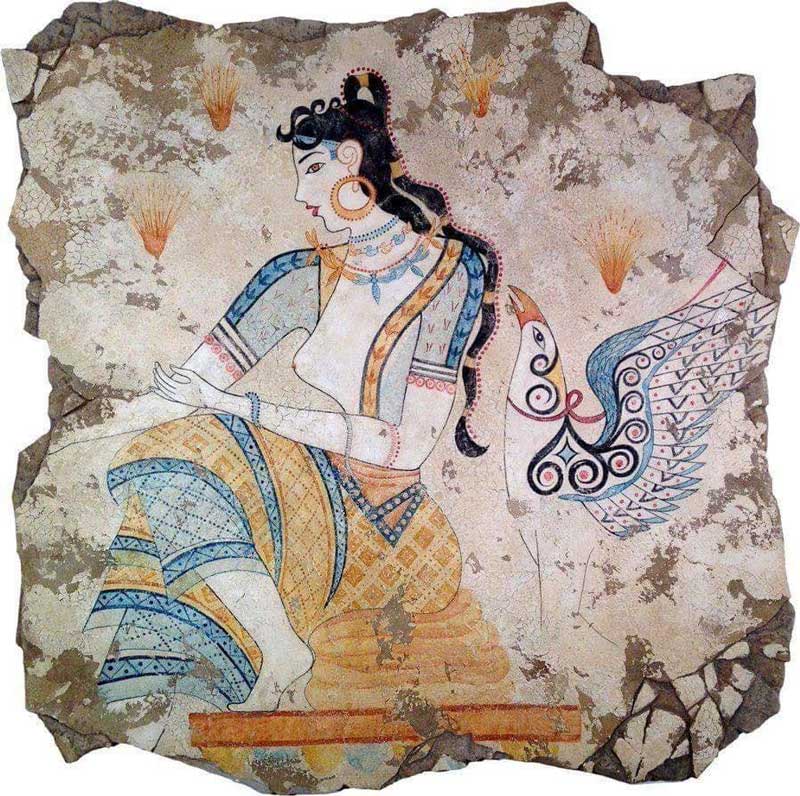
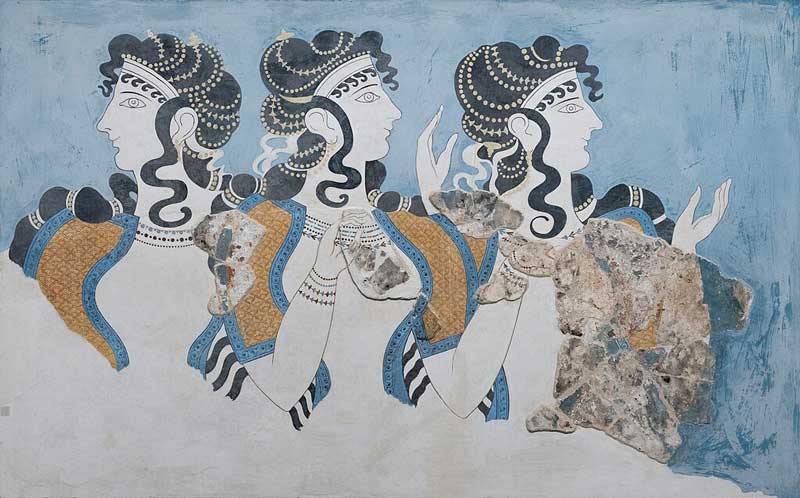
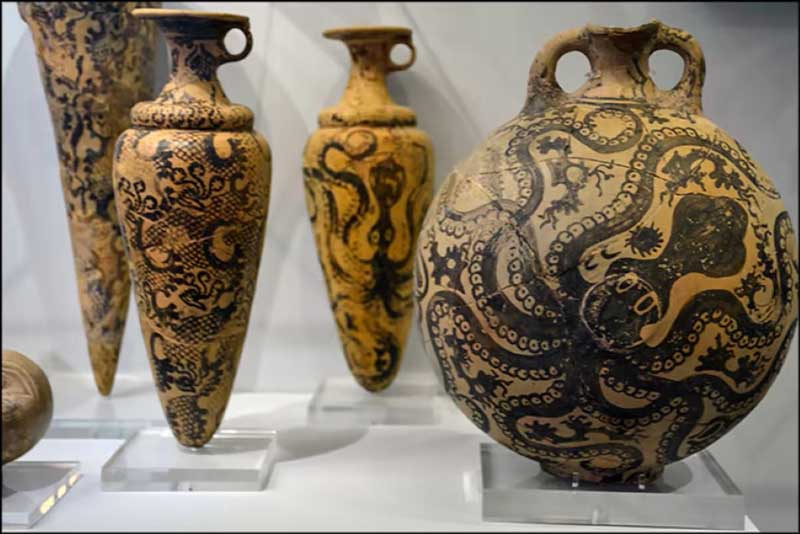
Although larger than human scale sculptures of the Minoans are not found at the excavated sites, and are considered to be perished, several small figurines made of materials like clay, bronze or ceramics display their affinity of creating figures in strikingly active stances, which include a jumping acrobat in ivory and the ceramic figurine of the snake goddess holding snakes, primarily found at Knossos. The Minoan pottery includes a wide range of vases and vessels in different sizes and shapes from wafer-thin cups to large storage jars, which include beakers, ritual vessels with figure-of-eight-shaped handles, squat round vessels with a false spout, three-handled amphorae or tall jars or jugs, with two handles and a narrow neck, and more. In addition to the magnificent frescoes created on the walls, ceilings, and floors of the palaces, Minoans were one of the earliest cultures to paint natural landscapes, which are devoid of the presence of any humans, although Minoan paintings often displayed birds and animals, dolphins and fishes in their natural habitat
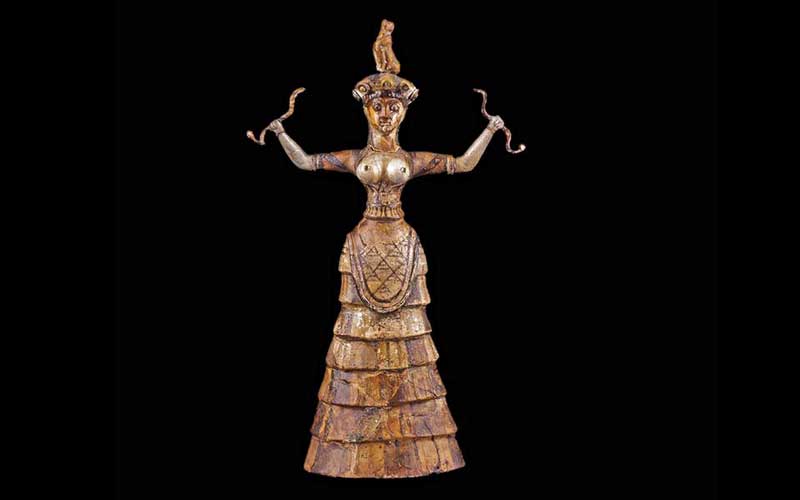
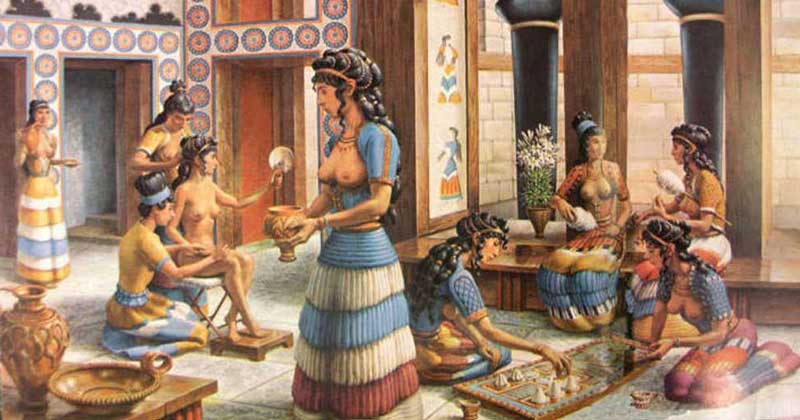
Unfortunately, the religion followed by the Minoans remains sketchy, but detailed depictions of their religious ceremonies and rituals like the pouring of libations, making food offerings, processions, and feasts are revealed through their art, architecture, and artefacts. It is apparent from the artworks of the Minoans that they revered nature, specifically natural forces, which they portrayed in their artworks as the figure of a voluptuous female mother-earth goddess, and a male figure holding several animals like bulls. However, the archaeologists have also identified a Minoan mountain goddess, located on hilltops and caves, a dove goddess, and also a snake goddess, as mentioned earlier, perhaps worshipped as the guardian of the households. It is obvious that Minoans had more goddesses than gods, and the prominence of female figures also in authoritative roles signify that women were predominant in the Minoan society, which in turn seems to indicate that the Minoan society was matriarchal. Minoan women wore decorated skirts that flared out from the waist in a bell shape, along with low cut blouses, exposing the breasts as probably the Minoans did not think of breasts as sexually stimulating body parts, and possibly thought of breasts as parts of a female body only meant for breast-feeding.
However, the actual reason for the enigmatic decline of the Minoan civilization is shrouded in mystery till today and is debatable. It is maintained by many that the massive eruption of Thera, the present-day island of Santorini, is one of the main reasons for the downfall of the Minoan civilization, as it destroyed an entire island and resulted in tsunamis that wiped out coastal settlements, which adversely affected their trade. But as the exact date of that catastrophic eruption is controversial, its connection with the end of the Minoan period cannot be adjudged. .Nevertheless, it is also considered that probably it was a fatal mix of environmental degradation, causing ruined harvests, along with unhealthy competition for wealth weakening the structure of society, associated with internal upheavals, which was exploited by invading Mycenaean Greece. However, whichever was the cause, most of the Minoan sites were abandoned by 1200 BC.