FREE ASSISTANCE FOR THE INQUISITIVE PEOPLE















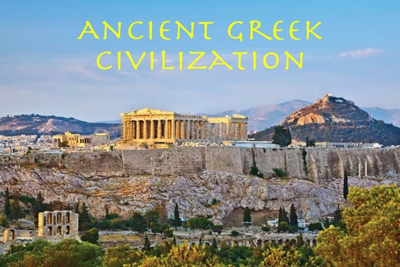
Followed by the collapse of the Mycenaean Civilization around 1200 BC, the Ancient Greek Civilization ushered a period of immense cultural growth that flourished in southeastern Europe, famous for its advancements in governmental administrative structure, science, philosophy, art, and literature, which ended with the death of Alexander the Great in 323 BC. History says, during the period of the Ancient Greek Civilization, the Greeks made important contributions to philosophy, mathematics, astronomy, and medicine, and were also known for their sophisticated sculpture and architecture. In addition, literature and theatre was an important aspect of Greek culture, which subsequently influenced modern drama. In fact, Greek culture influenced the Roman Empire and many other civilizations, and it continues to influence modern cultures today. Spanning from the Dark Ages (1100–800 BC) through the Archaic (800–480 BC), the Classical (480–323 BC), and the Hellenistic (323–146 BC) periods, and ending with the Roman conquest, it was a rich era of democracy, and empire-building that laid foundations for Western culture. Generally, Classical Greece is considered the cradle of Western Civilization from which the modern West derived many of its founding archetypes and ideas in politics, philosophy, science, and art.
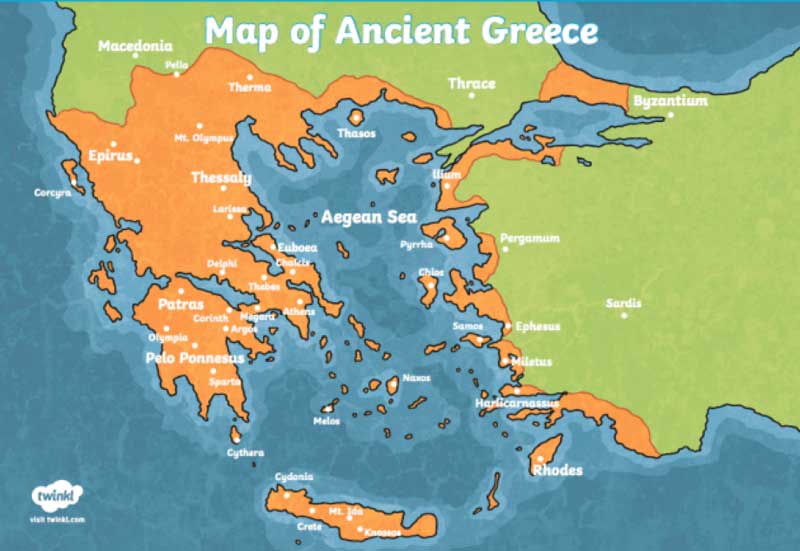
The Bronze Age collapse of the Mycenaean civilization led to the Greek Dark Age, a period of stagnation before its resurgence in the Archaic Period, marking the advent of the city-states, or polis, colonization, the Olympic Games, and the works of Homer, followed by the Classical period, a period of around 200 years during the 5th and 4th centuries BC that began after the Greco-Persian Wars, and marked the peak of the Greek culture and the Golden Age of Athens, with great advancements in art, drama, and governance, philosophers like Socrates, and the Parthenon. Eventually, the Hellenistic Period that began after the death of Alexander the Great, is distinguished by the spread of Greek or Hellenic culture across vast territories from Greece to Asia, until Rome conquered mainland Greece in stages, culminating in 146 BC, after the Battle of Corinth, though some define its total end with the death of Cleopatra in Egypt in 30 BC.
In Ancient Greece, principles of governance were outlined by philosophers like Aristotle, focusing on roles like steering, called Kybernēsis, and managing the state, called Politeia. The city-states were the fundamental political units with their own unique systems, relying on direct involvement of the citizens. In democracies like Athens, all eligible adult male citizens had the right to vote and participate in decision-making. Councils, like the Athenian Boule, a body for overseeing daily governance, chosen by lot for a year, preparing the agenda for the Assembly. Magistrates, like Archon in Athens, were responsible for specific executive, judicial, or religious functions, while Collegia or Boards, formed with groups of ten men, one from each tribe, were appointed by lot for short terms to manage specific public works, tax collection, etc.
The Greeks were Polytheistic, worshipping multiple gods and goddesses, and religion was the central part of ancient Greek life. According to tradition, the twelve Olympians, commonly considered to be Zeus, Poseidon, Hera, Aphrodite, Athena, Artemis, Apollo, Ares, Hephaestus, Hermes, and either Hestia or Dionysus, were their major deities, residing on Mount Olympus. However, besides the twelve Olympians, there were many other cultic groupings of twelve gods. The most important religious ritual in Ancient Greece was animal sacrifice, most commonly of sheep and goats, accompanied by public prayer and hymns.
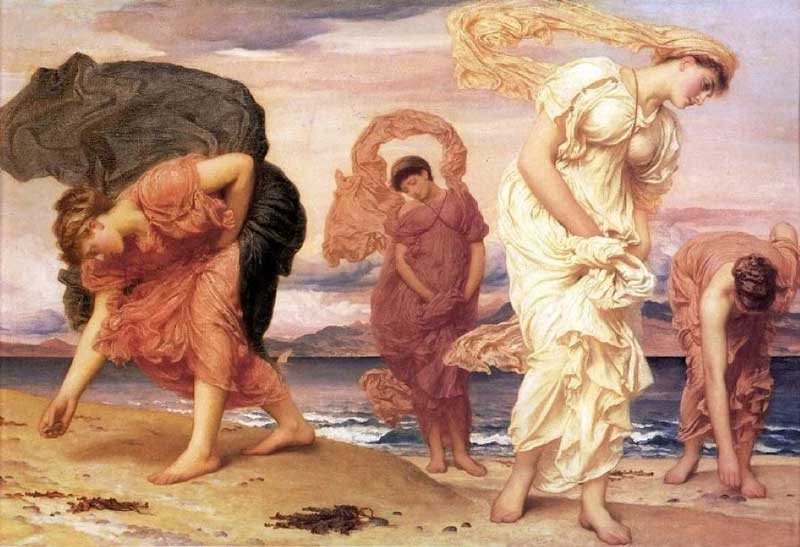
Most families in Ancient Greece owned slaves as household servants and labourers, and although the slaves had the right to have a family and own property, subject to their master's goodwill and permission, they had no political rights. As citizens, men in Ancient Greece participated in public life as in politics, philosophy and commerce, while women were focused on domestic skills, music, and dance, but not formal academics. They were confined to the private, domestic sphere, involving household management and child-rearing, cooking and weaving, and were expected to be obedient and secluded, with few legal rights, devoid of right to own land, vote, or hold office. However, the Spartan women had greater autonomy, could own property, were physically trained, and managed estates while men were at war, fostering a more equal ideal. Educated courtesans also provided companionship and intellectual engagement, and served as priestesses and oracles, like Pythia at Delphi, the high priestess of Apollo at the Oracle of Delphi, making her one of the most influential figures of Ancient Greece, with her ambiguous pronouncements shaping history and politics from the Temple of Apollo.
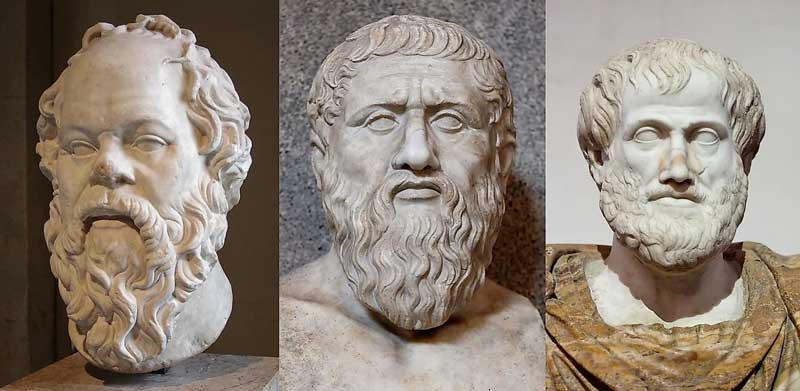
The Greeks made important contributions to mathematics, astronomy, and medicine, pioneered by the. Great figures like Thales (early geometry), Pythagoras (number theory, theorem), Euclid (axiomatic geometry, Elements), Ptolemy (mathematical models, geocentric system), and Archimedes (calculus precursors), which laid the foundations for Western science. They developed abstract geometry, formal proofs, and number theory, and also created mathematical models to predict celestial movements, explain phenomena like eclipses, the Earth’s axis, and the heliocentric system, a model that places the Sun at the centre of the solar system, while Hippocrates, the most famous physician in antiquity, and credited as the founder of modern medicine, established a medical school, and pioneered the systematic and empirical investigation of diseases and remedies. Hippocrates separated medicine from superstition, emphasising observation, diagnosis, using dreams for symptom interpretation and treatment, and also established medical ethics, which was later named after him as Hippocratic Oath.
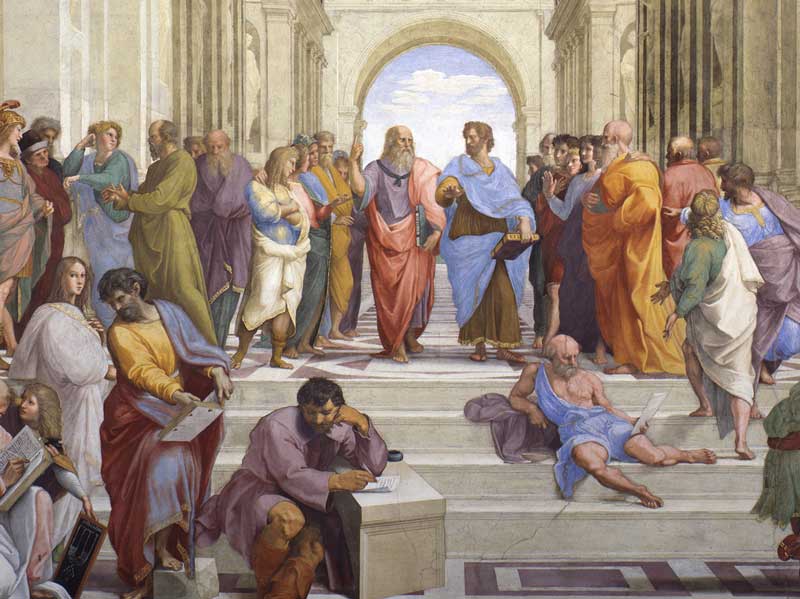
Ancient Greek philosophy was used to make sense of the world using reason and enquiry, emphasising logic and championing the idea of impartial, rational observation of the natural world. Greek Philosopher Socratic advocated the method of questioning to expose ignorance and pursue truth, influencing critical thinking, while his student Plato wrote dialogues, exploring ideal forms, justice, and the soul, using Socratic discourse. Later, Aristotle, disciple of Plato, systematised logic, ethics, politics and literary criticism, which influenced science and arts, and later immensely influenced Western Philosophy.
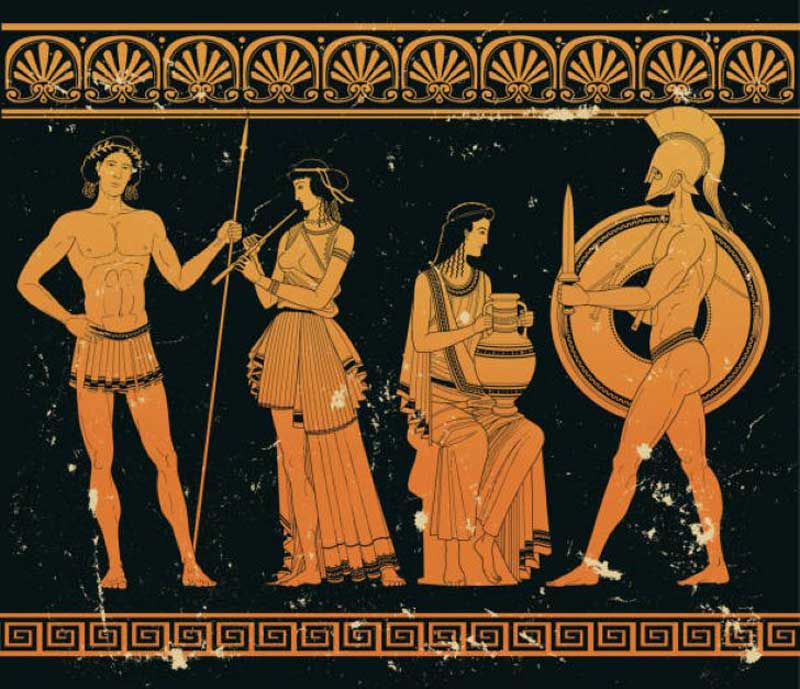
The earliest Greek literature was poetry and was composed mainly for performance. In fact, literature and theatre were intertwined, and had great importance in ancient Greek society. Greek theatre began in the sixth century BC in Athens with the performance of tragedy plays at religious festivals, which inspired the genre of Greek comedy plays, and developed around the end of the Archaic period. Both of these types of Greek drama became hugely popular, and performances spread around the Mediterranean and influenced Hellenistic and Roman theatre. Although the earliest Greek literature was poetry and the earliest Greek poet known is Homer, the works of playwrights like Sophocles and Aristophanes formed the foundation upon which all modern theatre is based. Later, Aeschylus introduced the idea of characters interacting with dialogue, while other theatrical devices, like irony, were exemplified in works like Sophocles’ Oedipus the King.
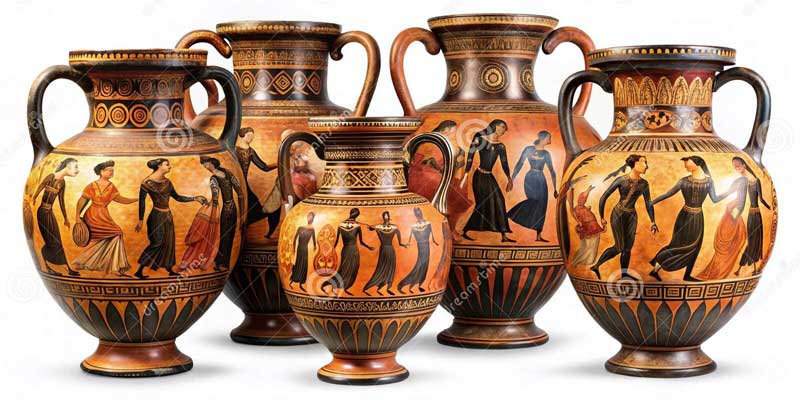
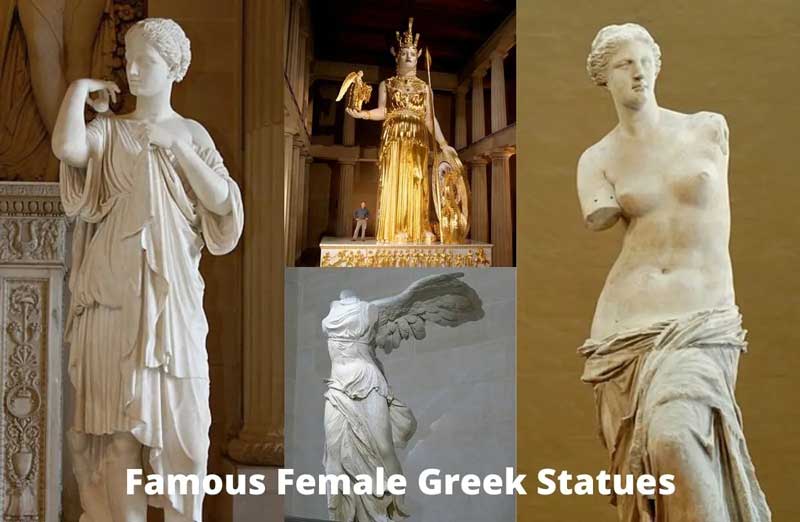
Ancient Greek art, renowned for its naturalistic and idealized depictions of human forms in stunning sculptures, depicting gods, goddesses, athletes, and mythical scenes in marble and bronze, along with detailed pottery and storytelling in vase painting, illustrating myths, daily life, and historical events, established the foundational aesthetics for Western art. From 800 to 300 BC, Greek sculpture took inspiration from Egyptian and Near Eastern monumental art and, over centuries, evolved into a uniquely Greek vision of the art form.
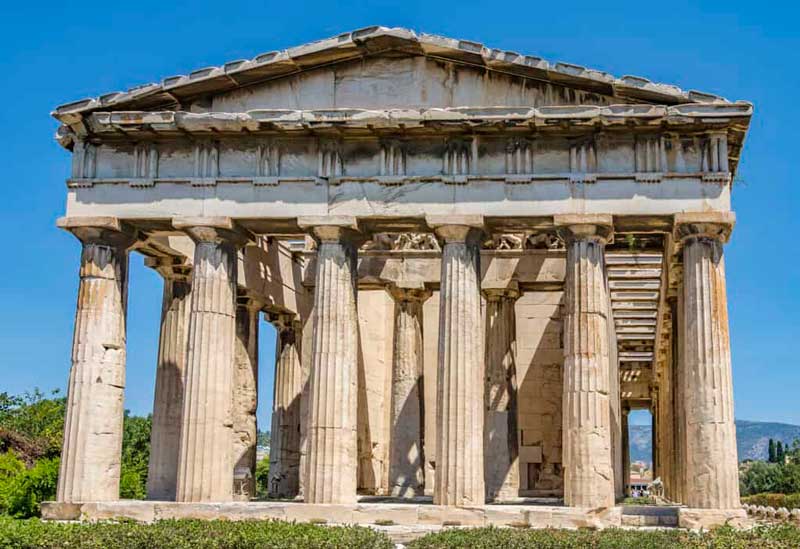
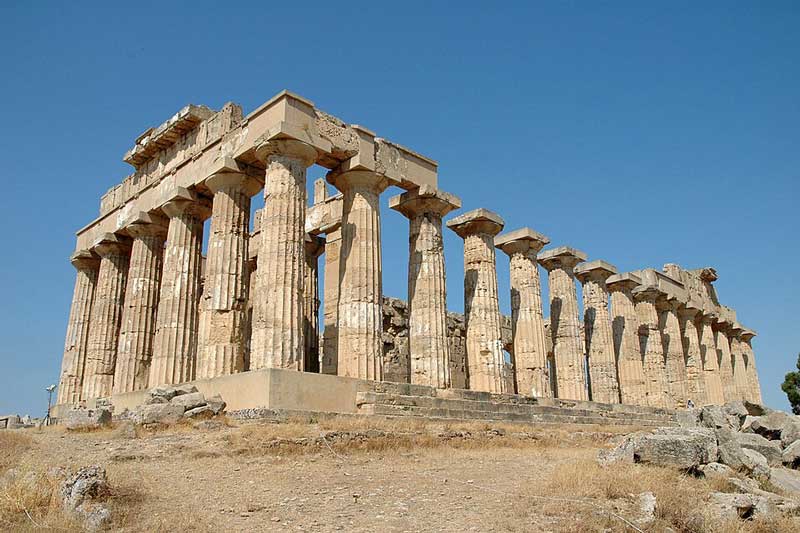
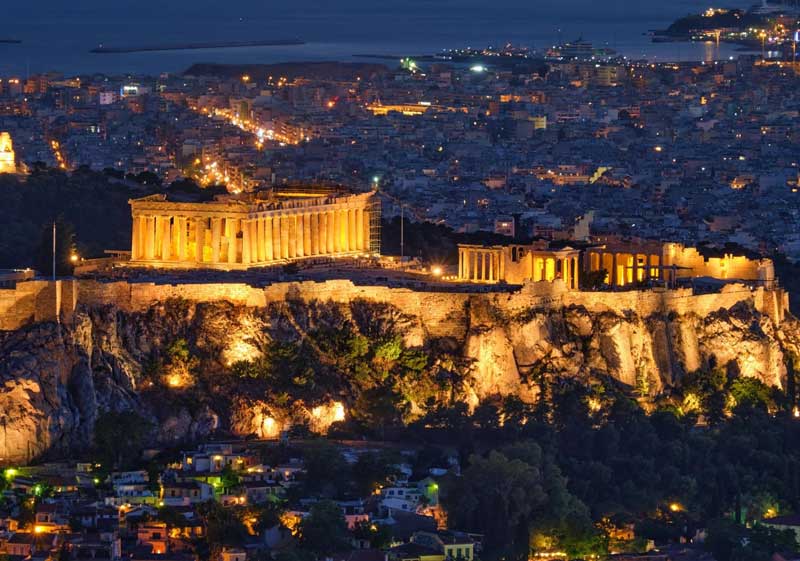
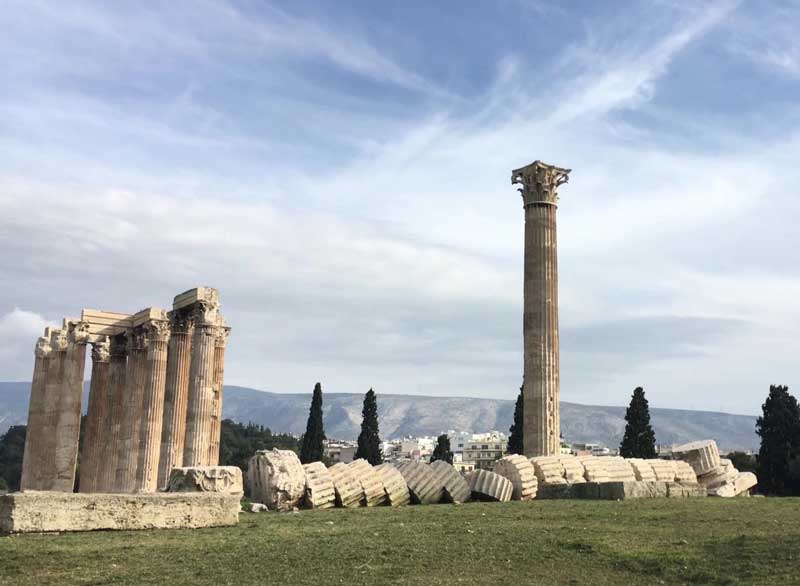
Adorned with the Doric, Ionic, and Corinthian orders of columns, and designed with mathematical precision for harmony and visual appeal, characterised by precision, proportion, and the use of marble and limestone, Ancient Greek architecture established a system of rules influencing Western architecture for millennia. Key structures of Ancient Greece include the grand temples like the Parthenon, the iconic symbol of ancient Greece, Temple of Hephaestus in Athens, Temple of Olympian Zeus, Temple of Hera in Selinute, Sicily, and many more, along with the open-air structures, often built into hillsides, serving as vital centers for religious festivals, drama, and athletic contests, like the Theatre of Dionysus, the birthplace of Greek drama, at the Acropolis, the Stadium at Delphi, serving for events during the Pythian Game, alongside the Stadium at Olympia, the central venue for athletic events during the ancient Olympic Games, as well as a sacred site dedicated to Zeus, and several civic buildings, all emphasising symmetry, order, and visual appeal through mathematical principles.
The Ancient Greek civilization declined gradually for multiple reasons, which include constant warfare between Athens and Sparta that weakened all city-states, draining resources and fostering division, and the consequent economic stain, political fragmentation, and internal class conflicts. Finally, the eventual rise of Macedon under Philip II and Alexander the Great, and ultimately the Roman conquest in 146 BC, culminated the Ancient Greek Civilization, though Greek culture heavily influenced Rome, and its legacy continued through the Hellenistic Period.