FREE ASSISTANCE FOR THE INQUISITIVE PEOPLE












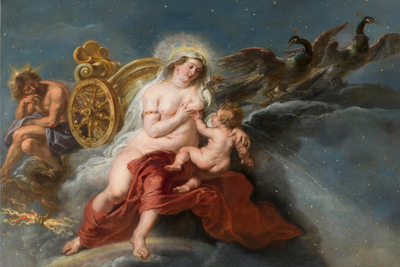
The Birth of the Milky Way, also known as the Origin of the Milky Way, painted by the Flemish artist Peter Paul Rubens has a history behind it. It comes from the series of his sixty mythological scenes, commissioned by Philip of Spain in 1636 for the decoration of his newly renovated hunting lodge, Torre de la Parada.

As the artist was well aware of the mythological stories, he took it as a big chance to design an entire world of the classical subject and carried out the bulk of his work in Antwerp where he enlisted a team of artists to carry out the paintings after his initial sketches. Within fifteen months of receiving the commission, Rubens and his team had completed fifty-six paintings out of six.
While Ruben was busy working out the project, Cardinal-Infante Ferdinand, the King’s brother and governor of the Spanish Netherlands used to visit the artist’s studio to check the progress of the project. However, he was not happy and was rather disturbed by the presence of nude female figures on the canvases. Nevertheless, like a matured diplomat Ruben dejectedly agreed with him and at the same time expressed his inability to change them as it was too late. Finally, the artist shipped the paintings to the king, who did not seem to mind the seldom promiscuous mythological nudes that reflect Ruben’s evolving interests as an artist.

In fact, unlike his other earlier works in that particular series Ruben focused less emphasis on the female flesh than the related narrative and emotional part of the character they were enacting. The noticeable heftiness of the mythological nudes did not make them sensuous, but served the purpose to convey their high spirit and robustness.
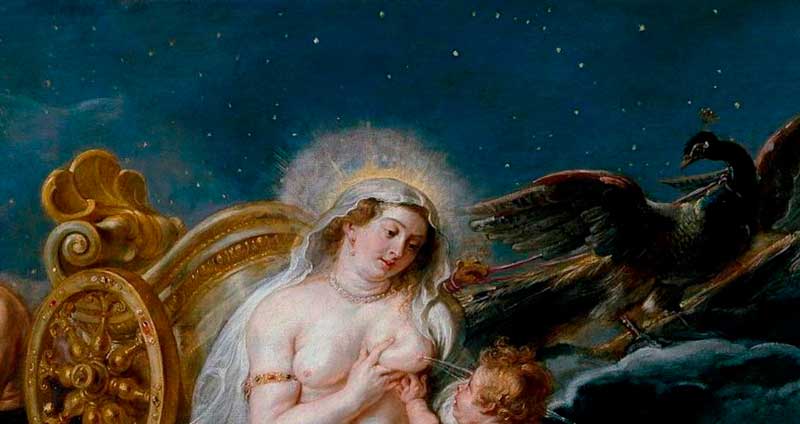
The Birth of the Milky Way, painted by Peter Paul Rubens, is based on the Greco-Roman mythical story about the origin of the Milky Way. According to the story, Alcmene, the wife of Amphitryon, was a beautiful woman with her face and dark eyes as charming as Aphrodite’s.Although Zeus was married to Hera, he had the habit of having affairs with several women, even with the mortals.

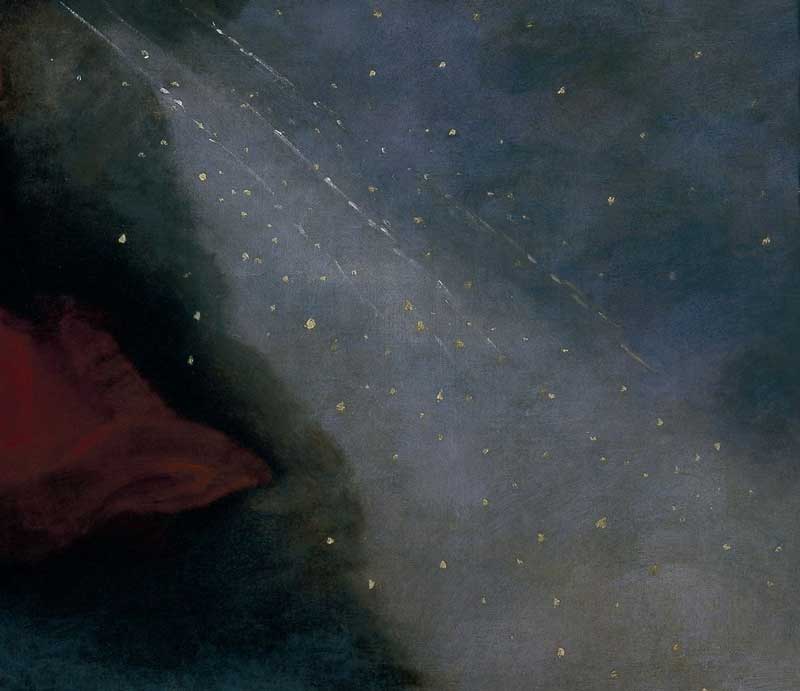
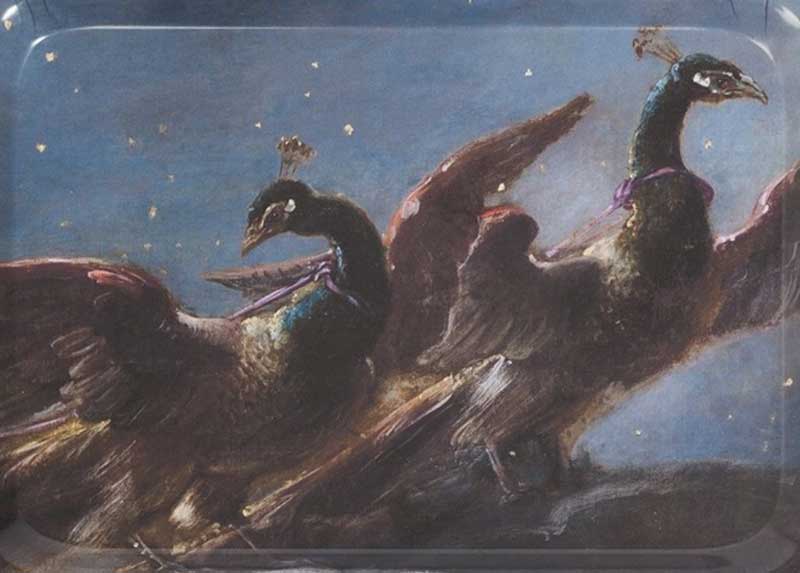
As it happened, he became very much attracted by the alluring beauty of Alcmene and desperately wanted to have her for sex. Finally, he got the opportunity, and while Amphitryon was away with his army, he visited Alcmene disguised as her husband and slept with her, extending one night into three. However, little Heracles, the illegitimate son of Zeus, lacked immortality as he was born of a mortal woman. Therefore, to ensure his son’s immortality, Zeus sneaked the child up to Mount Olympus and placed him on the breast of his wife Hera so that he could suckle to become immortal while she was sleeping next to her chariot pulled by her peacocks. As Hera just happened to be lactating, the baby eagerly latched on greedily and chomped down too hard in his enthusiasm. It awakened Hera, and she brusquely pulled her breast away from him, while the immortal-life giving milk spilled out of her breast and streamed into the sky to form the Milky Way.
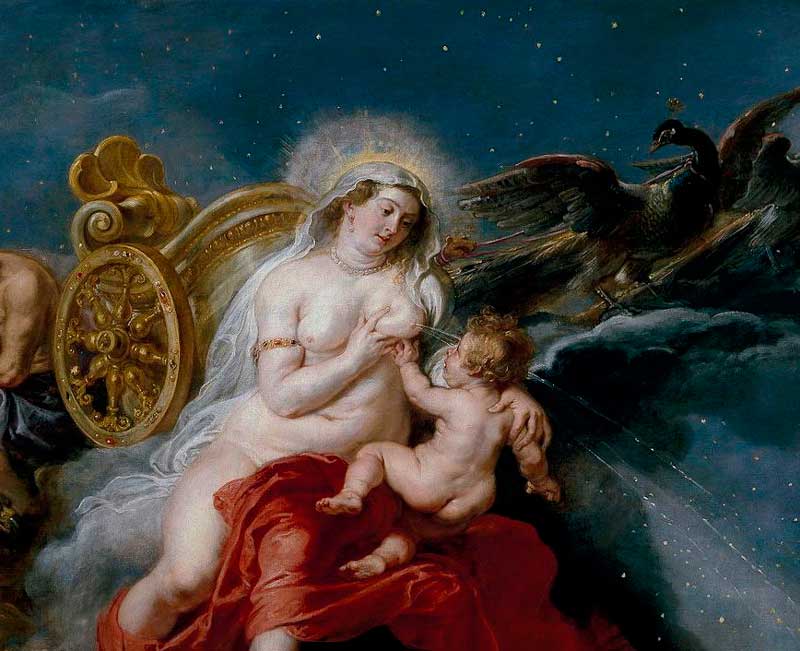
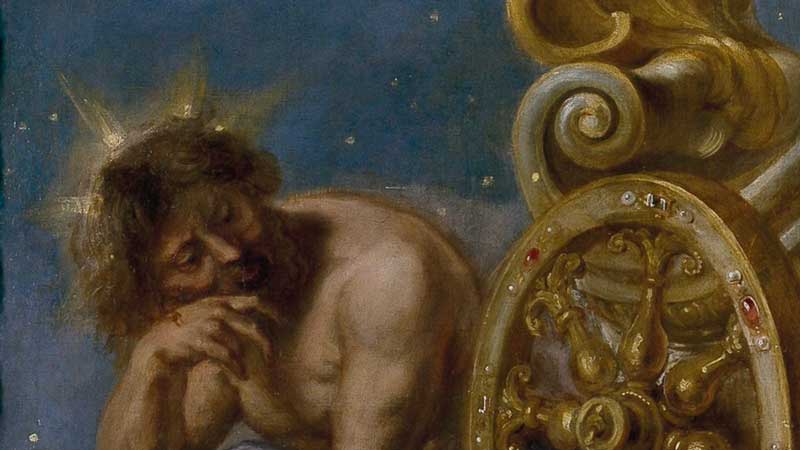
The Birth of the Milky Way, housed in the prestigious Museo Nacional del Prado in Madrid, depicts almost nude Hera spilling her breast milk with the infant Heracles on her lap and Zeus in the background as if hiding behind the chariot of Hera pulled by her peacocks. While Zeus is identifiable only by his eagle and lightning bolts, the almost dark night sky added a greater sense of volume in the painting. It seems that Hera, whose face is modeled on Ruben’s wife, Helena Fourment, is suddenly awakened, and due to her hasty movement, she became exposed as her velvety cover is thrown on her left leg. This abrupt movement of Hera is consistent with the mythological story on which the painting is based.