FREE ASSISTANCE FOR THE INQUISITIVE PEOPLE

















Phryne, the daughter of Epicles from Thespiae in Boeotia, was born around 371 BC, the year Thebes razed Thespiae, not long after the battle of Leuctra and expelled its inhabitants. Phryne spent most of her life in Athens and ultimately became one of the most acclaimed and desired Athenian courtesans in ancient Greece, known for her unearthly beauty, astute intelligence, and acerbic wit. Born as Mnesarete, meaning commemorating virtue, she was called Phryne, which means toad, for her yellowish complexion. Basically, for her stunning looks, she became a model, posing for various artists, including Praxiteles, the first artist to sculpt the nude female form in a life-size statue, who was one of her most frequent clients.

However, despite being a famous courtesan and the wealthiest self-made woman in Athens, her name survived for thousands of years for her dramatic trial, which she won by the daring move of the defending orator Hypereides when he tore off her dress to expose her beautiful body before the judges. The win in the battle of law made her the ultimate symbol of freedom against sexism, as well as repression disguised as piety.
Although she was only a courtesan, she accumulated huge wealth and even proposed to finance the reconstruction of the walls of Thebes, destroyed by Alexander the Great in 336 BC.

However, her offer was turned down by the local authorities of Thebes, as they were intimidated by the idea that a courtesan and model of doubtful morality would pay for the restoration that a great ruler like Alexander had destroyed, and the walls remained in ruins.
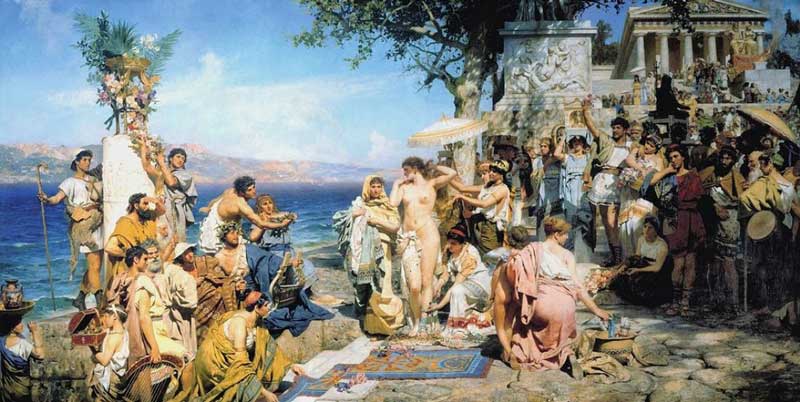
However, despite her divine looks, incredible wealth, power, and prominent lovers, Phryne had to face a trial as she was prosecuted for a capital offense. Although the nature of the alleged charge is not very clear, according to some sources, she was accused of profaning the Eleusinian mysteries, the annual rites performed in the village of Eleusis, stood upon a height at a short distance from Athens, in honour of Demeter and Persephone. It is said that on the solemn assembly of the ancient Greeks to celebrate the Eleusinian festival, and the feast of the Poseidonia, Phryne took off her cloth, ignoring the presence of all, laid her garments aside, and having undone her hair, went to take her bath in the sea.
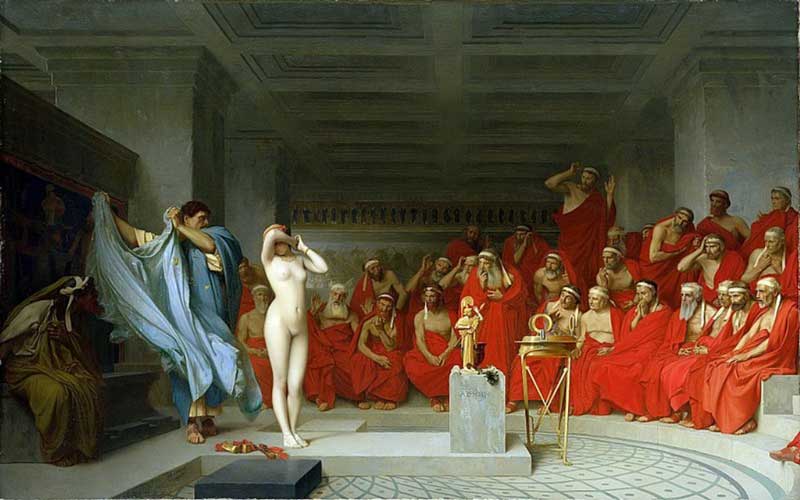
Nevertheless, According to Athenaeus of Naucratis, a Greek rhetorician, and grammarian, Phryne was defended at the trial by the great Athenian orator Hypereides, who was a flamboyant figure, an ardent pursuer of the beautiful, and one of her lovers. There is a great dispute among the scholars about what really happened in the court. However, according to the writings of Athenaeus of Naucratis, when despite the spirited speech of Hypereides it became evident that the judges were about to condemn Phryne, Hypereides in a daring move tore off her dress to expose her beautiful body.

Consequently, as Phryne stood unmoved, exposed to the male audience, with a slightly tilting head and partially shielding her face in a gesture of modesty, Hypereides openly declared that only the god could create such a beauty, and to condemn her would be an act of blasphemy and disrespect the god. The unexpected move left the judges speechless and confused and they did not dare of condemning a prophetess and priestess of Aphrodite. What appeared to be an unfavorable verdict, turned into a glorious victory for Phryne, and she walked out of the court triumphant.
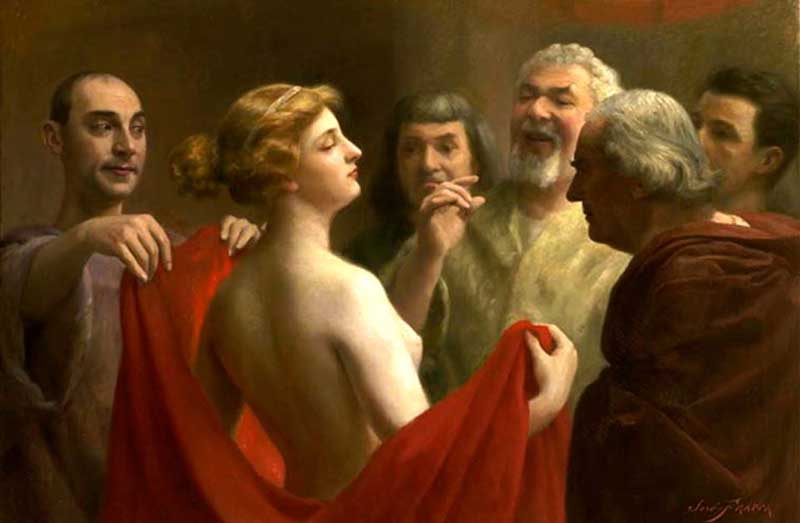
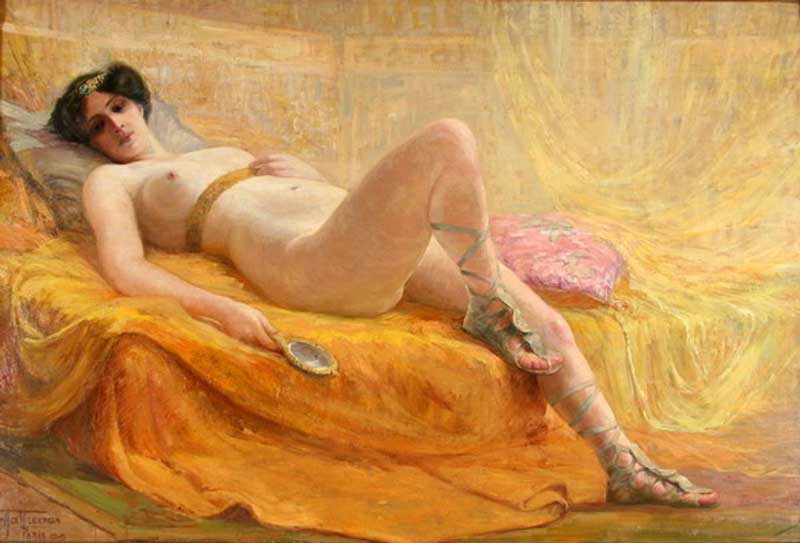
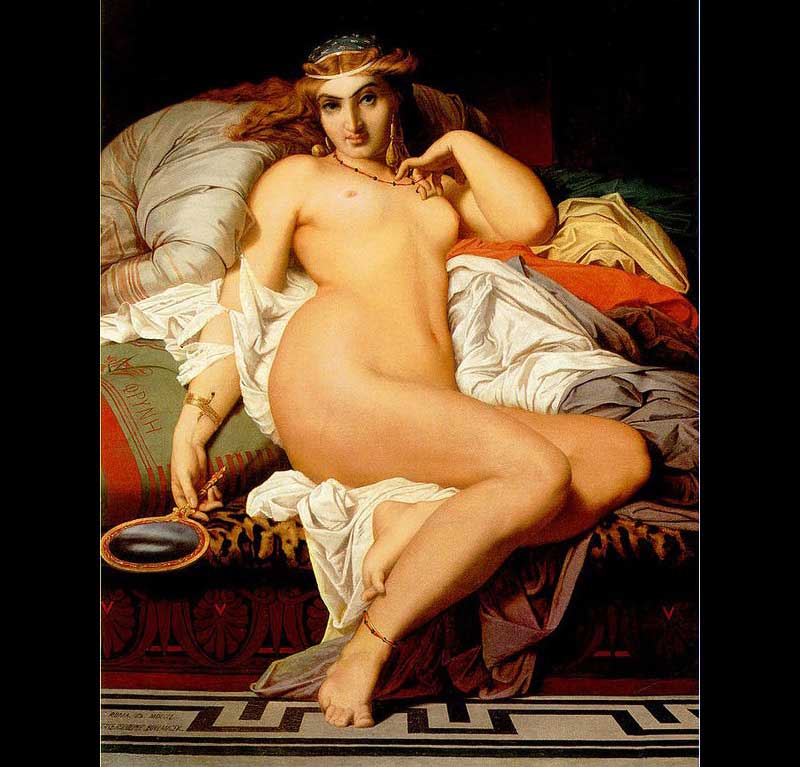
The story of the trial of Phryne inspired many works of art, including the iconic paintings titled Phryne before the Areopagus, by Jean-Léon Gérôme (1861), Phryne at the Poseidonia in Eleusis, by Henryk Siemiradzki (1889), depicting Phryne about to step into the sea in nude, Phryne, baring her breasts before the jury, by Jose Frappa (1904), Phryne, depicted nude in her bed, by Antonio Parreiras (1908), and others. Apart from the painters and sculptors, she also inspired several authors, and her beauty became the subject of many Greek writers. In Deipnosophists, a 3rd century AD Greek work, the Greco-Egyptian author Athenaeus of Naucratis openly worshipped her and described her as the wealthiest self-made woman in all Athens at the time. Much later, French poet Charles Pierre Baudelaire penned two poems on her, and French composer Camille Saint-Saëns wrote an opera on her.