FREE ASSISTANCE FOR THE INQUISITIVE PEOPLE














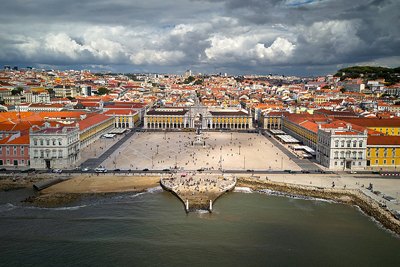
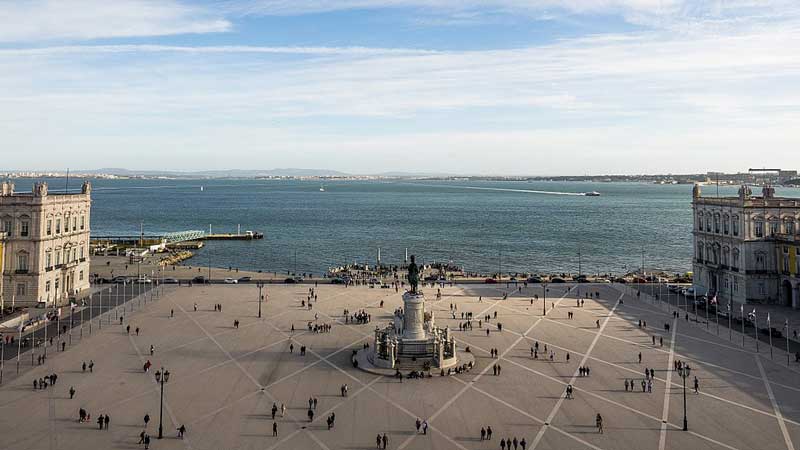
Facing the River Tagus, the longest river in the Iberian Peninsula to the south, the Praça do Comércio is a large, harbour-facing square in the Capital City of Lisbon and is one of the largest in Portugal. However, once it was known as the gateway to Lisbon, the symbolic entrance into the city as the port was used by the merchant ships to offload their passengers and cargo, even the Kings and the Heads of the State would disembark here when visiting Portugal. Praça do Comércio is also locally known as Terreiro do Paço or the Palace Yard as the luxurious Riberia Palace once proudly stood on the site. Unfortunately, many magnificent buildings of the city, including the grand palace and the royal library, housing more than 20,000 classical Portuguese literature books, were destroyed by the great Lisbon earthquake and the consequent tsunami in 1755. It was estimated later that more than 30,000 people lost their lives in Lisbon due to the impact of the catastrophe.
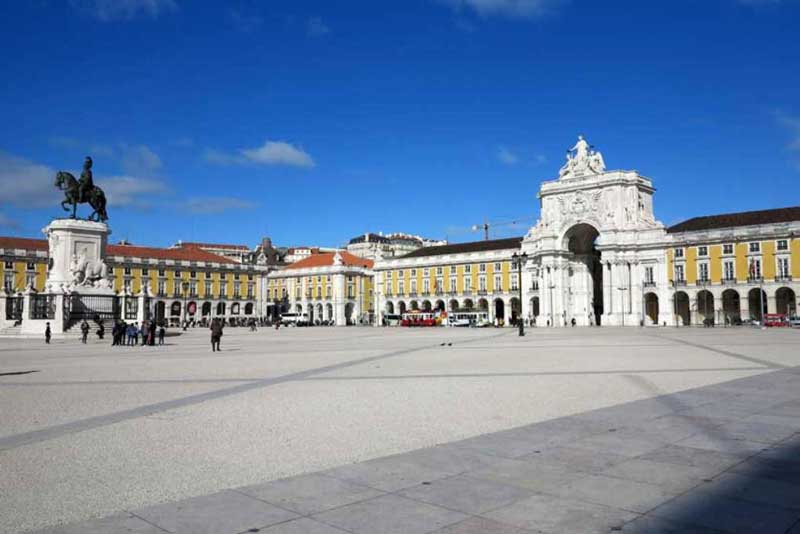
After the devastating blow, the reigning King José I entrusted the responsibility to completely remodel the square to his Chief Minister, Sebastiao Jose de Carvalhoe Melo, also known as the Marquis of Pombal, who coordinated a massive rebuilding effort led by the Portuguese architect Eugenio dos Santos. The new rectangular square was designed in the shape of a huge U, open towards the Tagus River, with its two arms ending in two large towers, a remembrance of the tall tower of the Ribeira Palace, destroyed by the disastrous earthquake and tsunami.

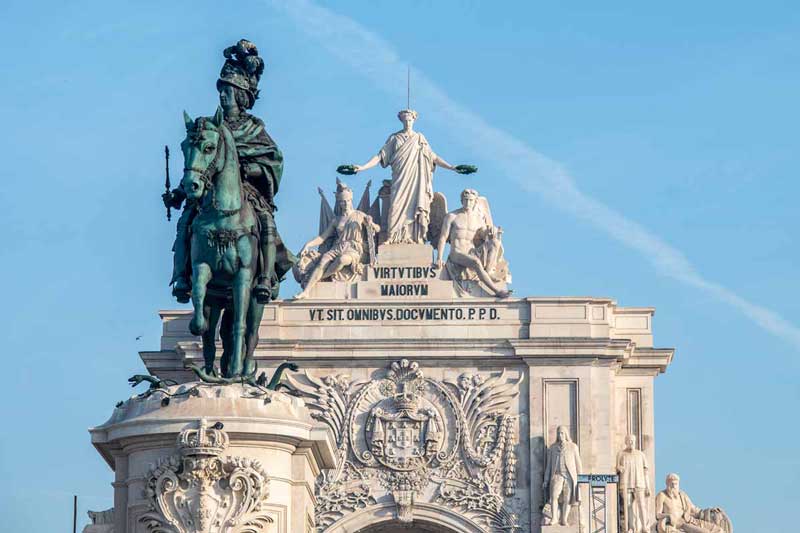
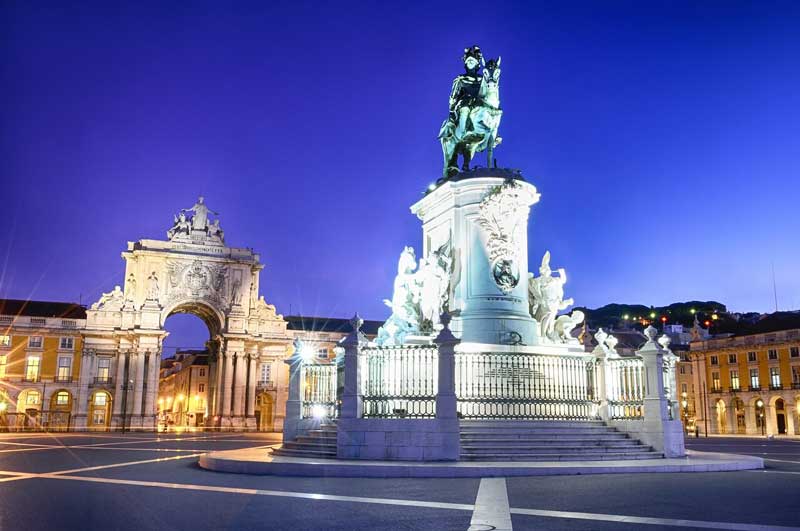
Although he almost executed his plan, the triumphal arch, designed by the Portuguese architect Santos de Carvalho and named Rua Augusta Arch, was completed in 1873. While a group of beautifully carved allegorical figures, created by French sculptor Célestin Anatole Calmels, depicting Glory crowns Valour and Genius with laurel wreaths, stands on the top of the massive arch, the other decorative statues of the arch were created by Portuguese sculptor Vítor Bastos. The statues on the right include General Nuno Alvares Pereira and diplomat and statesman Marquis of Pombal, while the famous explorer Vasco da Gama stands on the left, along with Viriatus, the famous leader of the Lusitanian people, whom the Portuguese consider their ancestor.
Praça do Comércio, one of the highlights of Lisbon, is surrounded on three sides by distinctive yellow buildings, with the south side facing the estuary of the River Tagus. Today, most of those beautiful buildings are occupied by restaurants, equipped with outdoor seating arrangements, making the square an ideal meeting place, especially in the evenings, when the sun sets over the river.

Interestingly, the plaza houses the oldest café in the city, Martinho da Arcada, which was established in 1782.
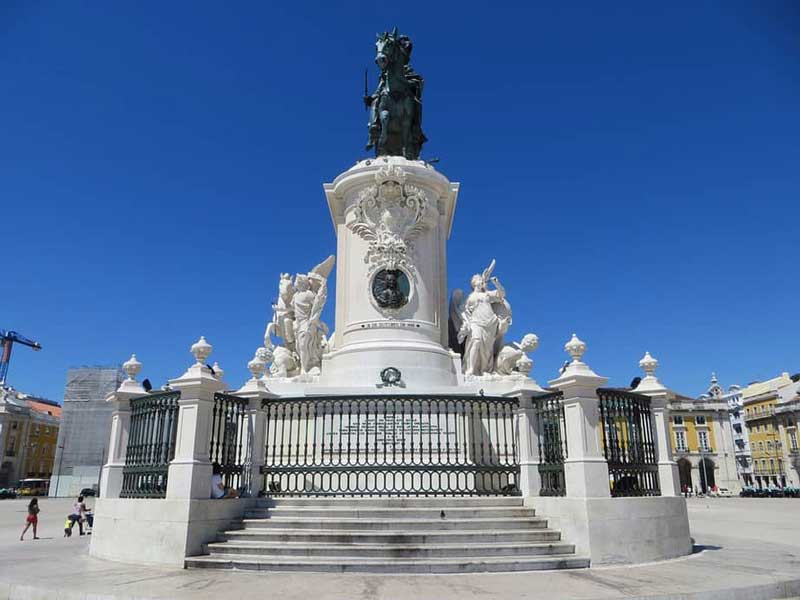
Designed by the reputed Portuguese sculptor Joaquim Machado de Castro, a bronze statue of King José I, astride his majestic horse Gentil, with serpents underfoot, stands in the centre of the grand plaza. The statue was ceremoniously unveiled on 6th June 1775, celebrating the birthday of the king. The celebration continued for three days and included a huge banquet for all the people of the city. There was another statue by the riverside, resembling Pombal, which was subsequently removed when the honoured minister fell into disgrace and was replaced by the Liberals in 1834. The sculptured figures on either side of its pedestal represent Triumph with a horse and Fame with an elephant, signifying the overseas possessions of Portugal.

The low relief on the rear side of the pedestal depicts an allegorical representation of royal generosity to the ruined city with the figure of Commerce opening up a chest full of money for the commoners. At the southern end of the plaza at the water's edge, there is a grand marble staircase, which was probably constructed before the 1755 disaster. Possibly, it was built for the arrival of royal dignitaries, leading straight into the royal palace.
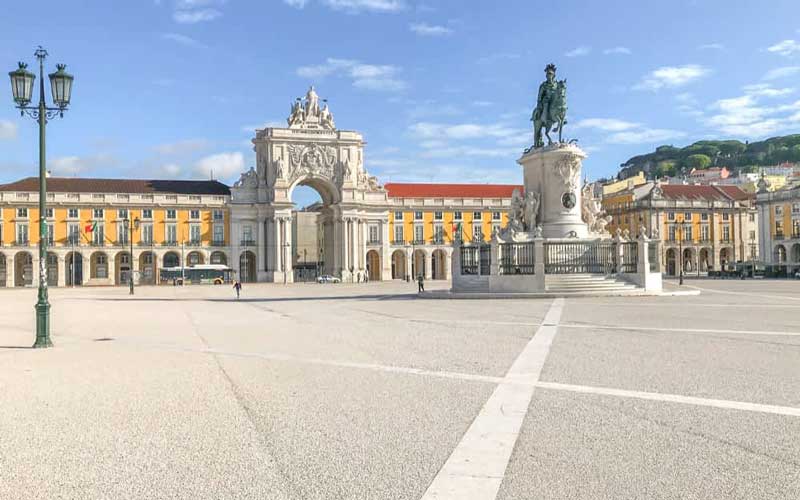
Reckoned as one of the largest open areas in Europe, the square was intentionally named Praça do Comércio, which literally stands for the Square of Commerce, to signify its function in the economy of the City of Lisbon. Apart from serving as a transportation hub, it also acts as a hub for commercial business. The symmetrical buildings painted in yellow house different government offices regulating customs and port activities, while the western tower of the square houses the Museum of Lisbon.
Praça do Comércio is the silent witness of the assassination of King Carlos I, the penultimate King of Portugal, on 1st February 1908. On that day, the incident occurred when the royal carriage carrying Carlos I and his family was passing through the square on their way back from the Palace of Vila Vicosa to the royal palace in Lisbon. At least two shots were fired on the carriage from the crowd, killing the king on the spot, while his heir Luís Filipe, Prince of Royal of Portugal, was fatally wounded, and Prince Manuel was hit in the arm. Nevertheless, the assassins, Alfredo Luís da Costa and Manuel Buica, later identified as members of the Republican Party, were instantly shot by the police on the spot. However, two years later, the revolution initiated by the Republican Party overthrew the monarchial system, leading to the transformation of Portugal into a republic.
Praça do Comércio also has a special spot of attraction for the visitors. There is a viewing platform at the top of the Rua Augusta Arch at a height of 98 feet (30 m), offering an impressive panoramic view of the entire area, including the estuary of the River Tagus. In addition, various events and musical concerts are often arranged on weekdays for entertaining the public visiting the Square, organized by different commercial concerns or musical bands or simply by street artists.