FREE ASSISTANCE FOR THE INQUISITIVE PEOPLE















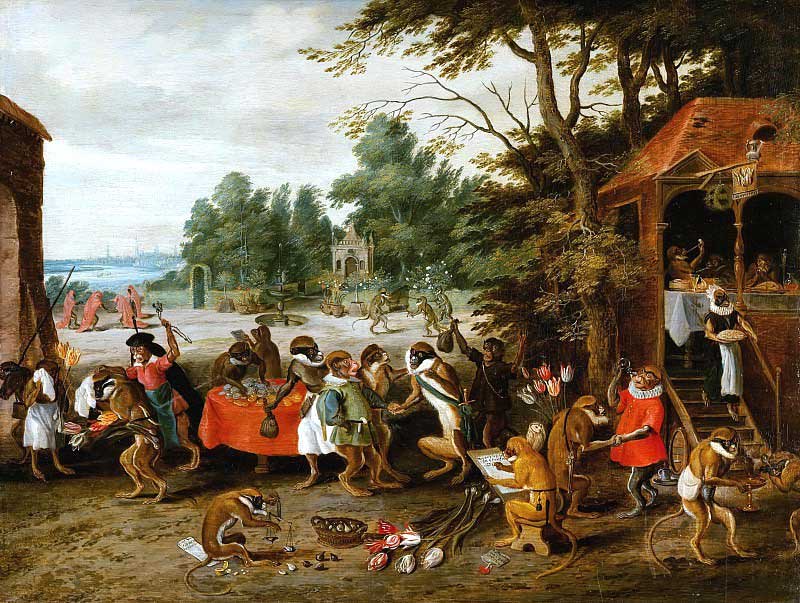
Displayed in Frans Hals Museum, Haarlem, Netherlands, Allegory of Tulip Mania (1640), a famous 17th-century painting by Jan Brueghel the Younger, the eminent Flemish Baroque painter, satirizes the Dutch economic bubble during the Dutch Golden Age, when the contract prices of some bulbs, especially the new varieties from the Ottoman Empire that became status symbols, soared the extraordinarily absurd high levels before dramatically collapsing in February 1637, generally considered as the first recorded speculative bubble or asset bubble in history. The unusual painting, ridiculing the Tulipmania by depicting the greedy and foolish speculators as monkeys dressed in human attire, engaged in buying and selling, often with moneybags or exchanging contracts for bulbs, symbolises human greed and irrationality and the speculative frenzy that led to financial ruin. However, while the monkeys in the painting represent human greed and irrationality, and the tulips, the central commodity in this economic satire signify the fleeting nature of wealth and trends, the Peasants outside is a subtle reminder of the grounded reality from which the speculative traders have detached themselves.
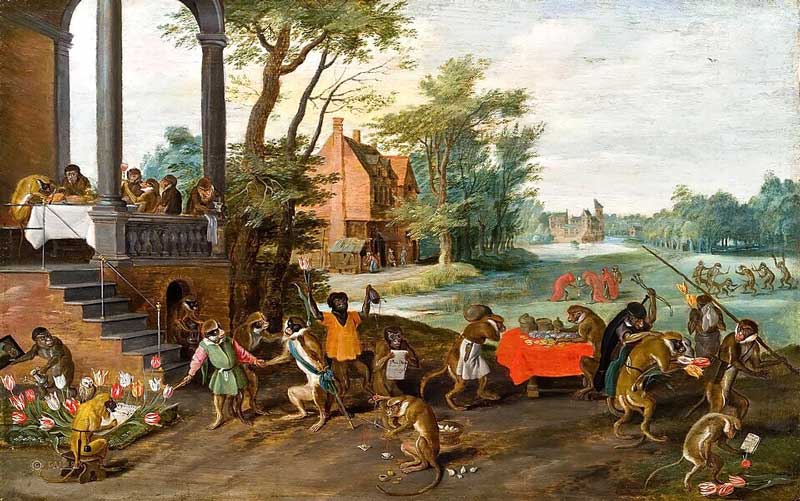
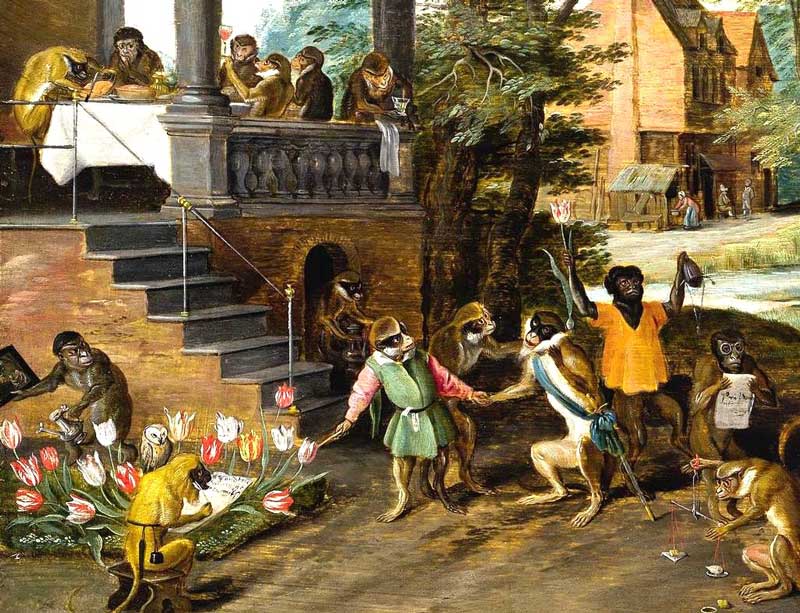
The scene of the painting, seemingly a tavern or a similar public space, reflects how the bulb contracts were traded like commodities, sometimes without anyone ever seeing the actual flower, and is filled with details like moneybags, contracts, and various tulip varieties, even including rare broken tulips, all emphasizing the absurdity of the market. The painting depicts monkeys exchanging contracts in front of an inn with an open front to the right, and the artist took care to meticulously paint each stage of the strange trade, which included weighing the bulbs, counting of money, conclusion of a sale with a handshake, and a business dinner taking place in an inn. While one monkey, equipped with a sword, indicating his high status, successfully concludes a deal, another disgruntled buyer shows his fists and brandishes a purse full of money, and another monkey, with an owl on his shoulder, is reading through a sales contract, signifying stupidity, because the nocturnal creature is blind by day.
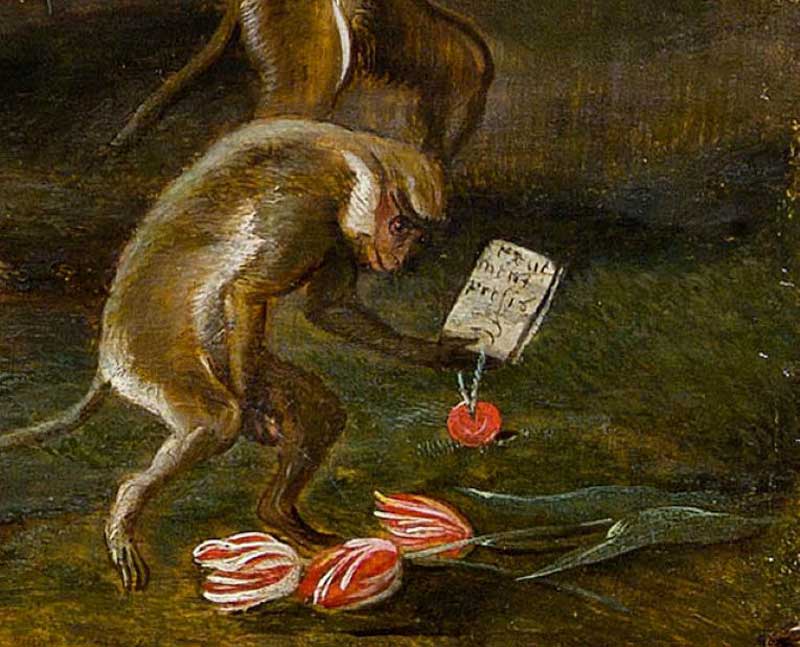
Nevertheless, the painting also displays the consequences of the crash as a speculator who has not paid his debts is hauled off in the presence of a crying monkey. The right side of the canvas shows a monkey urinating on some tulips as his purchase deed has become worthless, and behind him, a speculator has been brought before the judge, because he failed to pay back his dues, while another monkey is sitting in the dock crying about losing his money. In the middle of the background, a disappointed buyer has begun a fight and to the right, another speculator is being carried to his grave.
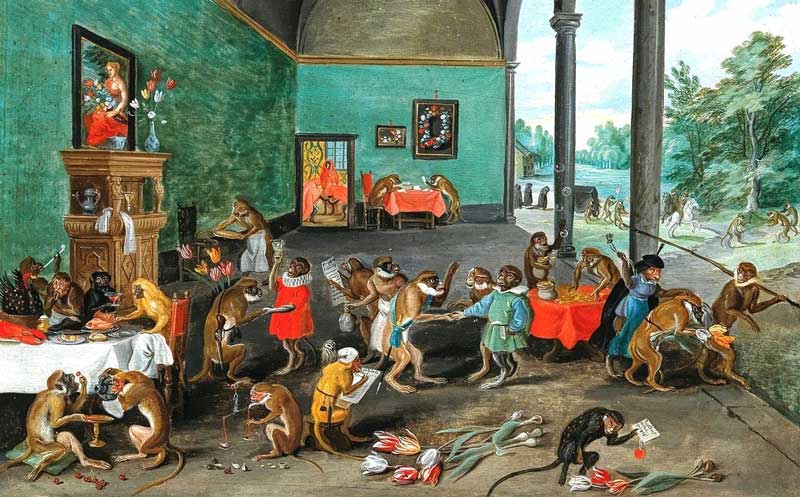
Painted by Jan Brueghel the Younger, Allegory of Tulipmania, also known as Satire of Tulip Mania or Persiflage Auf Die Tulpomanie, is a famous visual commentary on the first major financial bubble in recorded history, in which many speculators were financially ruined. Interestingly, the original Allegory of Tulipomania, created by the artist, is a small oil on wood panel, measuring approximately 30 x 47.5 cm, while prints and several reproductions come in many sizes, like 18x24 inches or larger for framing found in private collections, with the most well-known version currently held in the Frans Hals Museum in Haarlem, Netherlands.