FREE ASSISTANCE FOR THE INQUISITIVE PEOPLE


















Spanning 4,200 square miles (10,878 square km) over a mountainous terrain on the eastern flank of The Rocky Mountains, and containing several notable geological features, like glaciers, ice fields, waterfalls, lakes, limestone caves, canyons, as well as diverse animal and plant populations, Jasper National Park, in western Alberta, Canada, is the largest national park in The Canadian Rockies. Initially established as Jasper Forest Park in 1907, to encompass 5019 square miles (13,000 square km) of terrain along the transcontinental railway through the Athabasca Valley, it was renamed as a national park in 1930, and finally, declared a UNESCO World Heritage Site in 1984. Amazingly, the name of the national park originates from Jasper’s House, the fur trading centre of a North West Company, built by Jasper Haws, a Maryland born fur trader, on Brûlé Lake in 1813. Although the Jasper House was destroyed in 1910, both the national park, and the Jasper town, located within the Park, was named after it.

Located on the border of Alberta and British Columbia, the park contains the glaciers of the Columbia Icefield, which feeds rivers that flow to the Pacific and Arctic oceans and to Hudson Bay. Equipped with SkyTram, Canada’s longest and highest cable car, the Columbia Icefield Icewalk, a glass-floored walkway suspended from a cliff 918 feet above the valley, along with several spectacular day hikes, Jasper National Park, reckoned as the 12th largest national park in Canada, is also among the most-visited national parks in The Canadian Rockies, visited by more than two million visitors every year.
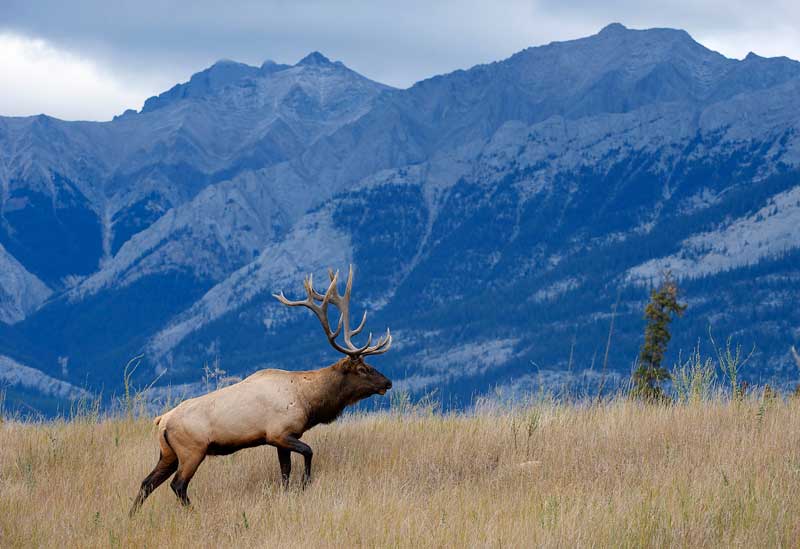
Jasper National Park is home to 1300 species of plants, 53 species of mammals, and 277 species of birds. While the evergreen Picea engelmannii, crowberry and grouseberry, subalpine fir and heather grow in the snow-covered subalpine region, the alpine region of the park is characterised by sturdy species such as dwarf birch and eightpetal mountain-avens, an Arctic-alpine flowering plant, the floral symbols of innocence and longevity. The park is home to a diverse array of wildlife, which include big mammals like grizzly and black bears, wolves and coyotes, elk, moose, deer and caribou, bighorn sheep and mountain goats. Elk are the park's most common ungulate, while Moose are a shy species, and are seen less frequently than elk. Mountain goats are known for their ability to navigate steep, rocky terrain, and Bighorn sheep, the iconic animals, are often seen in mountainous areas, inhabiting the steep, rocky heights above the Athabasca Valley. However, wolves and coyotes are wary of humans and are difficult to spot. Apart from the big mammals, the park is also home to several small mammals, which apart from the small carnivorous animals like Cougars, Wolverines, Lynx and Pine Martens, also include other small mammals like Beavers, Porcupines and Snowshoe Hares. In addition to the above, Jasper National Park is home to a variety of bird species, including bald eagles, owls and songbirds, a few reptiles and amphibian species, a wide variety of insects and spiders, several types of fish in the lakes and rivers.
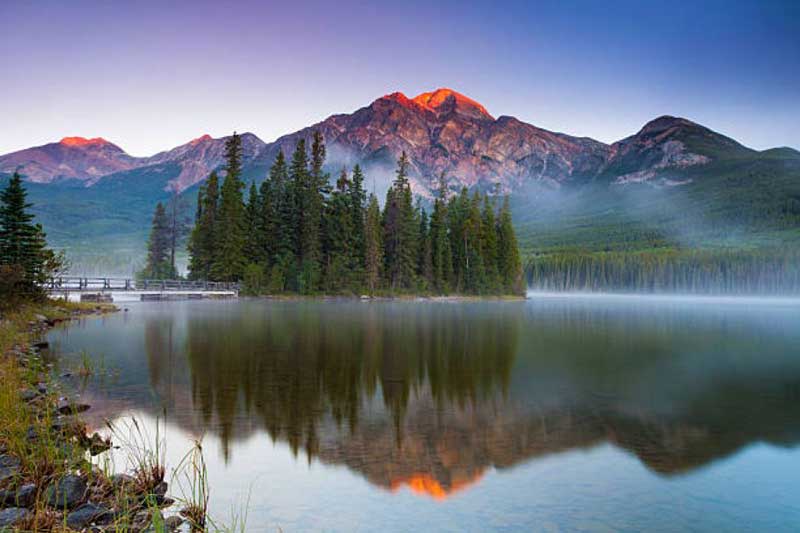
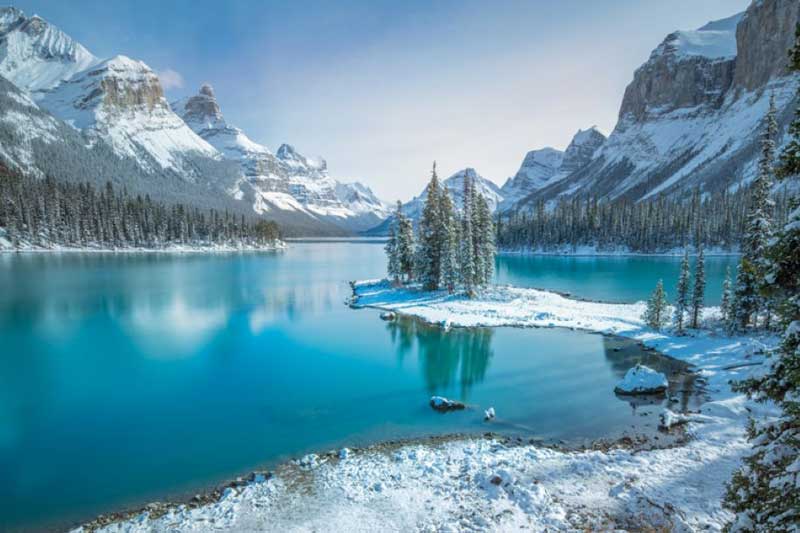
Amazingly, Jasper National Park contains no less than 1,762 lakes, some of which inconspicuously hidden behind the mountains, and only 107 of them have been named. Some of the lakes are brilliant turquoise and have been photographed by millions, while some are remote surprises, tucked behind the next mountain. Famous lakes of the park include Pyramid Lake, Maligne Lake, Abraham Lake, Medicine Lake, Horseshoe Lake, Honeymoon Lake, Curator Lake, and Patricia Lake. Among the famous, the Maligne Lake, stretching for more than 13.67 miles (22 km), and surrounded by towering mountains, glacier-fed streams and dense forests, is the longest natural lake in the Canadian Rockies. A cruise for around 90 minutes along the lake offers the visitors to see some of the most picturesque spots of the lake, which include the Spirit Island, a small, tree-shaded island, situated at the junction of three glaciers of the lake, where the visitors can disembark, explore the island, and enjoy the breathtaking views of the surrounding mountains and glaciers. The Medicine Lake, located along Maligne Lake Drive, presents an incredible scene in the autumn, when the lake disappears as the water sinks into sinkholes, creating a beautiful pattern of water and sand. The kidney-shaped Pyramid Lake, located at the foot of the Pyramid Mountain, is a natural landmark, which has benches, picnic tables and a small open wooden shelter, connected to several hiking trails to other tourist sites such as the Pyramid Mountain, Patricia Lake and Cabin Lake. Located near the Sunwapta Falls and the Columbia Icefields, Honeymoon Lake is a serene and scenic lake, offering a peaceful and romantic destination for visitors. Abraham Lake, famous for its ice bubbles formed by methane gas, can also be visited by a helicopter tour, flying over 6 glaciers followed by a landing at Landslide Lake.
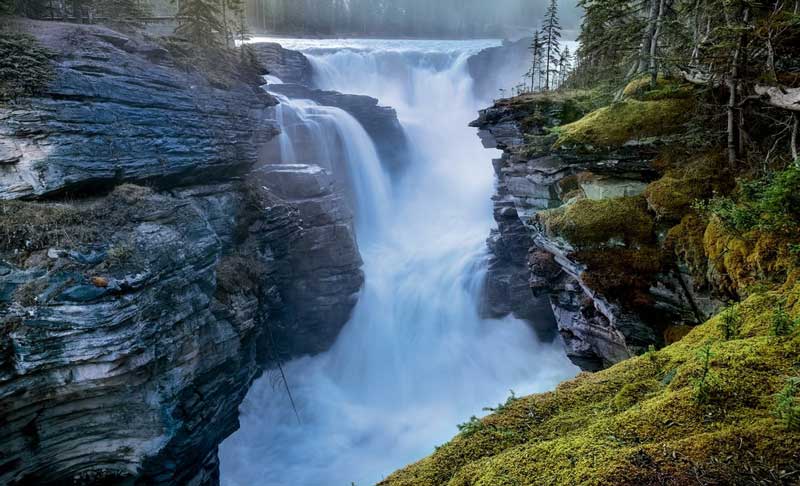
Jasper National Park has several wonderful cascading waterfalls, some of which are only a short walk from a parking lot. However, the beauty of the Athabasca Falls, magnified by the backdrop of Mount Kerkeslin, and rushing vigorously through steep canyon walls towards the wider section of the Athabasca River, is perhaps the best. The others, located near the parking lot and accessible for the old and the young alike, include the Tangle Falls, which freezes in winter and becomes a popular ice climbing spot, Stanley Falls that plunges into a magical pool before making its way further down the canyon, Sunwapta Falls, Geraldine Falls, and the great Maligne Canyon Waterfalls, leaping and bounding over ledges and plunging around 164 feet (50 m) down in some unknown spots.
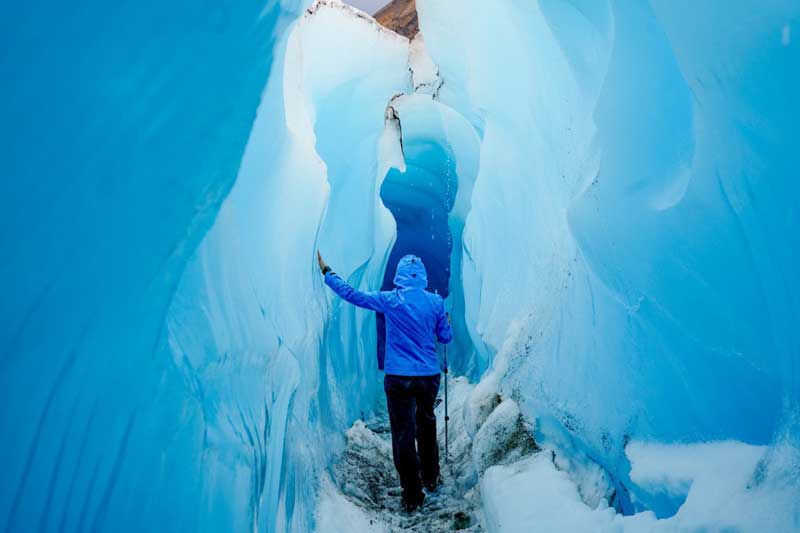
Jasper National Park is also home to The Columbia Icefield, the largest icefield in the Canadian Rockies, spanning approximately 325 square km (125 sq miles), and also its major glacier, known as one of its six principal toes, the Athabasca Glacier, popular for its accessibility, with the leading edge of the glacier within easy walking distance. To take a closer view of the icefield and the glacier, visitors can take a ride on a massive Ice Explorer vehicle to the Athabasca Glacier. A glass-floored walkway suspended from a cliff offers stunning views of the icefield and surrounding landscape. Unfortunately, like many other glaciers of the world, the Athabasca Glacier is also experiencing significant recession due to climate change.
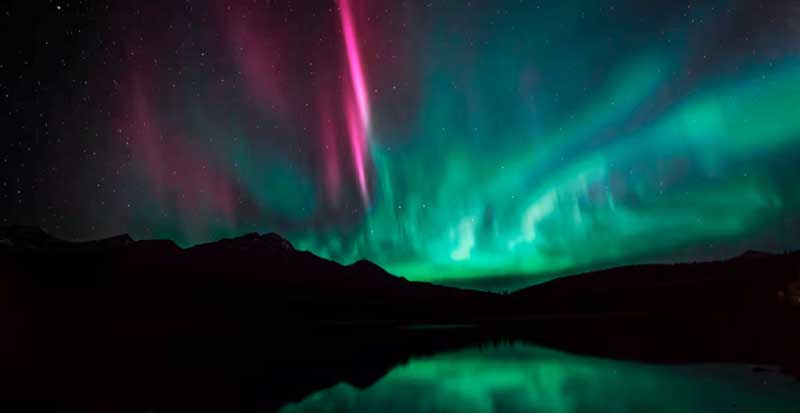
Jasper National Park is the second-largest dark sky preserve in the world, and there is a continuous effort to reduce light pollution in the protected area. It is famous for its dark skies and each year the park hosts the dark sky festival in October. Heading out to the lakes of the park at night is one of the best things to do in Jasper. While the Dark Sky Festival is an annual event, one can often witness the magical Aurora Borealis from the park during September through mid-May, when the crisp mountain air makes the sky crystal clear.