FREE ASSISTANCE FOR THE INQUISITIVE PEOPLE











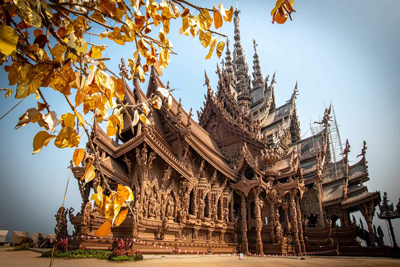
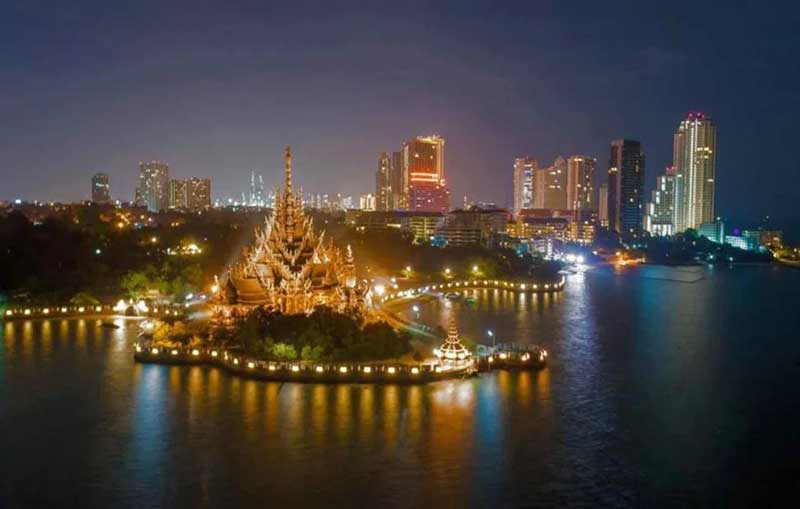
Standing majestically right on the shoreline, directly overlooking the Gulf of Thailand, the Sanctuary of Truth, an awe-inspiring wooden sanctuary, as well as a philosophical museum, is regarded as one of the most famous and culturally significant landmarks of Pattaya, a vibrant, bustling coastal city in Thailand. Built entirely of durable hardwoods like Teak, Mai Takien, Mai Deang and others, and joined together by a series of slots and wooden pins, without the use of a single metal nail, it is the largest wooden structure in Thailand, completely hand-carved with elaborate motifs from the Buddhist and Hindu mythology. Construction of the massive, handcrafted wooden castle-like structure, as well as a philosophical museum, designed by Lek Viriyaphan, a Thai businessman, began in 1981 and is still in process, though visitors are permitted inside with hard hats.
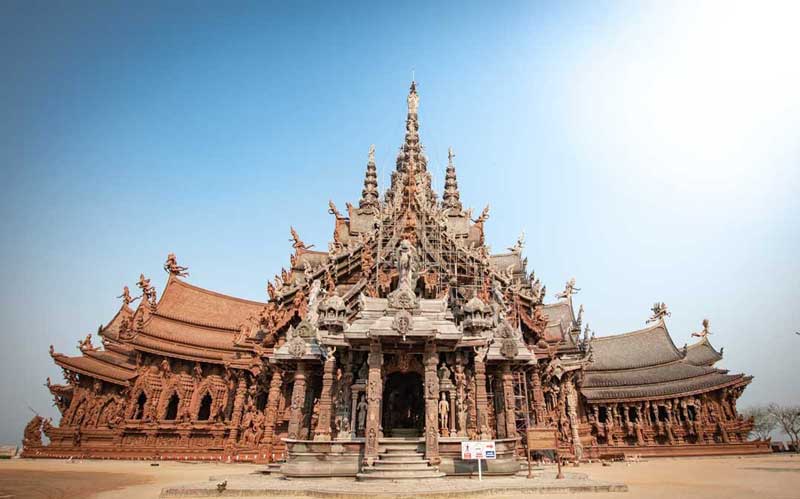
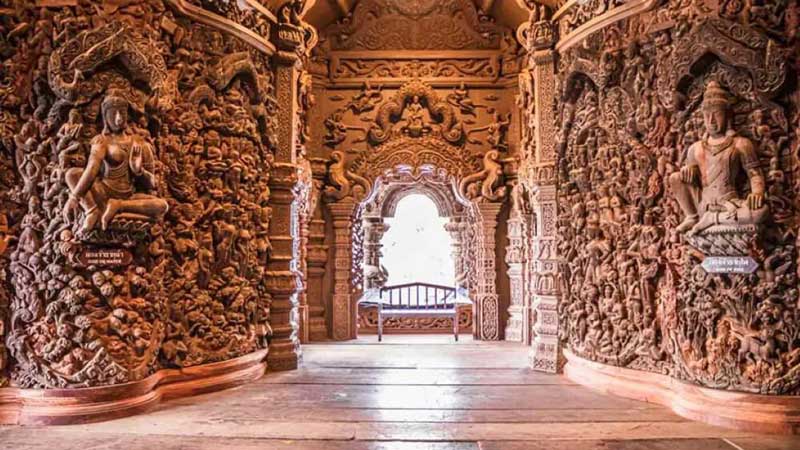
Overlooking the azure blue Gulf of Thailand, the massive structure is a hybrid of a temple and a castle, themed on the Ayutthaya Kingdom and a combination of Hindu and Buddhist beliefs. With the tallest spire reaching 344 feet (105 m) high up in the sky, its roof features four distinct spires pointing in the cardinal directions, crowned by a celestial sculpture of Brahma riding a swan, representing the root of life. Constructed from highly durable hardwoods, the layout of the sanctuary is a tribute to human wisdom, eastern philosophies, and the cycle of life. Every inch of the majestic, castle-like wooden temple, seemingly floating above the sea at the Ratchavete Cape beachfront, is decorated with intricate carvings, showcasing stories from Thai folklore, most of which are rooted in Buddhism and Hinduism, and at the same time, aiming to portray the idea that all religions are basically different paths to reach one ultimate truth, the universal goal of achieving eternal peace.
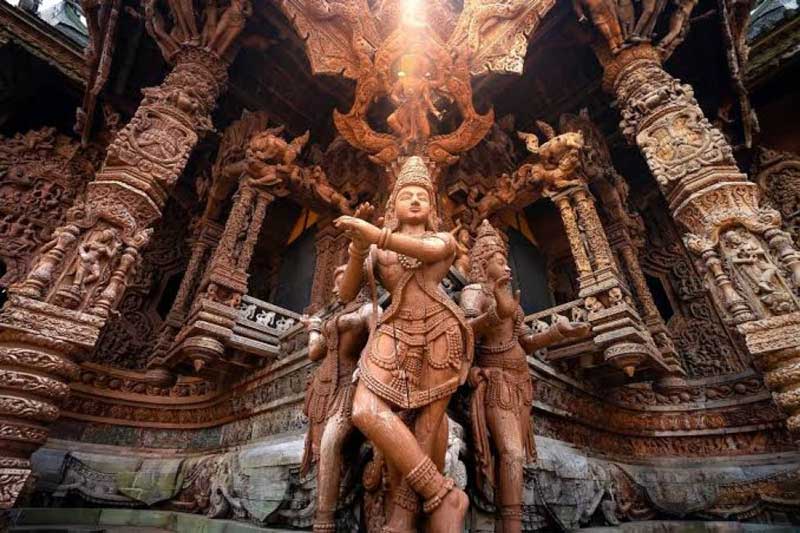
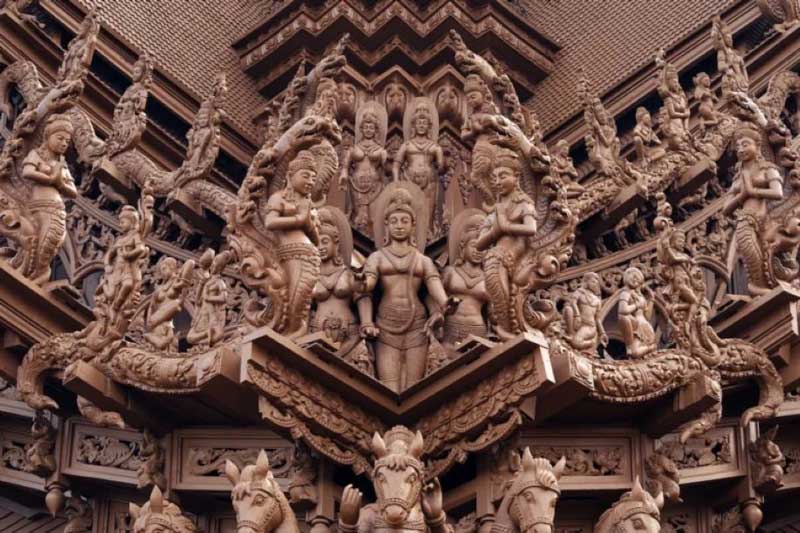
Covering a huge area of around 22,766 feet (2,115 m), its indoor space is divided into four main halls, the east, west, north and south halls, each exploring profound themes, devoted to different eastern philosophical cornerstones, cultural origin, and the four classical elements. The East Hall is dedicated to the family, the principles of morality and human generations, exhibiting intricately carved wooden scenes depicting a mother, father, love, mercy, and the lineage of life passed from generation to generation, while the West Hall signifies the philosophical and spiritual ideals about the four basic elements, namely earth, water, wind, fire that make up the human body, and houses the striking sculptures of the Hindu Trinity, Brahma, Vishnu and Shiva. The North Hall represents the heavens, the creator of the universe, and the wisdom of emancipation, and features Buddhist sculptures of Guanyin and themes of spiritual enlightenment. Finally, the South Hall focusses on the Earth, the sun and the other planets, humanity, and is decorated with celestial themes, representing how the sun, moon, and planets influence the environment and human existence.
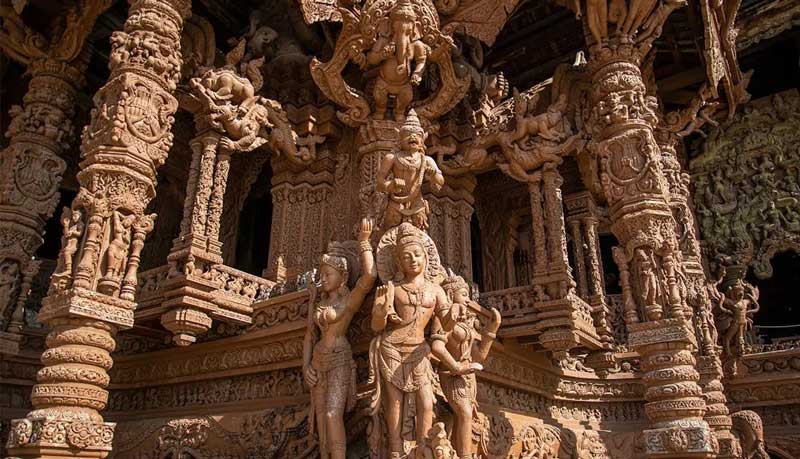
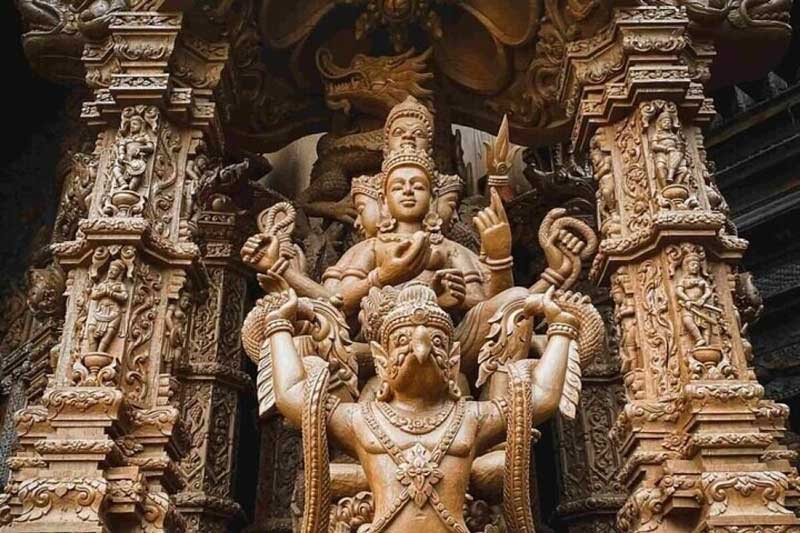
Seemingly floating above the sea at the Ratchavete Cape beachfront, the impressive structure of the Sanctuary of Truth stands as a symbol of Thailand's rich cultural heritage and outstanding craftsmanship that brilliantly decorated every inch of the huge sanctuary with detailed wooden carvings, depicting various deities and mythical creatures, as well as stories from Thai folklore, most of which are linked to Buddhism and Hinduism, displayed with the aim to express the single idea that all the religions in the world are different paths, leading to the same goal of achieving eternal peace. The castle-like colossal, and breathtakingly stunning wooden structure of the sanctuary, locally known as Prasat Sut Ja-Tum, is not just an architectural marvel but also a place for spiritual reflection, inviting visitors to explore the teachings of Buddhism and Hinduism.