FREE ASSISTANCE FOR THE INQUISITIVE PEOPLE











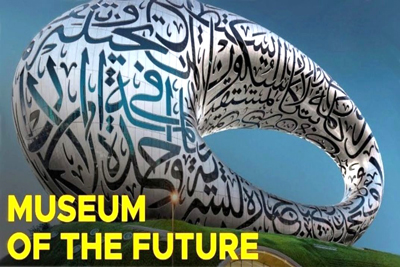
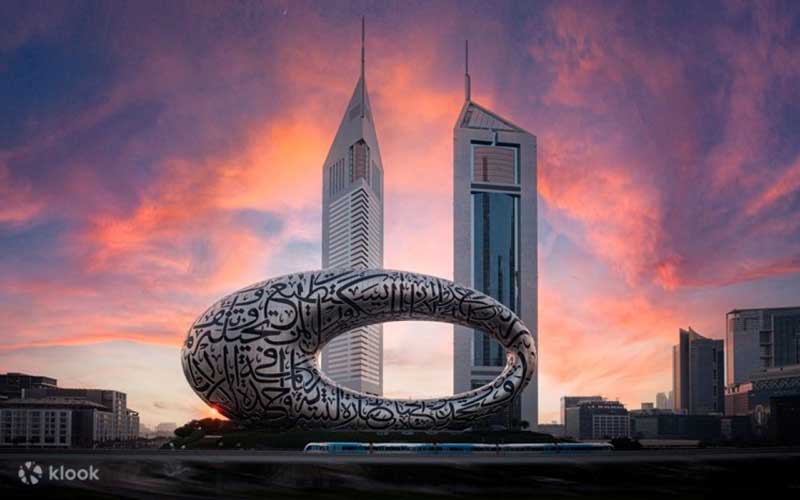
Located in the Financial District of Dubai, and housed in a torus-shaped or a 3Dshaped building, looking like a doughnut or ring, generated by revolving a circle around an axis, the Museum of Future, with windows in the form of a poem in Arabic about the future, is dedicated to exploring the future of science, technology, and innovation. With the goal of being the first one to look into the future, rather than the past, the museum officially opened its doors to be an incubator for ideas and innovation on the evening of 22 February 2022, by His Highness Sheikh Mohammed bin Rashid Al Maktoum with a light show to mark the occasion, who decorated the windows of the building in the form of a poem in Arabic, about the future.
The museum building, featuring seven floors in total, of which five floors are dedicated to exhibits based on different themes, takes visitors on a fictional journey to the year 2071 that begins from the fifth floor and takes guests down floor by floor. Among the five exhibiting floors, three floors focus on outer space resource development, ecosystems, along with bioengineering, health and wellbeing, while the other four floors showcase near-future technologies that address challenges in areas including the essential items like water, food and health, energy and transportation. Finally, the last floor is dedicated to children under the age of 10 years, offering interactive activities, hands-on play and reward-based challenges to encourage collaboration and creativity, including designing their own avatars.
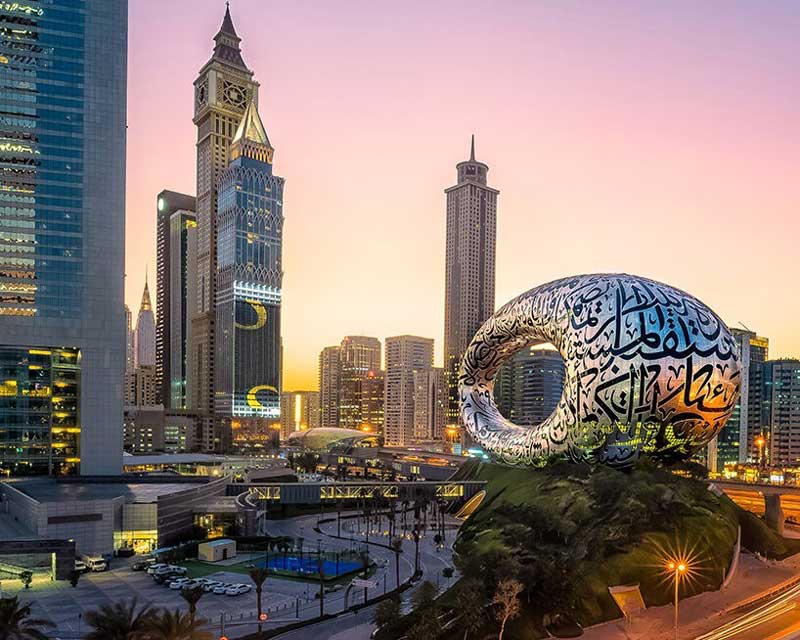
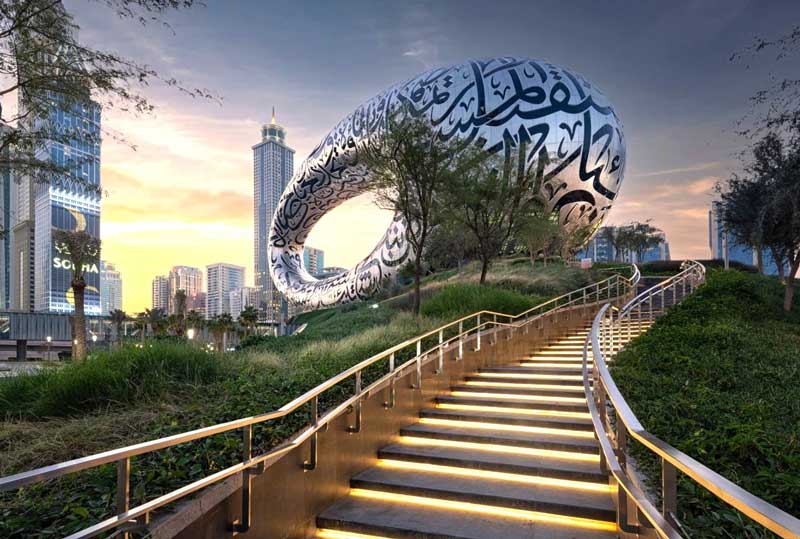
Standing tall at 256 feet (78 m), Museum of Future, the brainchild of His Highness Sheikh Mohammed bin Rashid Al Maktoum, and the award-winning dream project designed by architectural firm Killa Design and engineered by Buro Happold, with its bold shape and striking façade illuminated by more than 45 943 feet (14,000 m) of Arabic calligraphy, is described by many as one of the most unusually beautiful buildings in the world. With a total built-up area of 322917.31sq feet (30,000 sqm), it accommodates exhibition spaces for innovative ideologies, services, and products, as well as theatre spaces, a laboratory, and a research centre. Symbolizing Arab heritage and future progress, as well as a connection between generations of leadership where the visionary ideals and aspirations have driven the success of its city and the future generations to come, it comprises three main parts, which include a green hill, the building, and the void. The green hill, representing the earth with solidity, permanence, and rootedness in place, along with time and history, serves to discreetly elevate the museum above the adjacent metro line and create an elevated park, while the torus-shaped structure of the building represents mankind, with all of its strength, artistry and ability to create in harmony with its surroundings and to push up the limits of modern engineering and construction. Finally, the elliptical void is an expression of ‘the unknown’ that seeks to inspire today’s creators to face humanity’s unwritten future.
Although regarded as one of the most advanced structures ever built, and also an architectural and engineering marvel for its magnitude, eye-catching form and extremely intricate design, the architects and the engineers had to face a lot of challenges that arose from the complexity of the diagonal diagrid and the façade. To overcome the problems, the design process required a combination of advanced materials, and also the latest technologies of digital tools in 3D modelling software, collaborative design, and parametric construction, an innovative method that uses algorithms and computational logic to design and build structures, which were ultimately pivotal to the success of the project.
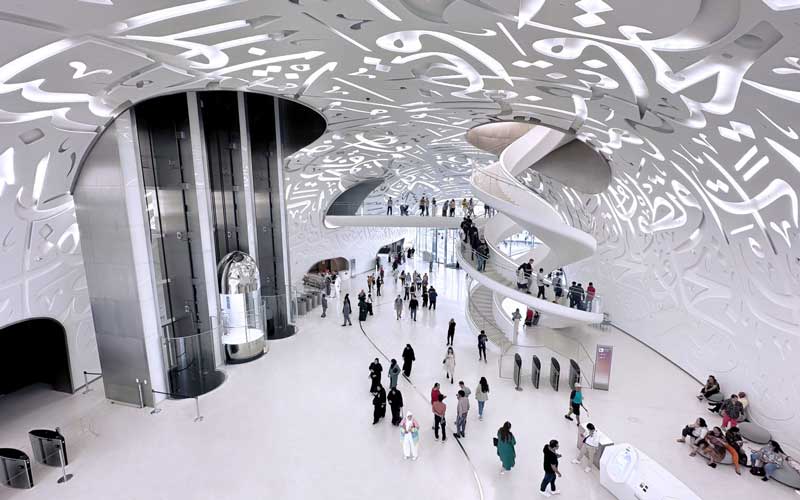
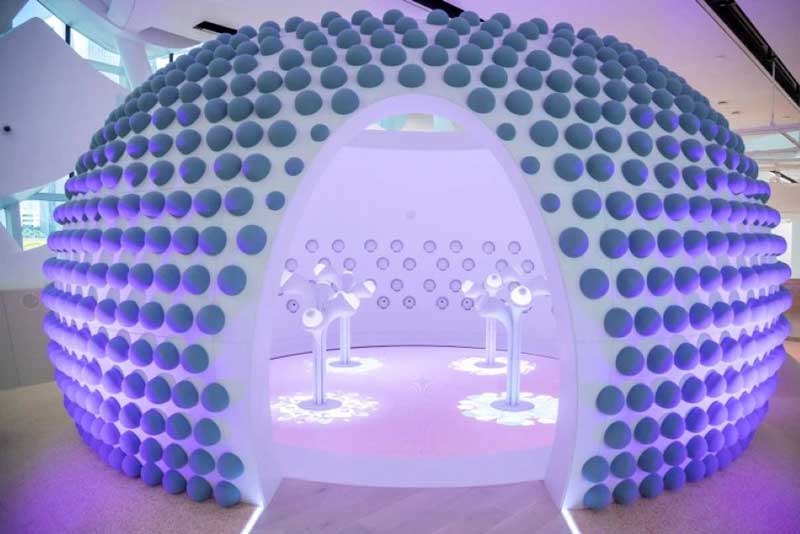
The central spiral stair runs throughout the atrium space, encouraging visitors to descend through the levels of the museum and at the same time experiencing the undulating volume of the space with changing light through the calligraphy fenestration. The visitor journey begins from the fifth floor, housing the Orbital Space Station Hope, focusing on life in space in the year 2071 and exploring how the future of space travel can help humanity address their challenges. The HEAL Institute, located on the fourth floor, is an immersive exhibition focused on ecological restoration, biodiversity, and repairing Earth's ecosystems, highlighting the ecology and biodiversity in the future, while Al Waha or the oasis, on the third floor, offers visitors to experience different therapies to connect with their senses to stay focused and grounded. Tomorrow, Today, situated on the second floor of the museum, highlights cutting-edge technology and innovative concepts, and also acts as an incubator and laboratory for global foresight. Finally, Future Heroes, located on the first floor of Dubai's Museum of the Future, is a fantasy world for children with an immersive 1,200 sq m exhibition designed for children under 10, to foster future-proof skills like curiosity, collaboration, and creativity, with opportunities to play and to learn through interactive activities that encourage critical thinking, courage, confidence, collaboration and creativity.
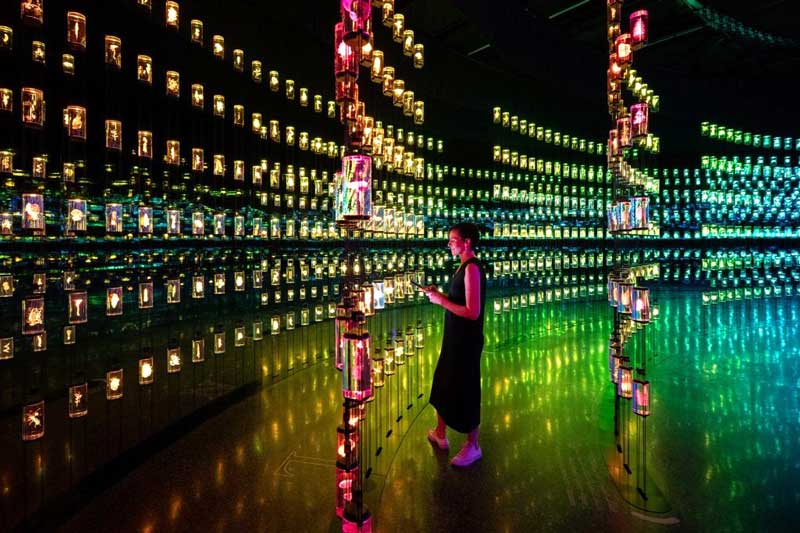
Recognised by National Geographic as one of the world’s most beautiful museums, Future Museum in Dubai attracts thousands of visitors throughout the year. The exterior of the Future Museum is often described as more captivating than the inside, making it a major landmark for photography in Dubai. Nevertheless, visiting the museum is a stunning experience of a lifetime. The exceptions were the gene pool collection, often referred to as the Vault of Life or Library of Life, an immersive, 375-square-meter exhibit located on the fourth floor of the building showcasing more than 2,400 glowing crystal jars, each containing a laser-etched, digital representation of existing or extinct species, designed to encourage contemplation of biodiversity and environmental restoration, lit by changing coloured lights, and the giant wall-to-ceiling light-art displays.