FREE ASSISTANCE FOR THE INQUISITIVE PEOPLE








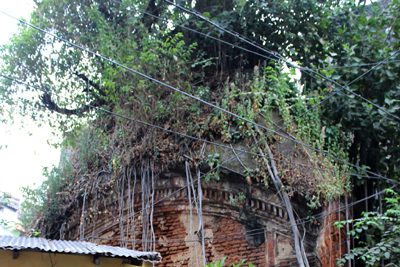
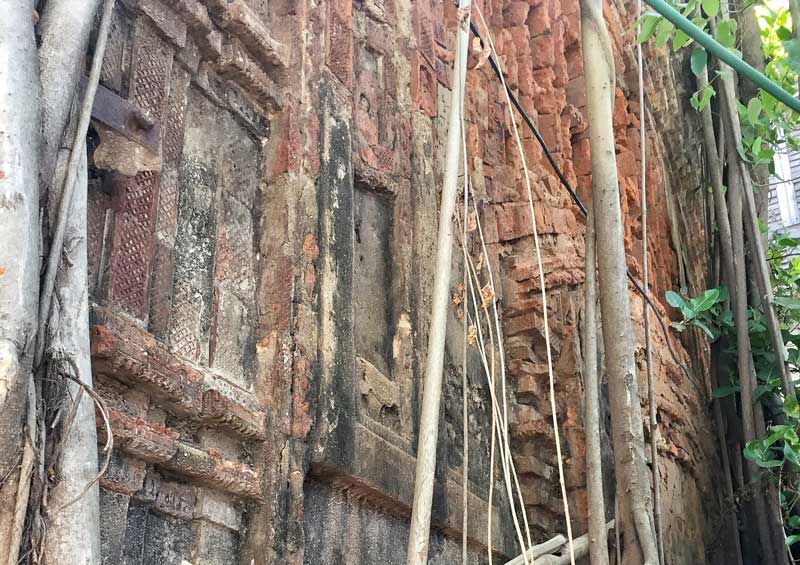
Located at 2/5 Banamali Sarkar Street in Kumartuli area of north Calcutta, Baneshwar Shiva Temple, a rare surviving 18th-century terracotta temple in the city, is sadly counting its days, due to severe structural damage by strong tree roots, and surrounding urban encroachments. According to David Mccutchion, an English-born academic who made a major contribution to the study of Hindu terracotta temples of West Bengal, it is perhaps the oldest temple in Calcutta to have survived more or less in its original form, although regrettably, the works of terracotta on the walls of the temple, as noted by David during the 1960s, is almost lost by this time. Notably, a public toilet was constructed in recent times, adjoining the temple, which damaged the lower part of the terracotta work on the eastern wall, while the north and the west part are covered by the adjoining residential houses.
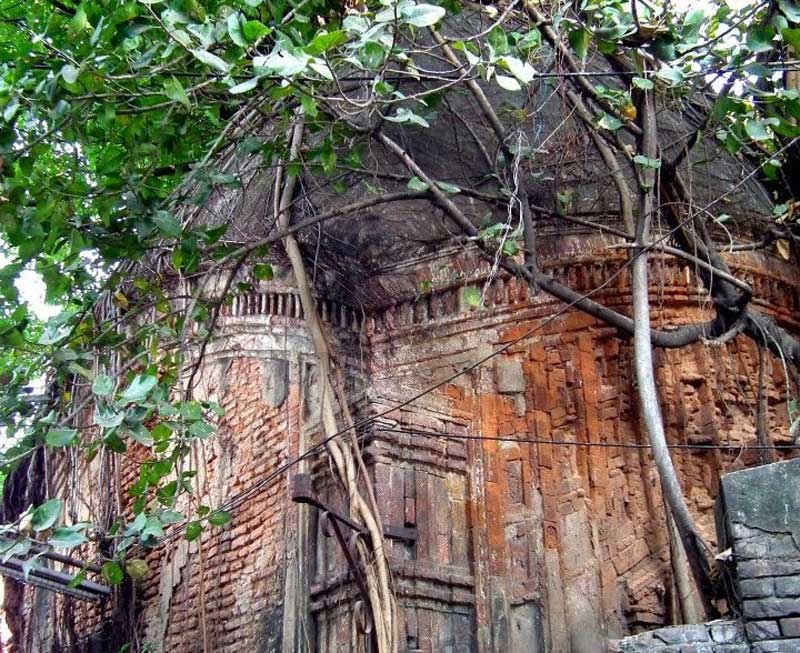
While there are no surviving foundation plaques on the temple walls, local history and lore attribute the foundation of the temple to one Banamali Sarkar, after whom the road was named. It is believed that Banamali Sarkar was a wealthy man of 18th century Calcutta, and his ancestral house was in Bhadreshwar in Hooghly. His father, Atmaram Sarkar, was the first man of the family to shift to Calcutta and settle in the then Kumartuli area of North Calcutta. According to historical accounts, Banamali Sarkar started his life as the Dewan of Commercial Resident in Patna, and was subsequently appointed as the Deputy Trader of the East India Company. Empowered by his administrative connections, he soon earned immense wealth through government assignments and became owner of a huge landed property in Calcutta, Hooghly, as well as in 24 Parganas, including the present Kumartuli area. His palatial residence in Kumartuli was a landmark of British Calcutta.
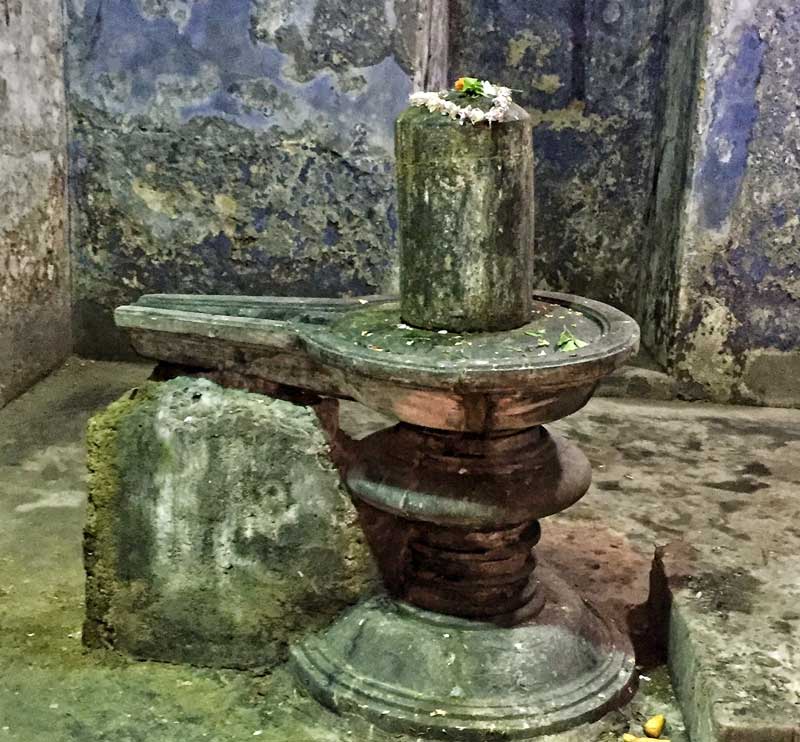
It appears from the dilapidated structure of the Aatchala or eight-roofed Baneshwar Shiva Temple that originally it had three entrances, on its north, east and south side, of which the east entrance was certainly the main one. But subsequently, for unknown reasons, the entrances on the north and the east were blocked by newly constructed walls, leaving the south as the only entrance. Surprisingly, although the three rows of terracotta plaques on the curved cornice are in sadly dilapidated condition, most of the geometric and floral motifs and decorative artworks on the upper eastern wall are still intact. The Garbhagriha or the sanctum Sanctorum of the temple contains the presiding deity, a Linga, representing Lord Shiva, the cosmic symbol of creation, destruction, and ultimate reality. The Linga, around 3 and 1/2 feet tall, and made of Kostipathor or Touchstone, is now being supported by a concrete structure, possibly erected to prevent the stone idol from collapsing.
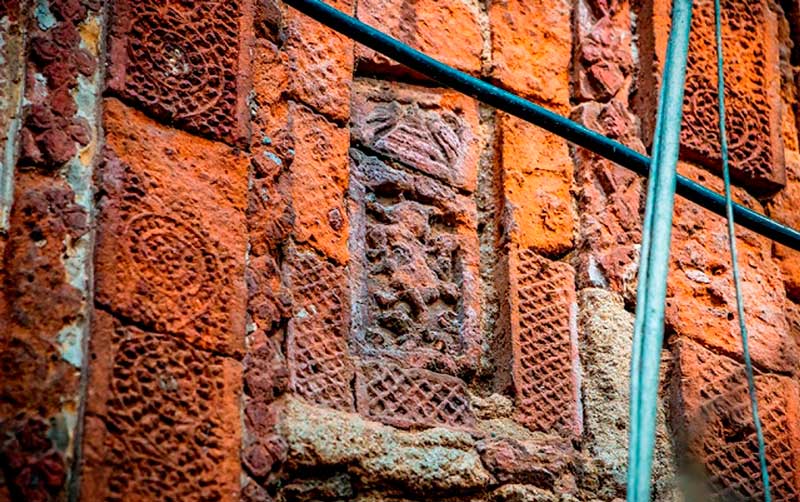
Unfortunately, although said to be officially listed in the heritage building records of Kolkata Municipal Corporation (KMC), the rare terracotta structure of Baneshwar Shiva Temple of 18th-century Calcutta, considered one of the last surviving terracotta temples in the city, suffers from lack of care and protection, and helplessly waiting for its ultimate end.