FREE ASSISTANCE FOR THE INQUISITIVE PEOPLE
















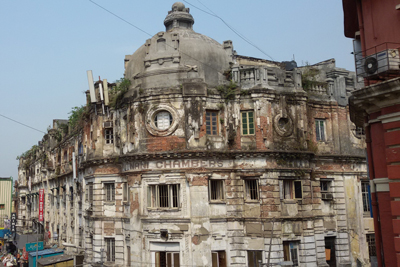
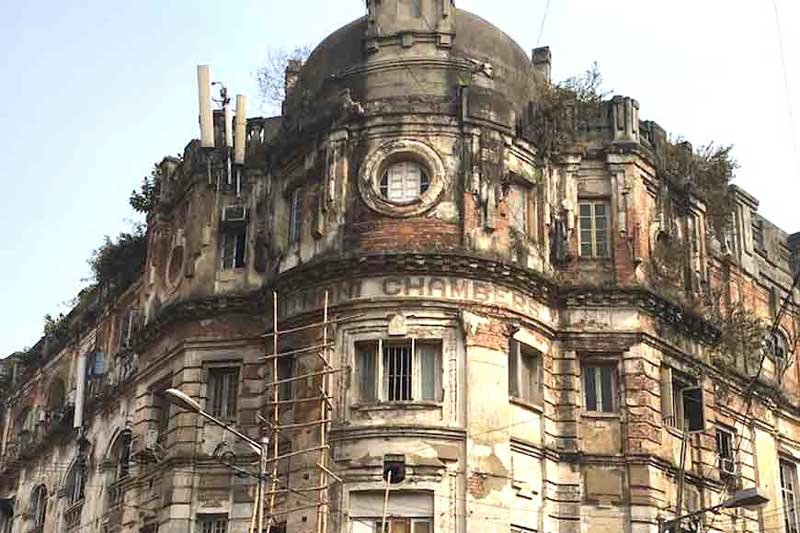
Standing ghostly on SN Banerjee Road, very near to Chowringhee, Calcutta’s historic and bustling central artery, Futnani Chambers, a Grade I heritage structure, is sadly counting its days. Sprawling on around 3.125 acres of prime land in the heart of the city, the building is not a single-year establishment, but evolved and expanded with the passing of time. Before 1910, it was part of the vast estate of Rani Rashmoni, and in the late 19th century, the property was acquired by the British-run Calcutta Municipal Corporation (CMC), though early documents for precise acquisition are unclear. Nevertheless, CMC, in its turn, leased the building to the Hindustan Insurance Company for 99 years, who named it Hindustan Building. However, on the 19th of January 1956, when all private insurance companies, including Hindustan Insurance Company, were merged into the state-owned Life Insurance Corporation (LIC), formed on 1 September 1956, LIC sub-leased the building to Murlimal Santram & Co, owned by the Futnanis, who eventually renamed the property Futnani Chambers, and rented it to 120 tenants. One among those 120 tenants was a doctor named Nishikanta Basu, who stayed there with his wife Hemlata and son for three years. Much later, Jyoti Basu, the son, served as Chief Minister of West Bengal from 1977 to 2000.
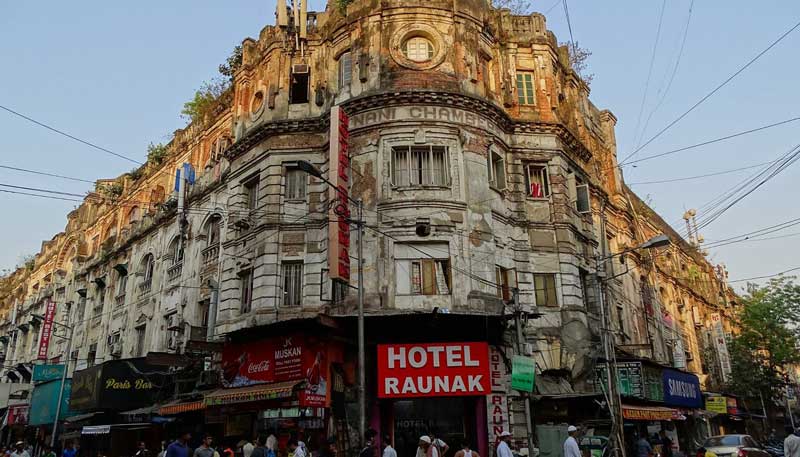
Futnani Chambers was vibrant in the 1940s and 50s, housing Hotel Raunak, which started declining from the 1970s onwards, but was pulsed with music and merry making in those early days, as Golden Slippers, Kolkata's first nightclub run by Dady Mazda. Paris Bar started in the mid '50s and was one of the first dance bars in the city till it was revamped as a family restaurant in the '90s. However, Paris Bar, along with Delite, became its largest and most famous joints, adapting the menu for Bengali tastes and becoming central to Kolkata's culinary scene. Later, Aminia chain of restaurants opened their iconic branch in the building on 15 August 1947, and eventually became its largest and most famous branch.
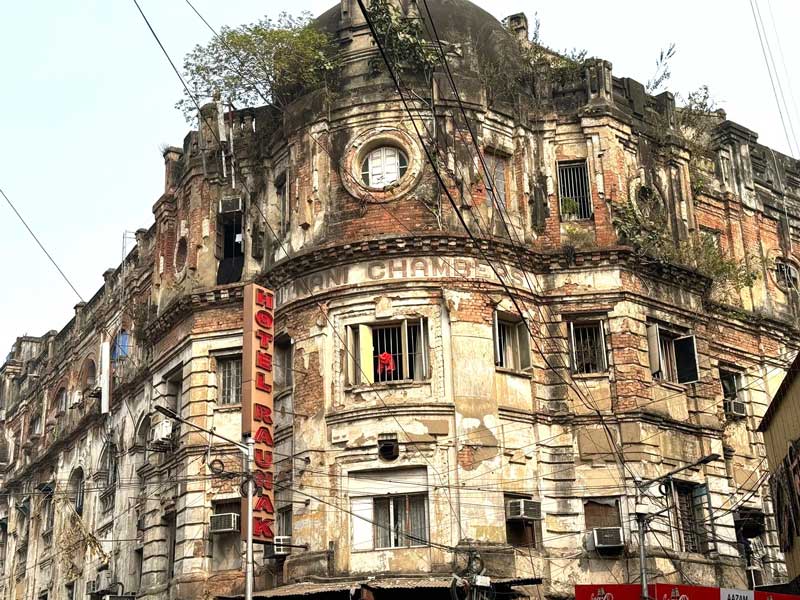
Among other important tenants, Indian Society of Oriental Art, a pivotal organization promoting modern Indian art, particularly the Bengal School, founded by Abanindranath Tagore and E B Havell, once rented space in the building, specifically Suite No. 12, from the first decade of the 20th century until roughly the 1960s. Apart from that, Bata India, the famous shoe company, also once had their registered office located in the building, but due to the deteriorating and structural condition of the building, they were forced to evacuate the crumbling heritage structure in 2019.
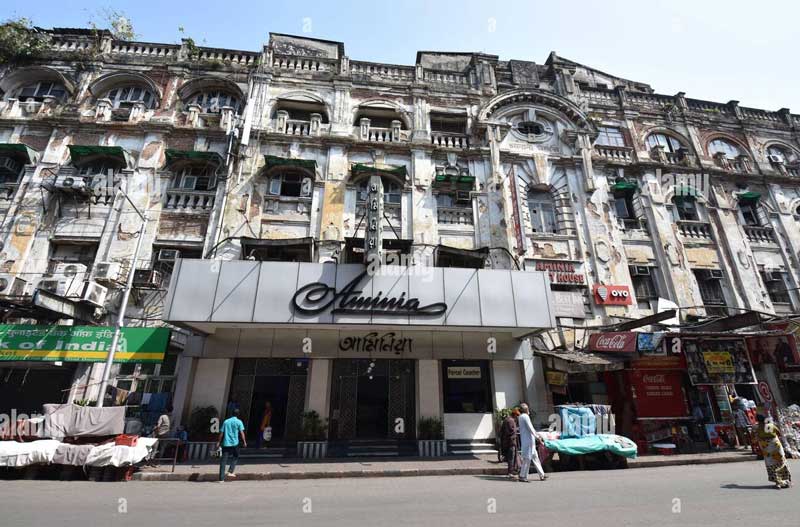
Unfortunately, today, the neglected building, with significant historical and architectural value, has developed multiple cracks, a part of its terrace has caved in, and strong branches of trees growing out from the walls. The authorities are now worried that even concrete chunks could fall at any moment on pedestrians from the roof, creating a disaster. However, although Kolkata Municipal Corporation (KMC) and Metro Railway have taken steps to save the heritage building by issuing takeover notices, undertaking temporary shoring up with steel props, reinforcing foundations, demolishing unsafe balconies, and covering roof damage, any delay due to funds, tenant issues or official procedure, will not help Futnani Chambers to become a disastrous ruin.