FREE ASSISTANCE FOR THE INQUISITIVE PEOPLE


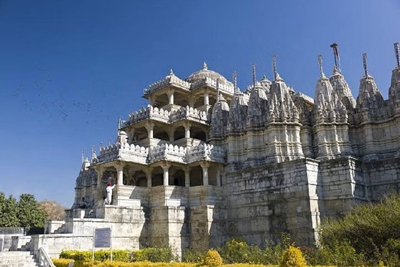









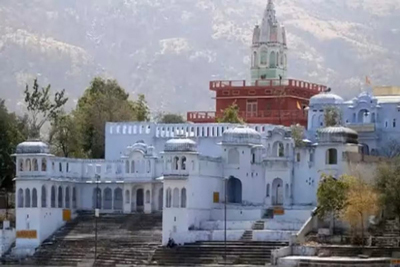
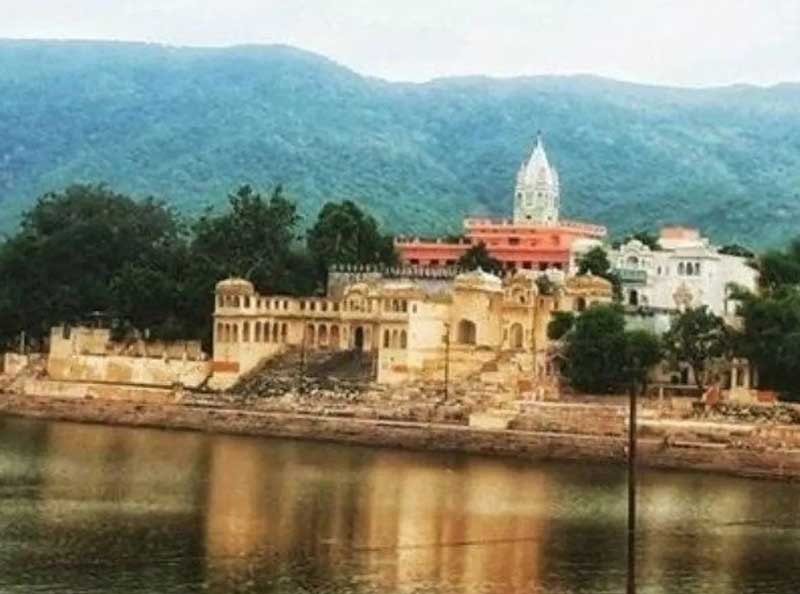
Also known as Jagatpita Brahma Mandir, the Brahma Temple of Pushkar in the Indian state of Rajasthan, located close to the sacred Pushkar Lake, and tracing its history to the 14th century BC, is believed to be one of the few existing temples in India dedicated solely to Lord Brahma, the Hindu god of creation. Built with marble and stone slabs and proudly displaying a unique red Shikhara or a rising tower with the motif of a swan, the mount or Vahana of Lord Brahma, over the silver-carved sanctum sanctorum, called Garbhagriha, the temple containing a four-faced idol of Brahma, and his consort Gayatri, the goddess of Vedas, draws thousands of pilgrims, especially during the celebration of Kartik Purnima, a spiritually significant full moon day in the Hindu month of Kartik, when the nearby Pushkar Lake becomes the hub of spiritual activity.
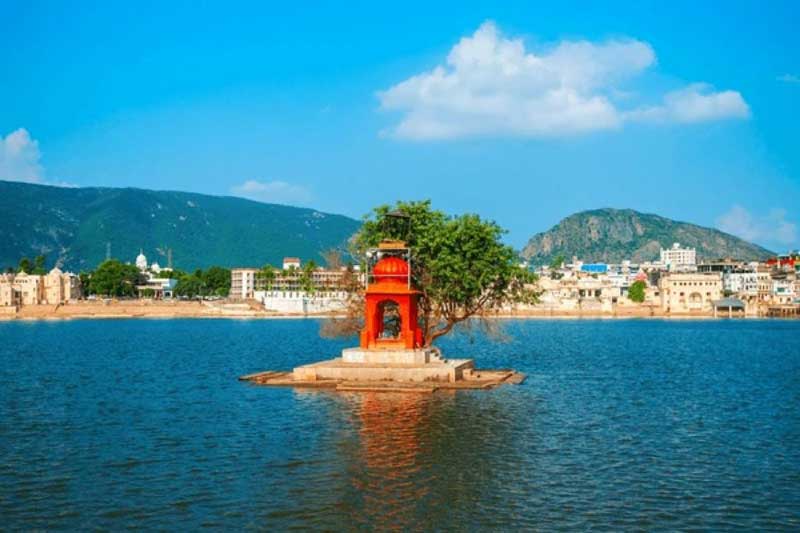
According to the Hindu scripture Padma Purana, one of the eighteen major Puranas, a genre of texts in Hinduism, enraged by the cruelty of a demon named Vajranabha who was causing terror, torturing and killing people mercilessly, Lord Brahma fought and killed him in a battle with his enchanted weapon, the lotus, when some petals from his lotus fell to the earth, forming the sacred Pushkar Lake. It is believed that the word Pushkar is derived from two Sanskrit words, Pushpa and Kar, which stand for flower, the lotus of Brahma, and hand, the hand of Lord Brahma, which held the lotus. Thereafter, Lord Brahma decided to perform a Yagya, a Vedic sacrificial ritual of offerings to deities in a sacred fire at the site of the battle, and to perform his ritualistic Yagya peacefully, without being disturbed by any possible attack by the other demons. He created hills to surround the Pushkar, namely Suryagiri in the east and Sanchoora in the west, Ratnagiri in the south and Nilgiri in the north, and also positioned the other gods to protect the site of the Yagya from any evil forces.
However, although the presence of Savitri, the consort of Lord Brahma, was absolutely needed within the specific time of the process to complete the essential parts of the Yagya, she could not make it as she was delayed by the preparation of her companions, goddesses Laskshmi, Parvati and Indrani. By that time, finding no other way to complete the proceedings of the Yagya, Lord Brahma had to marry Gayatri, another goddess, who took the place of Savitri, and sat beside Brahma to complete the rituals. Later, when Savitri finally arrived at the venue and found Gayatri sitting next to Lord Brahma, which was her rightful place, she became furious and cursed Brahma that he would never be worshipped, but then reduced the curse, permitting his worship only in Pushkar. Thus, the Pushkar temple became the only temple dedicated to Brahma.
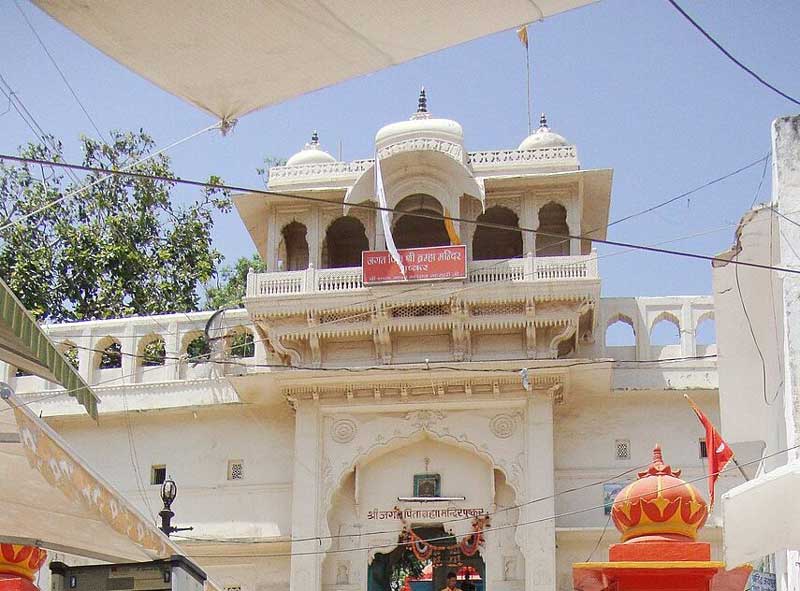
Legend says, the Brahma Temple in Pushkar was originally built by the great Sage Vishwamitra at the site, where Brahma performed the ritual of Yagya at the holy Pushkar Lake. Much later, the temple was renovated by the revered 8th-century philosopher Adi Shankaracharya. However, the current mediaeval structure, featuring a distinctive red spire and marble design, was mostly built and restored by King Sawai Jai Singh II of Jaipur in the 18th century, though the original temple design is retained.
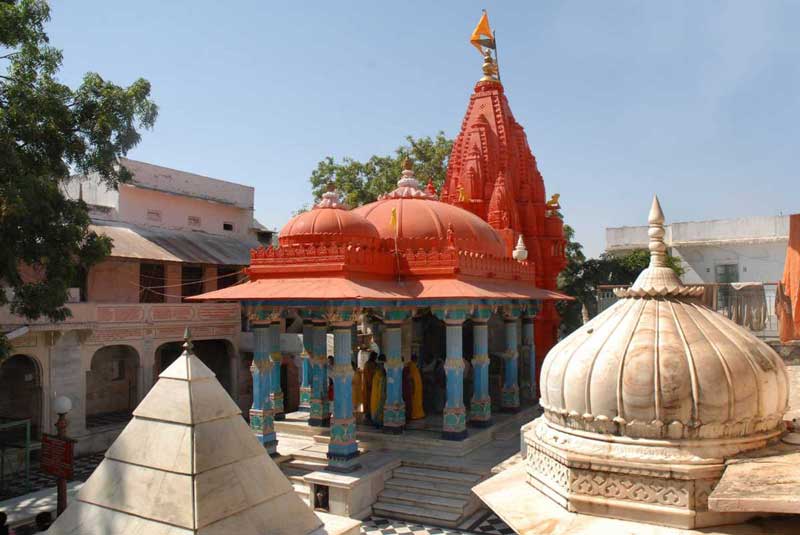
Set on a high plinth, the temple is approached through a number of marble steps leading to an arched gateway, decorated with pillared canopies, which leads to the silver-carved sanctum sanctorum, called Garbhagriha, through a pillared outdoor hall, known as Manadapa, with a silver turtle displayed on the floor, marking the sacred spot where Brahma's Yagya took place. The 70 feet (21 m) tall Shikara, along with the motif of Hamsa or Swan, rising over the silver-carved sanctum sanctorum, decorates the main entry gate. The black-and white marble floor and the inside walls of the temple have been inlaid with hundreds of silver coins donated by the devotees, as a mark of their offering to Brahma. The central image of the Garbhagriha is the four-faced life-size marble idol of the Chaumurti with each face oriented in a cardinal direction, and the four hands holding the Japamala or Rosary, the Pustaka or a book, the Kurka or Kusha grass, the sacrificial implement, and a Kamandalu or a water pot. The central idol is flanked by the image of Gayatri on the left and Saraswati on the right. In addition to that, there are also images of several other deities of the Hindu pantheon decorating the temple walls, which include the images of Lord Vishnu, known as the Preserver or Sustainer of the universe, and also one of the three members of the Hindu Trimurti, along with Brahma the creator, and Shiva the destroyer, apart from the gilded image of Garuda, the mount or Vahana of Lord Vishnu and the life-sized dwarapalas or the gate-keepers.
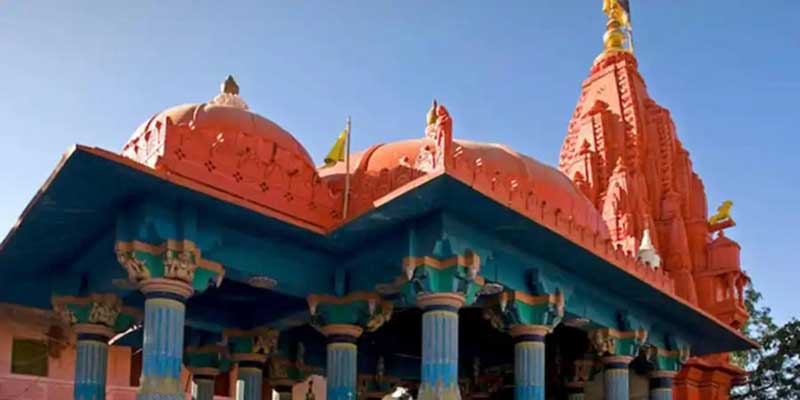
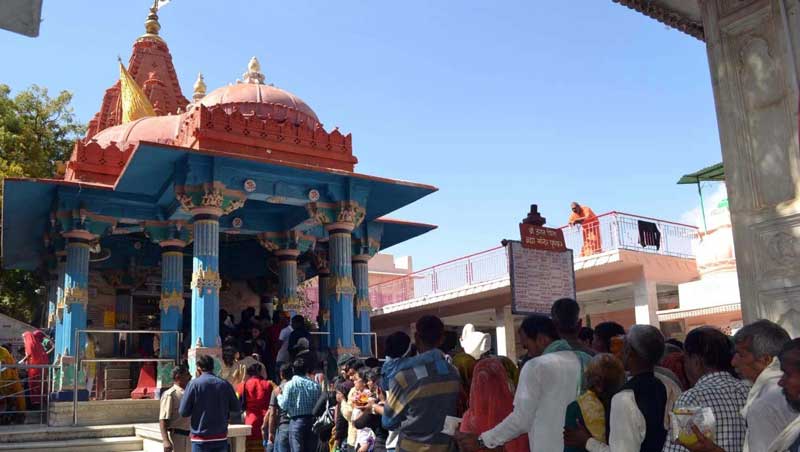
Considered as one of the Panch Tirtha, five sacred pilgrimages, in Hinduism, the Brahma Temple in Pushkar is visited by pilgrims all through the year, especially on Kartik Purnima, the full moon night of the Hindu lunar month of Kartik, occurring between October and November in the Gregorian calendar, when thousands of pilgrims visit the temple, after taking a dip in the Pushkar Lake. However, married men are traditionally not allowed to enter the sanctum during some rituals, based on a legendary condition imposed by Goddess Savitri.