FREE ASSISTANCE FOR THE INQUISITIVE PEOPLE




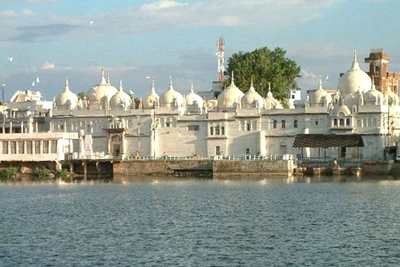














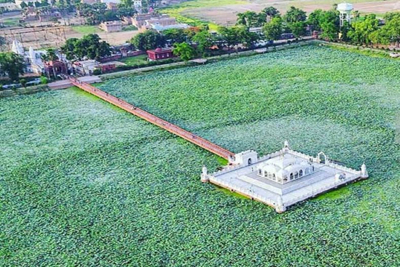
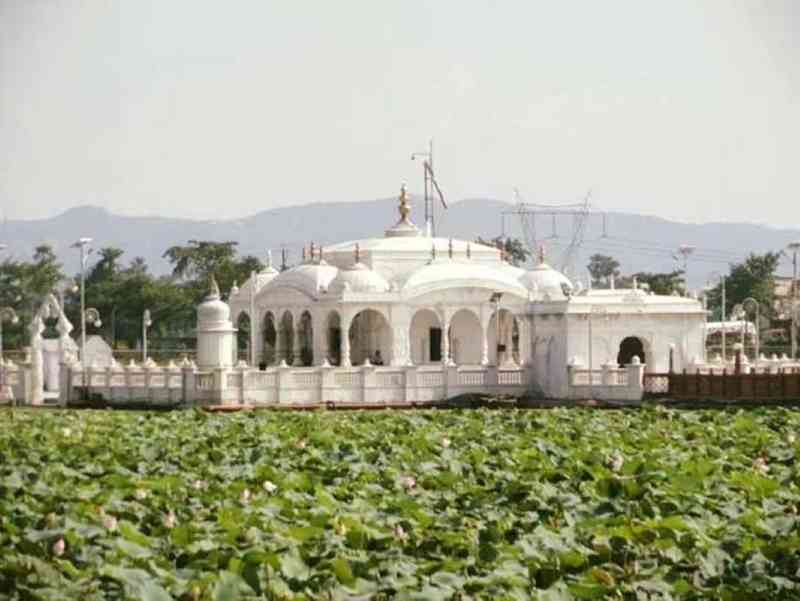
Situated in the middle of a large, lotus-filled pond on a rectangular island, and built of white marble, resembling a Ratha or a Chariot, Jal Mandir or Water Temple in Pawapuri, Bihar is a major pilgrimage destination of Jainas, dedicated to Lord Mahavira, the 24th Tirthankara of Jainism, marking the exact sire of his cremation in 527 BC. Pawapuri, located at a distance of 108 km from Patna, the capital city of Bihar, is also known as Apapuri, which stands for a town without sins, the place where Lord Mahavira attained Nirvana or ultimate salvation around 528 BC. The temple, sitting dramatically isolated in the geometric centre of a massive 84-bigha (around 27,000 square feet) water tank, famously known as Kamal Sarovar, a pond thick with lotus flowers, connected to shore by a single red sandstone causeway, decorated with lovely latticed panels on either side, roughly 657 feet (200 m) long that spans the lake, adding to its serene and meditative atmosphere. The causeway ends near an arch in red sandstone, leading to the temple.
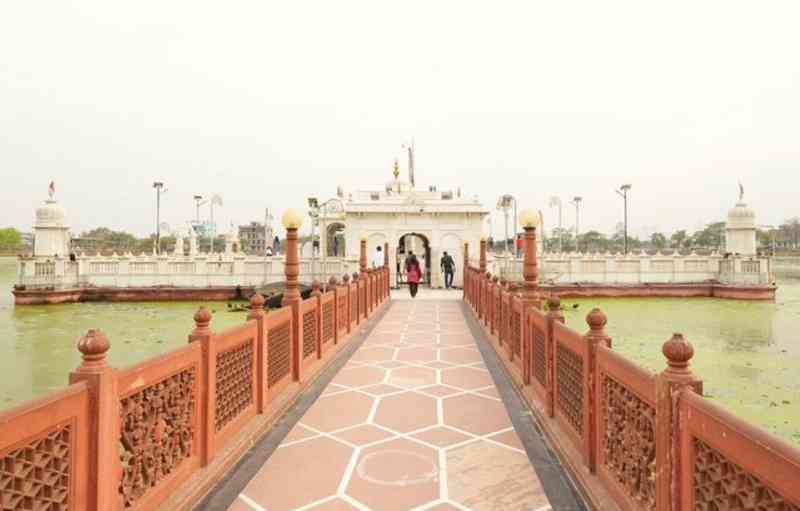
Legend says, following the cremation of Lord Mahavira, the demand for his sacred ashes was so great that many devotees collected handfuls of soil from the site, creating a large crater that later filled with water to form Kamal Sarovar. During the monsoon season, the water level rises and lotuses bloom densely, making the temple appear to float on a carpet of pink and green, while in winter, when the air is cool and dry, the white marble of the temple shines brightly against the pale blue sky. The causeway ends near a red sandstone arch, which leads to the temple.
Jal Mandir, the beautiful Shwetambara Jain temple in Pawapuri, was originally built by Nandivardhana, the elder brother of Mahavira, who ruled or served as the chief of the Naya, also known as Jnatrika or Natha clan, an ancient aristocratic Kshatriya Republic in India, living in Kundagrama and surrounding areas near modern-day Vaishali and Patna, best known as the family lineage of Vardhamana Mahavira, the 24th as well as the final Tirthankara of Jainism.
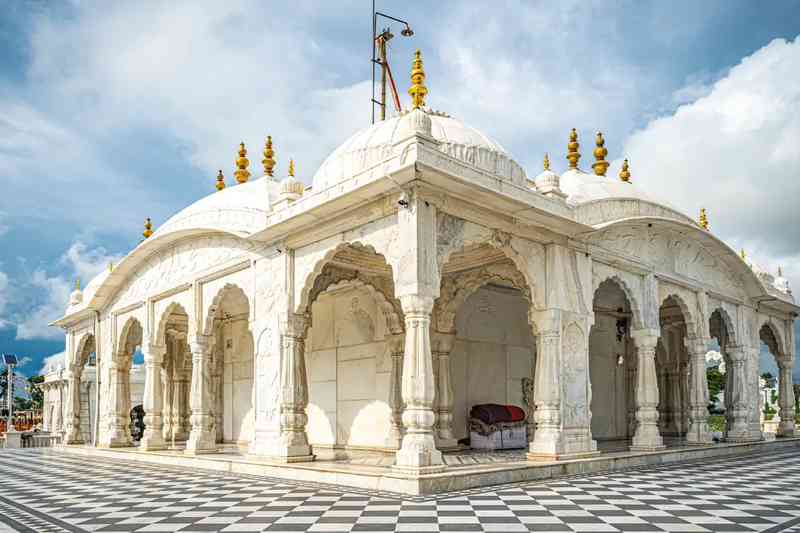
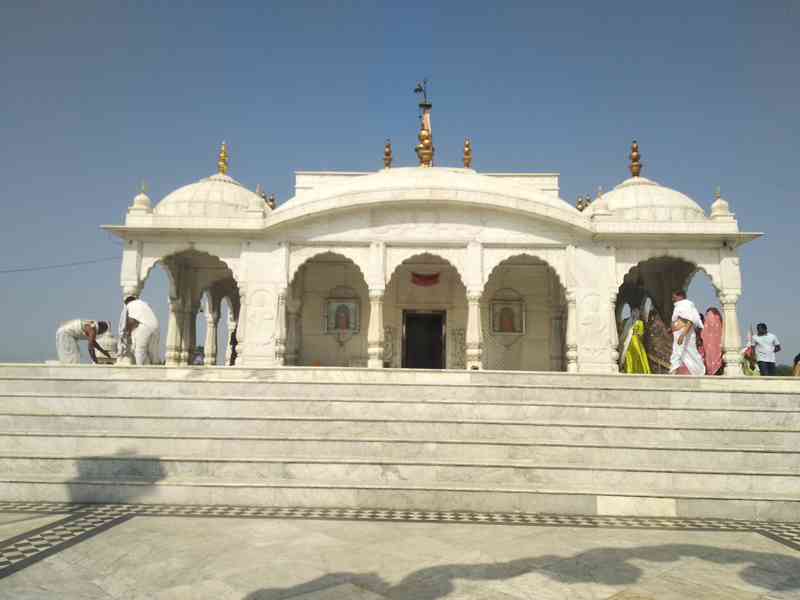
The structure of main temple stands majestically on an elevated, square-shaped plinth reached by a flight of marble steps, while the central structure features a distinct pyramidal roof, and the surrounding pavilion is adorned with smaller domes capped by golden spires or shikharas. A square, open-air pillared corridor with polished black-and-white marble flooring surrounds the inner sanctum, for the use of the devotees to perform parikrama or circumambulation. However, unlike other temples, Jal Mandir does not house any idol; or image, instead it contains three pairs of padukas or footprints, of which the middle one belongs to Lord Mahavira, flanked by the footprint of his first disciple Indrabhuti Gautam on the left, and that of his fifth disciple Sudharma Swami on the right.
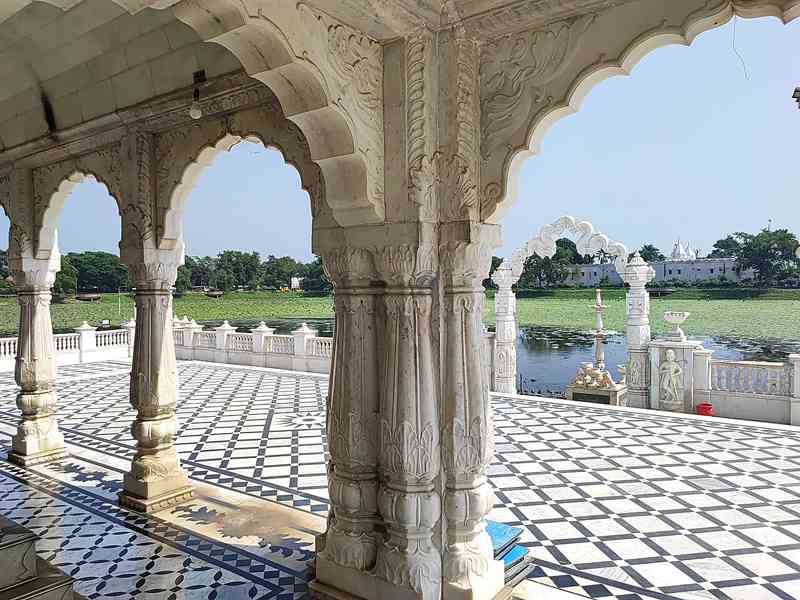
Jal Mandir, being made of marble, shines bright and sublime during the moonlit nights. According to Śhwetāmbara tradition, Lord Mahavira passed away at the age of 72, on the Dipawali night of 527 BC, or in 510 BC, according to the Digambara tradition. Nevertheless, every year, devotees make a special pilgrimage to Jal Mandir to commemorate the celebration of the occasion on the Dipawali night.