FREE ASSISTANCE FOR THE INQUISITIVE PEOPLE



















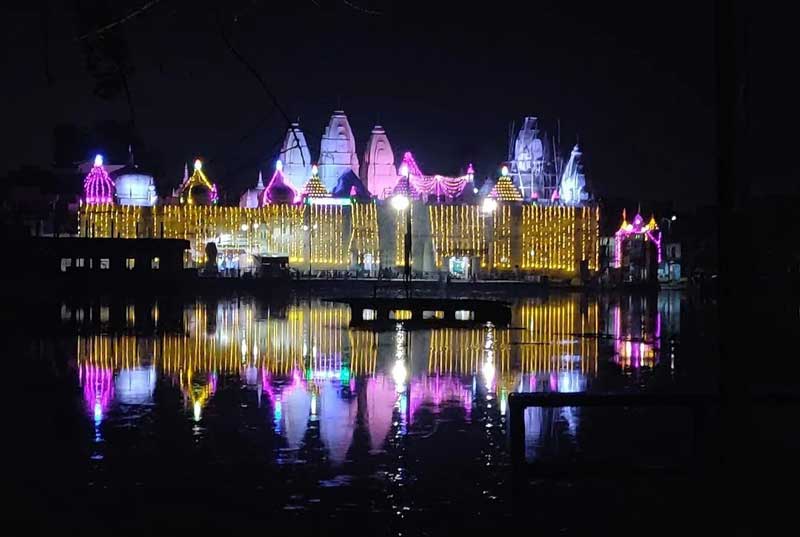
Located at a distance of 3 km from Jabalpur Junction in Madhya Pradesh, right on the edge of Hanumantal, a large water body, a historic lake and prominent tourist spot in Jabalpur, Hanumantal Bada Jain Temple is a historic 17th-century Digambar Jain temple, known as the largest independent functioning Jain temple in India. Originally constructed in 1686, and renovated in the 19th century, the temple is considered one of the most revered religious sites among the followers of Jainism, and frequented by tourists and devotees in great numbers. Famous for its fortress-like appearance with numerous shikhara or spires, the temple has a series of 22 shrines in its complex, dedicated to various deities in the Jain religion, and arranged around a central worship space.
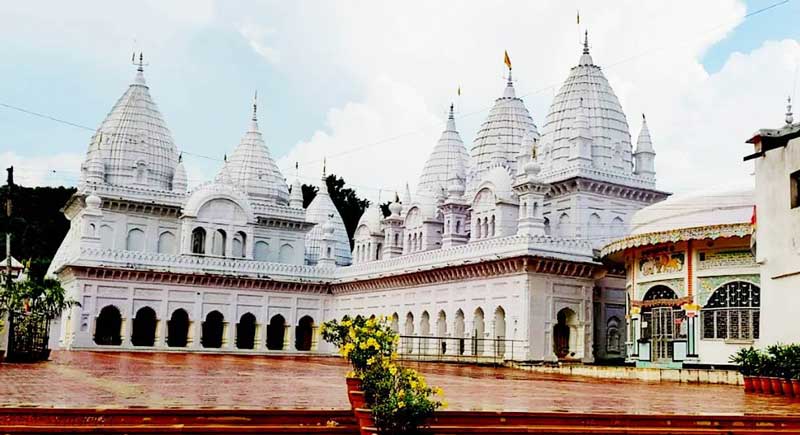
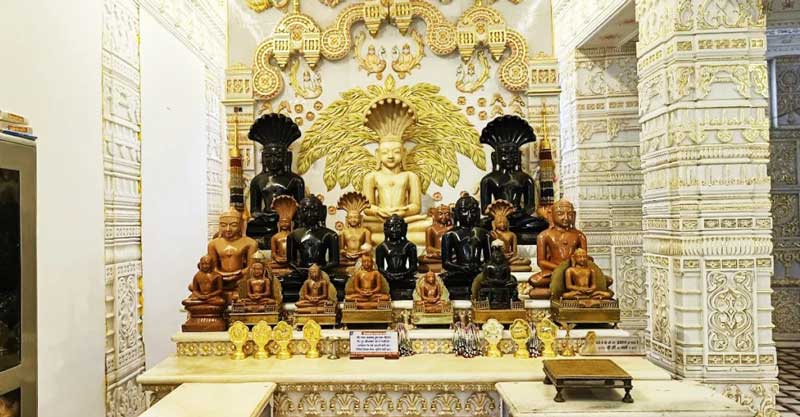
With the passage of time, the temple accumulated a vast collection of idols from different periods, spanning the Kalachuri period of the 10th-12th century, including an ornately crafted image of Lord Adinath, also known as Rishabhanatha, the first of the twenty four Tirthankaras or supreme preacher of Jainism, added with the images influenced by the later Chandela period. Apart from that, it also houses the images from the Mughal, Maratha, and British periods, as well as post-Independence installations, creating a living museum of Jain art without losing its devotional core.
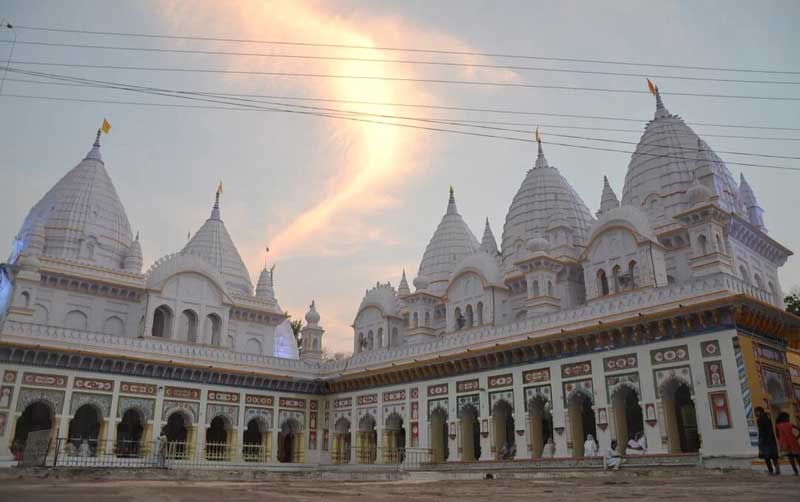
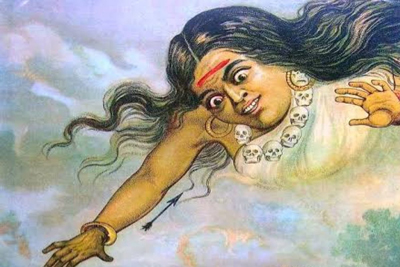
The sanctum sanctorum, decorated with glass work, and containing only the idol of the Jain Goddess Padmavati, was built in 1886 by Bholanath Singhai, who also helped initiate the first two schools organized by Hitkarini Sabha, one of India's oldest educational and social welfare organizations, focusing on educational upliftment, national consciousness, and promoting ethical, cultural, and physical education, established in 1868 in Jabalpur, Madhya Pradesh, by Shri Raja Balwant Rao Kher, Shri Diwan Bihari Lal Khajanchi, and Shri Ambika Charan Banerjee.
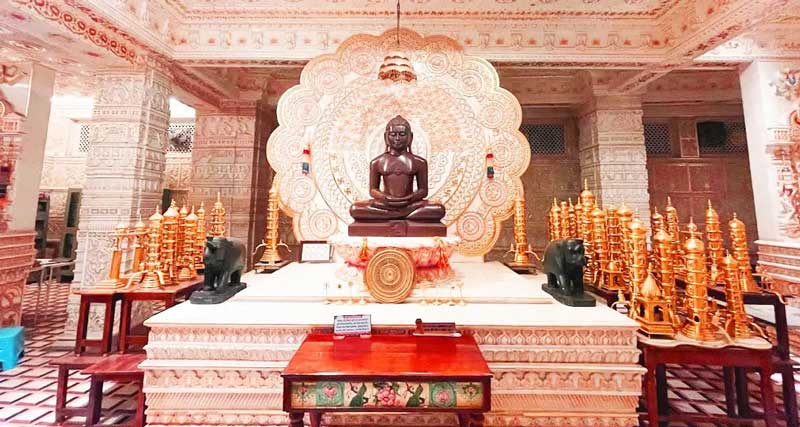
During an extensive rebuilding of the internal structure of the temple, inspired by Jain Muni Shri Sudhasagar Maharaj, a highly revered Digambara Jain monk, the idol of Goddess Padmabati was shifted to a cabinet for safety. However, the ancient idol, weighing 70 kilograms, was reportedly missing on the night of 16 May 2022, and a First Information Report (FIR) was filed with the police department regarding the alleged theft of the idol, creating panic and a gathering of devotees in the temple area. But later, a police investigation revealed that the idol was not stolen but had been removed and shifted to a protected place by trustees for re-installation at a new temple. Nevertheless, the temple was renamed Shasanodaya Jain Tirth, following a major Panchkalyana Pratishtha ceremony that culminated on 9th May 2022, in a Gajaratha celebration, a grand, auspicious, and festive procession, in which the idols of Tirthankaras are carried on a chariot or ratha, typically accompanied by gajas or elephants.
Every year, the temple celebrates the Mahavir Jayanti, the birth of Lord Mahavir, the 24th and final Tirthankara of Jainism, when a Jain procession starts from the temple and terminates at Bada Fuhara, referring both to the fountain, built in 1892 by Raja Gokuldas, and also the bustling commercial district that surrounds it, considered the heart of the city's old market area. Located beside the calm waters of the lake and creating a cool, picturesque appearance, Hanumantal temple, considered among the largest independent functioning Jain temples in India, is one of the most visited tourist places in Jabalpur.