FREE ASSISTANCE FOR THE INQUISITIVE PEOPLE












Perched atop the sacred Girnar Hill in Junagadh, Gujarat, also known as Revatak Parvata, the Girnar Jain Temples are a cluster of Śvetāmbara Jain temples and one Digambara temple, along with the Nirvana Bhumi of the 22nd Tirthankara, Lord Neminath, revered as a holy pilgrimage for both the Śvetāmbara and Digambara sects of Jainism, as well as a testament to the rich cultural and religious blending of the region. Apart from its importance as a holy place, the site is also historically significant, as it contains Emperor Ashoka’s Rock Edicts from 250 BC, providing evidence of the hill's religious and political importance over the centuries. The construction and renovation of the Girnar Jain temples spanned about 900 years, beginning in the 11th century over generations, reflecting a long history of construction and pilgrimage. The name of Girnar Hills is mentioned in the Vedas and scriptures from the Indus Valley Civilization, and the harmonious blend of faith and history makes Girnar a truly unique and sacred destination for all. However, the climb to the summit involves a challenging task to negotiate the 3800 steps from Taleti or opt for a scenic journey on the Ropeway, which takes passengers 2790 feet (850 m) above the hill to the Ambika Jain temple within 10 minutes.
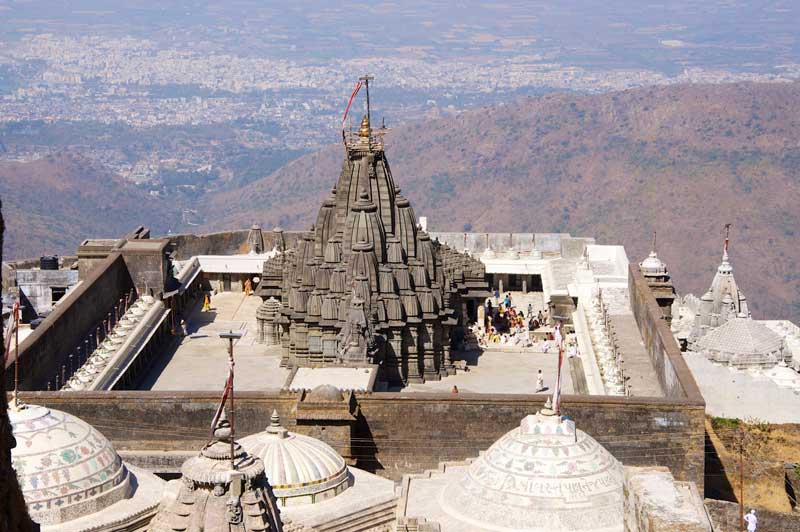
The peaks or the sacred spots on the mountain path of the Girnar Mountain that contain the important Jain shrines and footprints are known as tonks. In other words, a tonk in this context refers to a peak or a specific location on the mountain where a temple, shrine, or the footprints of a Tirthankara or other revered figure are located. There are five principal tonks on the mountain, each of significant religious importance. The first peak, or tonk, located about 2 miles above the base, contains a temple devoted to Digambar, the Rajulmati Cave, known for being the site of penance for Rajimati, the betrothed of Lord Neminath, and the black granite temple dedicated to Lord Neminath, featuring intricate carvings on its pillars and is adorned with unique coloured mosaics, constructed in 1128 AD. The second tonk houses the Ambika temple, along with the footprints of Anirudhhkumar and Pradyumna Kumar, while the third tonk has the footprints of Sambukkumar. Further, the fourth tonk contains the footprints of Pradhyman Kumar, the son of Lord Krishna, and finally, the fifth tonk enshrines the foot-idol of Lord Neminath. In addition to that, other sacred sites in the region include the cave of Rajul, the Rathanemi temple, dedicated to Lord Neminath's younger brother, and Sahasavan, famous for the Diksha or renunciation and Kevalgnan, also called Kaivalyagnan or enlightenment of Lord Neminath.
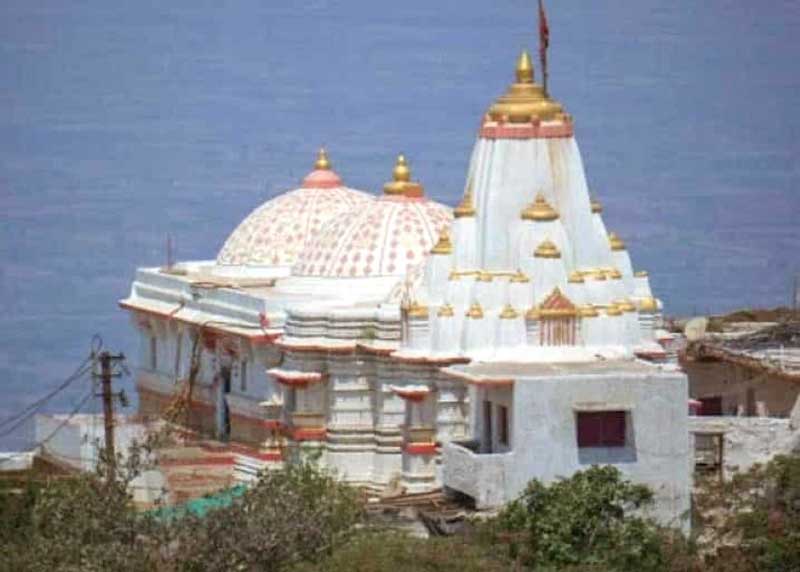
The Girnar temple complex contains several shrines, dedicated to different Tirthankaras, embodying a unique architectural style, among which Karnavihāra Prāsāda is one of the oldest temples, dedicated to Lord Neminath, believed to be built in the 12th century. The recess of the temple, located opposite to the entrance, has a decorative lion rampant and crocodile bas-relief work on top. Featuring the Māru-Gurjara or Solaṅkī style of architecture, the temple houses the idol of Lord Neminath, made of black granite, and sitting on a lotus, holding a conch shell in his hand. Apart from the sanctum sanctorum, the temple also contains two halls, each equipped with a porch, the pillars of which are decorated with inscriptions, dating back to 1275 to 1281. Located behind the Neminath temple, the Mallinath Temple, dating back to the 12th century, and dedicated to Mallinath, the 19th Tirthankara, is a masterpiece of architecture, featuring exquisite carvings that depict scenes from Jain mythology. Another important Jain temple in the area is the 15th-century Parshwanath temple, situated at the foot of the hills, and dedicated to the 23rd Tirthankara, Lord Parshwanath, renowned for its architectural grandeur, and adorned with sculptures narrating the life of Lord Parshwanath. Apart from that, the Dharamchand Hemchand temple, also known as the Khada ka Jinalaya, situated on the way to the Mallavwala Jinalaya temple, was rebuilt by Seth Dharamchand Hemchand and houses a 21-inch- high idol of Sri Shantinath, to whom the temple was dedicated.
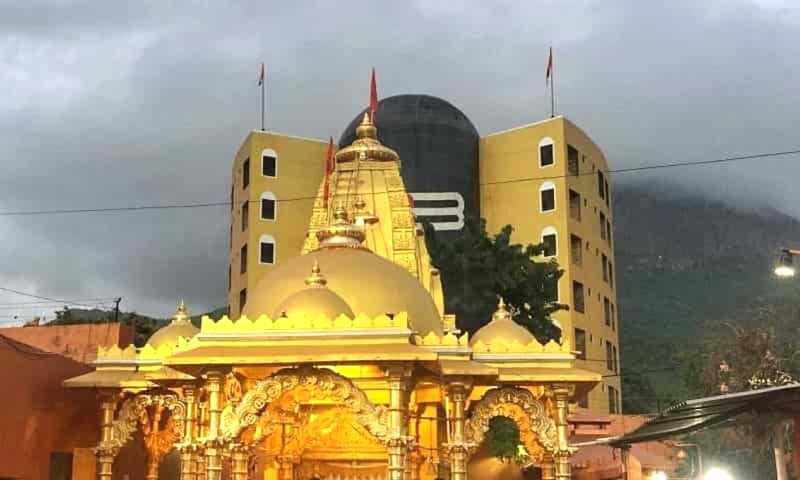
However, the Girnar Jain temple complex also contains several Hindu temples, which include the Ambika temple, housed in the second tonk and dedicated to the Jain deity Ambika Yakshi, an attendant of Lord Neminath, which is also regarded as a major Hindu pilgrimage site, especially during the Navaratri and the annual Bhadarvi Purnima Fair. Interestingly, although the earliest mention of the temple is recorded in the 8th century, the present temple was built around the 15th century, according to the Jain tradition and its mandapa ceiling match with the other Girnar Jain temples, which evidences that it was historically a Jain temple, and was later taken over by the Hindus. Other Hindu temples in the complex include the Dattatreya temple, dedicated to a three-faced incarnation of Vishnu, the Bhavnath Mahadev Temple, a major pilgrimage site for the followers of Lord Shiva, Kalika temple, dedicated to the Hindu goddess Kali, and Gorakhnath Temple, a symbol of religious harmony, attracting both Jain and Hindu devotees.
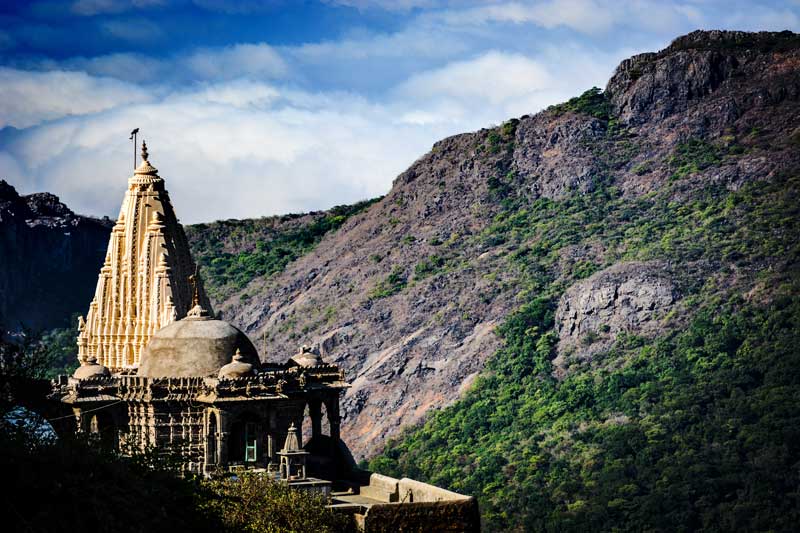
In addition to the big temples and several smaller shrines, the Girnar complex and its surrounding area feature several significant sacred water bodies and tanks, locally known as kunds, which are also important pilgrimage sites for both Hindu and Jain devotees. Gaumukh Ganga, located higher up on the mountain path, is one of those sacred tanks, which is perpetually filled by the Ganges River through a Gaumukh, an outlet shaped like a cow's mouth, where the devotees often take a ceremonial dip as part of their spiritual journey. Bhima Kunda, a tank measuring 70 feet by 50 feet, located outside to the north of Kumarapala's temple and built in the 12th century, according to a nearby inscription, is noted for remaining cold even during the peak of summer. Gajpad Kund, known as Gajendrapad, highly referred in Jain scriptures, is believed to be created by Airavan, the elephant of the celestial king Indra, who pressed its foot into the soil to create a depression that filled with water from all the sources of the universe. The other water bodies in the area include Dholokund, located at around the 2900th step of the ascent, near a small temple; Damodar Kund, considered a significant site in Hindu beliefs; and Kamandal Kund, located on the route to the Dattatreya temple.