FREE ASSISTANCE FOR THE INQUISITIVE PEOPLE












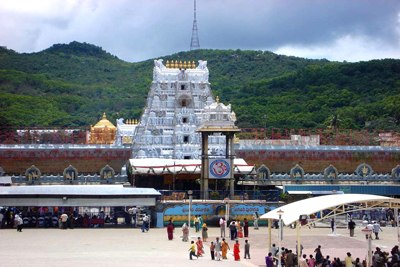
Located in the picturesque town of Tirumala in Andhra Pradesh, amidst the Tirumala Hills, a part of the seven peaked Seshachalam Hills, symbolising the seven heads of Adishesha or Ananta Naga, the gigantic snake on which lord Vishnu takes rest, Venkateswara Temple, dedicated to Venkateswara, an incarnation of the Hindu deity Vishnu, is considered one of the most important Hindu pilgrimage sites that embodies faith, culture, heritage, and spirituality. Also known as the Tirupati Balaji Temple or simply Tirupati Temple, it is also considered one of the Pancha Kshethram, most commonly refers to the Pancha Bhoota Sthalam, a group of five Shiva temples dedicated to the five great elements of nature. It is widely believed that the presiding deity of the temple, Lord Venkateswara, appeared on earth to save the human race from the trials and troubles of the Kaliyuga, the fourth and final era in the current Hindu Yuga cycle, considered the most degenerate era, marked by conflict, sin, and the decline of spiritual and moral values, while the Tirupati Temple earned the name Kaliyuga Vaikuntha, abode of the deity on Earth, during the Kaliyuga. The temple, renowned for its rich history and magnificent architecture, is one of the most visited religious sites in the world, with footfall surpassing 60,000 daily and reaching over a hundred thousand during festivals and holidays.

It is said that a Thondaman king found the idol of Lord Venkateswara in an anthill and built the initial structure of the Tirupati Venkateswara Temple around 300 BC. However, Ihe roots of the Tirupati Venkateswara Temple can be traced back to the Pallava dynasty of Kancheepuram, which had a strong influence on the region during the 9th century, with a recorded endowment by Pallava queen Samavai in 966 AD, which included several jewels and two plots of land, one measuring 10 acres and the other 13 acres, and ordered use of the revenues generated from those pieces of land for the celebration of major festivals in the temple. Subsequently, the Chola dynasty of Tanjore in the 10th century, the Pandyas of Madurai in the 14th Century, and the rulers of the Vijayanagar Empire of present-day Karnataka in the 14th and 15th Centuries, also played crucial roles in further developing and patronising the temple. However, the temple gained most of its current wealth and size under the reign of the Vijayanagara Empire, with significant contributions and endowments, especially donation of gold and diamonds, confirming its position in the religious landscape of South India. Emperor Krishnadevaraya, who ruled the Vijayanagara Empire from 1509 to 1529, was a frequent donor and visitor to the temple, and the shrine containing the Garbhagriha, known as Ananda Nilayam, was covered with gilt copper plates and a golden vase at its apex, by his donations of gold and jewels. Strangely, despite being a devotee of Venkateswara, Krishnadevaraya installed his own statue in the temple. Nevertheless, after the decline of the Vijayanagara Empire, the Tirupati Venkateswara Temple came under the administration of various regional kingdoms, like the Kingdom of Mysore, and subsequently, Maratha General Raghoji I Bhonsle set up a permanent administration for the conduct of worship in the temple, and also donated valuable jewels to the Lord which are still preserved in a box named after him.

It is interesting to note that in the 11th and 12th centuries, Ramanujacharya, an Indian Hindu philosopher, social reformer, and one of the most important exponents of the Sri Vaishnavism tradition in Hinduism, visited the Tirupati temple three times, and streamlined the rituals at the temple according to Vaikhanasa Agama tradition and introduced the recitation of Naalayira Divya Prabandham, praising Narayana or Vishnu and his incarnations. During his second visit, Ramanuja settled a dispute between the Saivites, the worshippers of Lord Shiva and the Vaishnavites, the devotees of Lord Vishnu, regarding the nature of the image set up in the Tirumala temple, and during his last visit, he installed the image of Govindaraja, a specific manifestation of Lord Vishnu, and also laid the foundations of the present-day town of Tirupati.

Covering an approximate area of 10.33 square miles (26.8 sq km) and reflecting the Dravidian architectural style, Venkateswara Temple features a spacious temple complex, equipped with three multi-storey entrance towers, locally known as Gopurams, serving as the gateways to the temple from outside. The first entrance, known as Mahadvaram or padikavali, topped with a 50-feet-tall, five-storey Gopuram with seven kalasa or golden vases in the form of domes, at its apex, is provided through Mahaprakaram, the outer compound wall, while the second entrance, known as Vendivakili or Silver Entrance, also known as Nadimipadikavali, provided through Sampangi Prakaram or the inner compound wall, includes a three-storey Gopuram. The third entrance, named Bangaruvakili or golden entrance, with two tall copper images of the dwarpalakas or door-keepers, Jaya and Bijaya on either side, leads to the Garbhagriha, the sanctum sanctorum. However, the main Gopuram of the temple is the Ananda Nilayam Vimanam, constructed over the Garbhagriha. The three-storey Gopuram, covered with gilt copper plates with a single kalasam on its top, contains an idol of Lord Venkateswara, called Vimana Venkateswara, which is believed to be an exact replica of the idol of the deity, housed inside the Garbhagriha.

The temple has two circumbulation paths around the Garbhagriha, known as Pradakshinam, the first one of which is called Sampangi Pradakshinam and contains several mandapas, a Bali Pitha or sacrificial altar, Kshetrapalika Sila or a stone slab representing the guardian deity, and a distribution area of prasada or sacred food offered to the deity, while the second one, called Vimana Pradakhinam, circumbulating the Ananda Nilayam Vimanam, has sub-shrines dedicated to Varadaraja and Yoga Narasimha, Ankurarpana Mandapam, Jgnashala the main kitchen and many more. The Garbhagriha, the sanctum sanctorum, houses the bejewelled presiding deity Venkateswara, in the form of Lord Vishnu with four hands, holding Panchajanya, a conch shell and the Sudarshana Chakra, a sharp discus in his upper arms and a lotus flower and a mace, named Kaumodaki, in his lower arms. The idol of the deity is flanked by Goddess Lakshmi on his right and Goddess Padmavati on his left.


It is widely believed that Lord Venkateswara fulfills all the desired wishes of his devotees, who donate their hair at Tirupati temple. There is a structure in the temple complex to help the devotees in this regard, and the funds collected by selling those heaps of hair for creating wigs are spent on the maintenance and development of the temple complex and its various charitable activities. The temple is a hub of celebrations and festivals throughout the year, of which the most significant festival is the annual Brahmotsavam, a nine-day festival that is celebrated with great pomp and grandeur, when the processional deity Malayappa, accompanied by his consorts Sridevi and Bhudevi is taken in a procession in the four streets around the temple in different Vahanas or vehicles. The other important festivals celebrated in the Tirupati temple complex include Rathasapthami, Ramanavami, Janmashtami, Eppotsavam or Float Festival, Vasanthotsavam or Spring Festival, Sri Padmavati Parinayotsavams, and many more.