FREE ASSISTANCE FOR THE INQUISITIVE PEOPLE














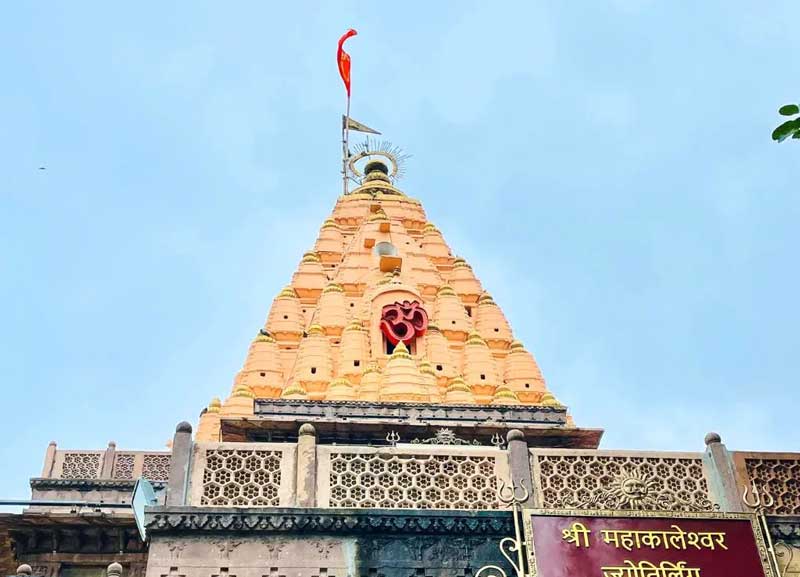
Mahakaleshwar Temple, located along the Shipra River, in the ancient city of Ujjain, Madhya Pradesh, and dedicated to Lord Shiva, is one of the twelve Jyotirlingas, believed to be the sacred abodes of Shiva, where he manifested himself in the form of a fiery column of light, symbolising his supreme divinity over Brahma and Vishnu. The presiding deity of the temple, Lord Shiva in the form of Mahakal lingam, is believed to be Swayambhu or self-manifested. In addition, the Mahakaleshwar temple is also revered as one of the 18 Maha Shakti Peethas, as it is believed that the upper lip of Sati, the wife of Lord Shiva, fell here.
It is believed that Lord Shiva is the God of death, and the name Mahakaleshwar means the god of Mahakal, which consists of two Sanskrit words Maha, which stands for great or mighty, while kala means time or death. However, unlike all the other Jyotirlingas, the Mahakaleshwar Jyotirling is known as dakshinamukhi, as it faces south, which is associated with death, symbolising Lord Shiva, the master of death. The devotees of the deity ritually take a bath in the holy Sipra and then visit the temple for worshipping Mahakaleshwar, praying to be blessed with a long life. Apart from several other ritual celebrations like the Nitya Yatra, the temple is famous for the Bhasma Aarti, which is performed every day, early in the morning, to awaken Lord Shiva, when the holy ash brought from River Shipra is applied to the deity, before worshipping.
According to legend, King Chandrasena of Ujjain was a devoted follower of Lord Shiva, and one day, when he was worshipping in the temple, a farmer's boy, named Shrikhar, heard the King chanting Shiva's name and rushed to the temple to pray with him. However, he was intervened by the guards of the king, who forced him out of the city, and left him near the river Shipra. There, Shrikhar overheard the conversation between the two neighbouring kings, Ripudamana and Singhaditya, conspiring to attack Ujjain with the assistance of a demon named Dushan, who was blessed by Lord Brahma to become invisible in the case of need. Shocked to know their intention and finding himself in a helpless condition, Shikhar started to pray to Lord Shiva, seeking his divine intervention to protect the city, when a priest named Vridhi also joined him. Pleased with their prayers, Lord Shiva appeared in his Mahakala form, and when the miscreants launched their assault and were on the verge of plundering the city, he destroyed the miscreants. After that, at the request of the king, Lord Shiva agreed to reside in the city and become the chief deity of the Kingdom, taking the care of the city, and protect his devotees.
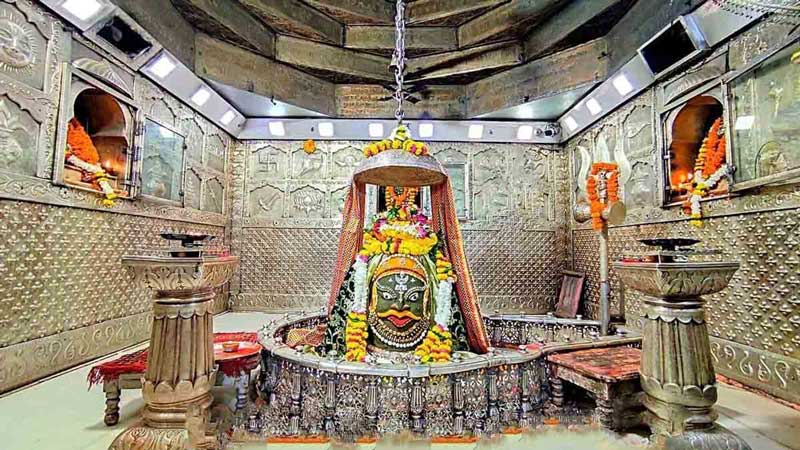
The Mahakaleshwar Temple is prominently mentioned in several ancient Indian poetic texts, depicting the temple as magnificent and grand, with a stone foundation and platform supported by wooden pillars. However, the architecture of the temple reflects the influence of Maratha, Bhumija, as well as Chalukya styles of structural design, as it was destroyed and rebuilt several times. According to history, the temple was destroyed by Shams ud-Din Iltutmish, the first Muslim sovereign to rule from Delhi, and considered the effective founder of the Delhi Sultanate, in the 13th century, during his raid of Ujjain, and its present structure was built or restored by the Maratha general Ranoji Scindia, the founder of Scindia dynasty, in 1734 AD.
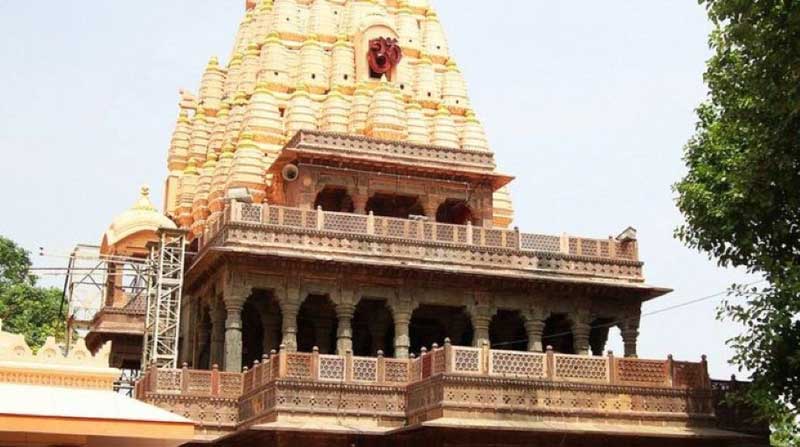
Nevertheless, located in a spacious courtyard surrounded by massive walls near a lake, the Mahakaleshwar temple complex is equipped with a Sabha Mandap or assembly hall, adorned with elaborate sculptures depicting various Hindu deities and mythological scenes. The five storey structure of the main temple, one level of which is underground, and its shikhara or the spire adorned with sculptural finery, is an architectural marvel. The Garbha Griha or the sanctum houses the Jyotirlinga, the presiding deity of the temple, while the lingam of Omkareshwar Shiva is consecrated on its upper floor. The idols of Ganesh, Parvati, and Karttikeya are installed in the west, north, and east of the sanctum sanctorum while the Nandi is installed to the south. The third floor of the temple houses the lingam of Nagchandreshwar, which is accessible for darshan only on Nag Panchami. The courtyard of the temple also contains a kunda, a pond, known as Koti Tirtha, built in the sarvatobhadra style, with four gateways, allowing access from any side. A huge corridor, located to the east of the kunda, decorated with small-sized images of Ganesha, Kartikeya and Parvati, leads to the Garbha GrIha.
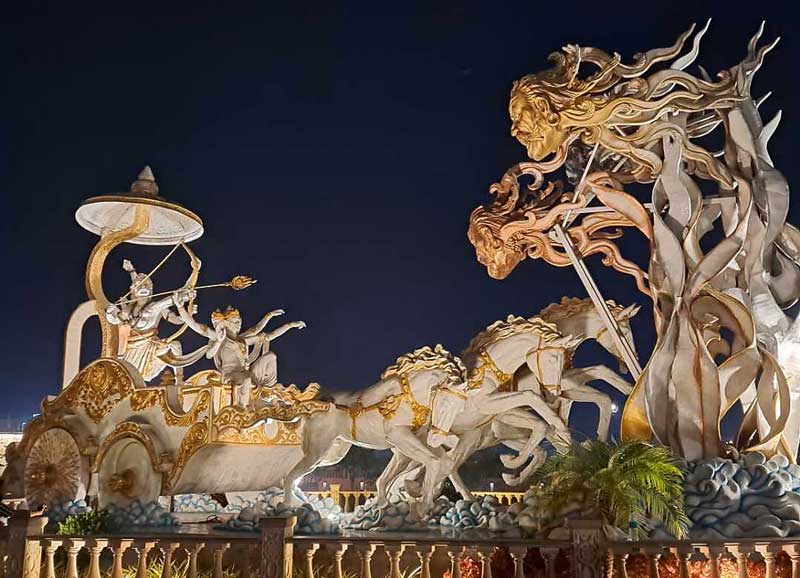
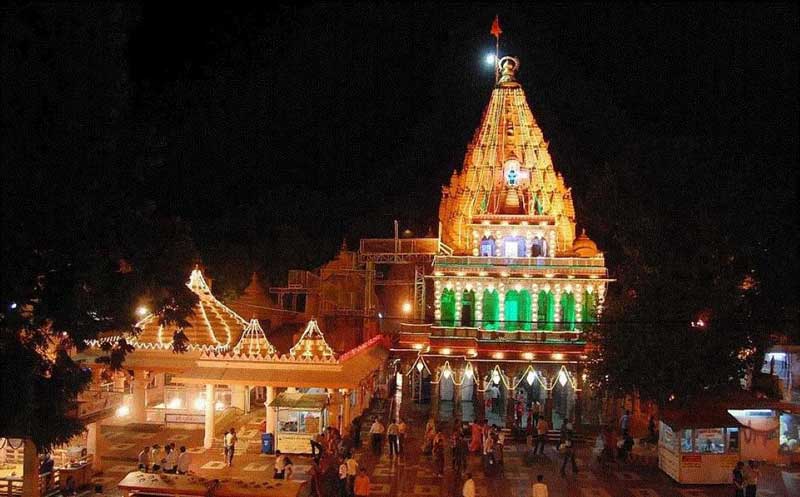
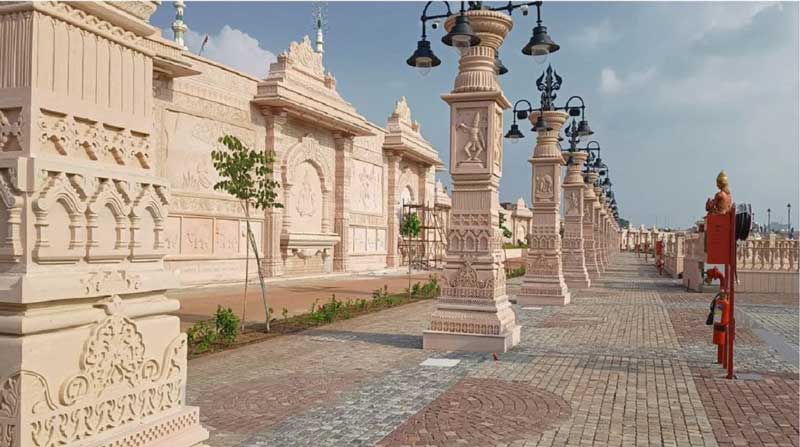
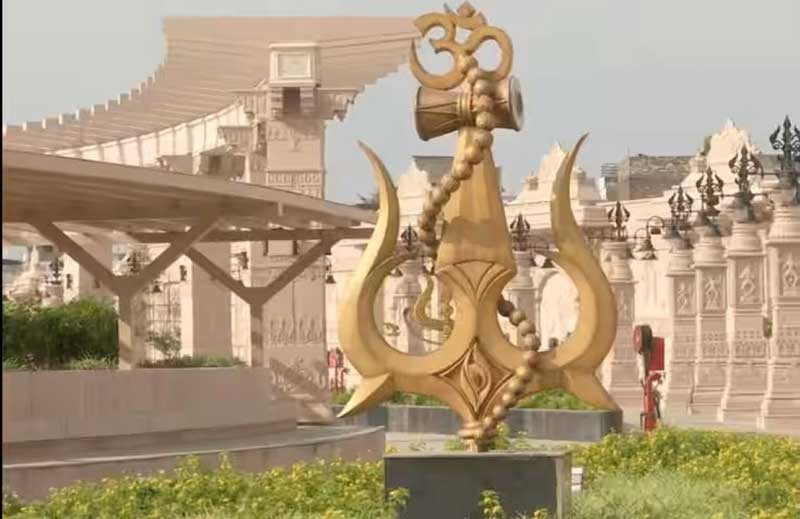
Recently, the first phase of the approximately 3018 feet (920 m) long Mahakal Loka Corridor, surrounded by the old Rudrasagar Lake, and billed as one of the largest such corridors in India, has been inaugurated The corridor, a part of the redevelopment project around the ancient Mahakaleshwar Temple, is a colourful living canvas, adorned with 192 statues, 53 murals, and 108 ornate pillars, narrating stories from the ancient scriptures. Equipped with two grand gateways, the corridor, a majestic colonnade of 108 ornate pillars made of intricately carved sandstones with ornamental elements of trident (or trishula, the weapon of Lord Shiva) on the top and Lord Shiva in various mudras dotting the corridor at regular intervals, along with a running panel of over 50 murals depicting stories mostly from Shiva Purana, offers a visual feast for devotees and art enthusiasts alike. In addition, the corridor project also includes a huge pavilion, the Triveni Mandapam, housing a gushing fountain with a sculpture of Lord Shiva in the centre, along with other fountains adjoining the Rudrasagar Lake. The journey into the corridor begins through one of the majestic gateways, known as the Nandi Dwar, named after the sacred bull mount and chief attendant of Lord Shiva, or the Pinaki Dwar, named after the revered bow of Lord Shiva, created by Lord Vishwakarma.