FREE ASSISTANCE FOR THE INQUISITIVE PEOPLE













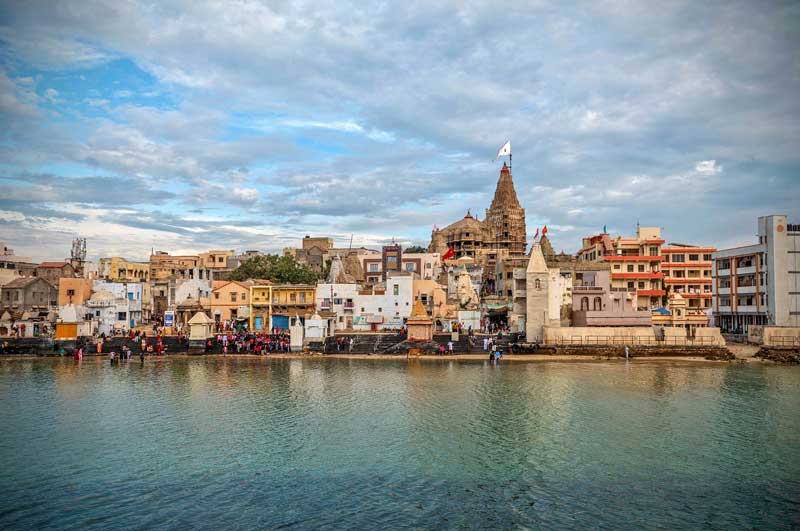
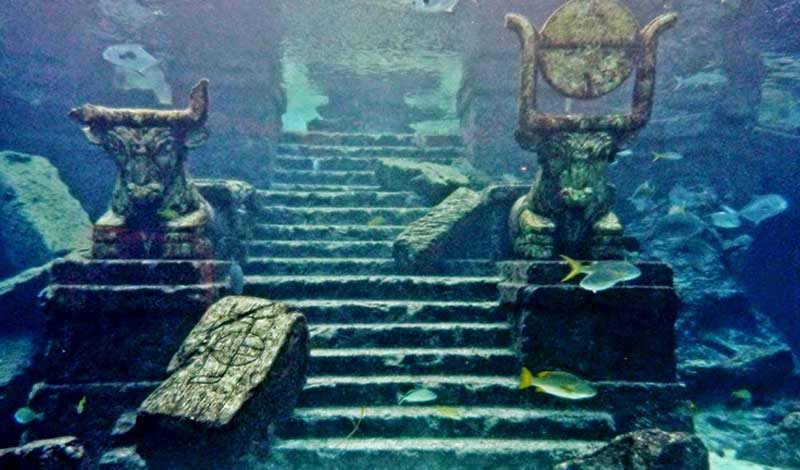
The modern-day city of Dwarka, which means the gateway to heaven, is situated on the extreme west coast of the country and is regarded as one of the most important religious places for Hindus. According to Hindu mythology, the city was created by Lord Krishna as the capital of his kingdom, after he came back from Mathura.Apart from the Indian epic Mahabharata, the name of the city is mentioned in several other texts, which include the Skanda Purana, Vishnu Purana, Harivamsha, as well as Shrimad Bhagavad Gita. It is believed that Dwarka, the capital of Lord Krishna, was an extremely planned city, divided into six sectors and consisted of beautiful gardens, deep motes, numbers of artificial lakes and several magnificent palaces, decorated with crystals and emeralds. It is mentioned in the Mausala Parva, the sixteenth of the eighteen chapters of Mahabharata, that just after the death of Lord Krishna, the glorious city sank into the sea and was lost from the face of the earth.
Myths apart, Dwarka is believed to be an important port, flourished during the period of the Middle kingdoms of India, beginning from 200 BC to 1200 AD, after the decline of the Maurya Empire and was subsequently destroyed, probably due to coastal erosion. It is estimated that the Dwarkadhish Temple in the city, dedicated to Lord Krishna, was originally built around 2,500 years ago, which was renovated in 885 AD, by the Shankaracharya Peetha, Centre, as one of the four Peethas or religious centres of the country. A second temple was built on the site, as the original temple was badly damaged in 1242, when Mohammad Shah invaded Dwarka. Unfortunately, that temple was also destroyed in 1473, when the city of Dwarka was ransacked by the Gujarat Sultan Mahmud Begada.
The excavations in the Dwarkadhish Temple Complex revealed the remains of three temples. It is estimated that the first settlement on the site in the 15th century BC and the second one in the 10th century BC, were submerged or washed away. However, the third settlement was made after a long gap, probably in the 1st century, when the first temple was built. After the first temple was destroyed, the second temple was built on the ruins of the first and eventually, after the destruction the second temple, the third temple was built in the 9th century. Probably, the third temple was struck by a stormwave in the 12th century, which blew away its roof, leaving only the walls and plinth and the fourth temple was built soon after that. While the present temple of Dwarkadhish is the fifth in the series, the modern town is the eighth settlement at Dwarka and this sequence led to further explorations at Dwarka.
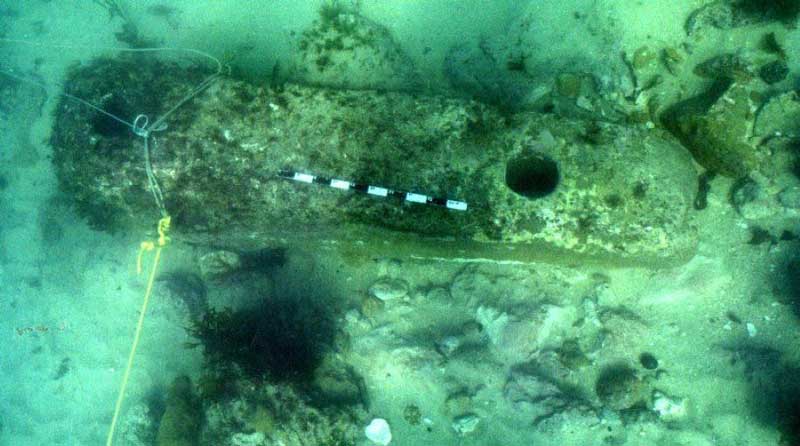
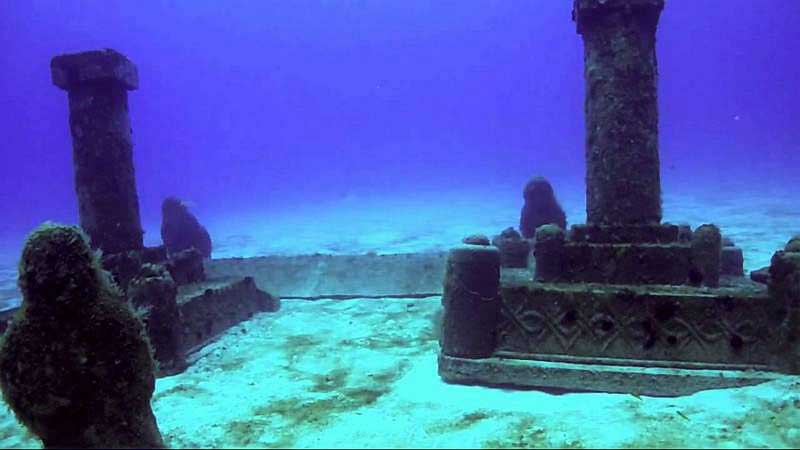
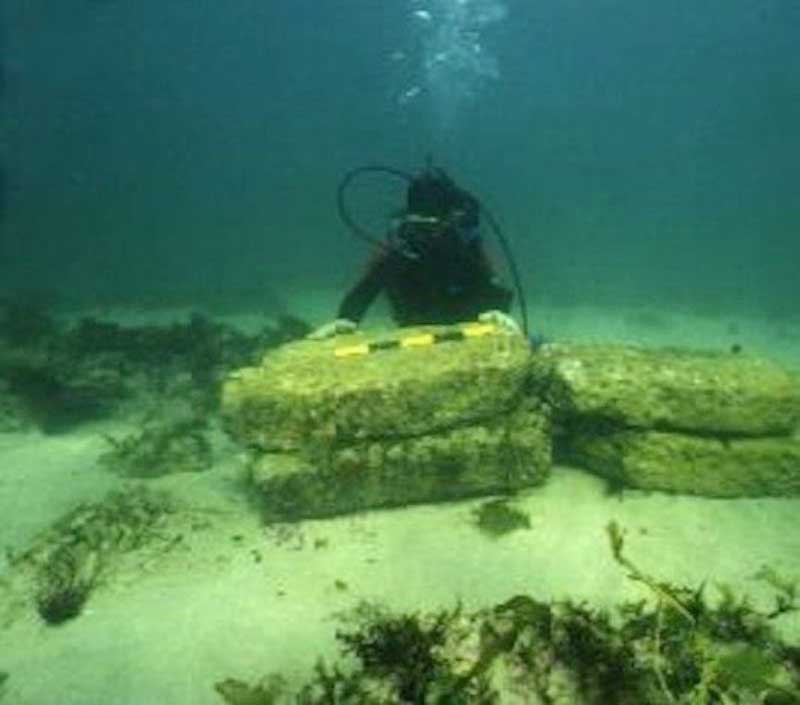
The successive underwater explorations off Dwarka, covering an area of approximately 980,000 square metres between the water depth of about 13 to 39 feet (4 to 12 m) in the Gulf of Cambay have revealed the presence of several submerged archaeological remains. Apart from the stone building blocks, such as the remains of a wall, pillar and bastion, the remains included beads, sculpture, human bones, teeth, along with a large quantity of pottery similar to the Lustrous Red Ware bowl and the Red Ware dishes, perforated jar and incurved bowls.The discovery of a submerged large stone-built jetty and triangular stone anchors with three holes suggests that Dwarka was an important trade port in the past and had the trading relations with the Arabic areas during the 15th to 18th centuries. Carbon dating on debris recovered from the site suggests that they are older than the Sumerian, Egyptian, even the ancient Harappa civilisation.
However, before the inception of the port town of Dwarka in the 15-14th century BC, there appears to have been an even earlier settlement, at least in the island of Bet Dwarka.The seal of the late Harappa period and the parallel-side blades of chert, a few shreds of the beaker and perforated jar, which were found on the island, clearly evidence that the ancient submerged city was a part of the mature Harappa Culture of the Indus Valley Civilization.
Nevertheless, the earliest evidence of the city dating back to the late Indus Valley civilization also indicates that it was not related to the Vedic civilization.