FREE ASSISTANCE FOR THE INQUISITIVE PEOPLE
















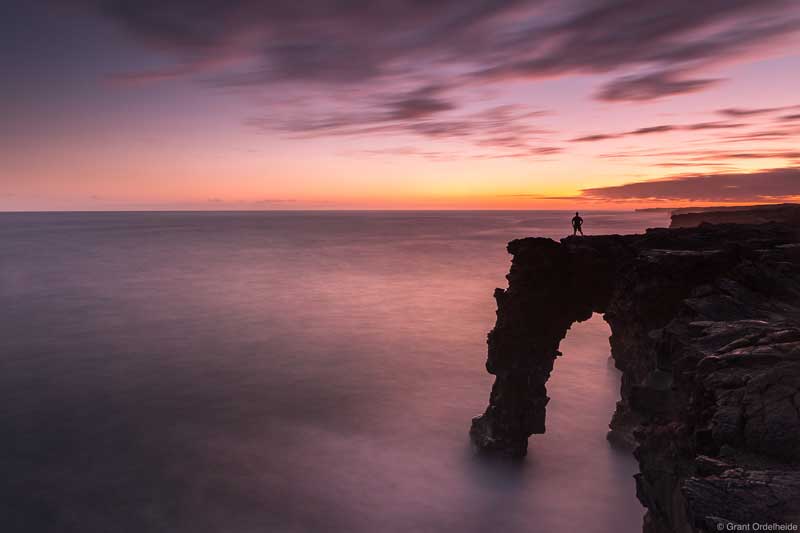
The Honopū Arch, a massive, 90-feet (27 m) tall and spanning roughly 124-feet (28 m) wide natural sea arch, located along the sacred and stunning Nā Pali Coast of Kauaʻi Island, the second-oldest inhabited Hawaiian island, divides the Honopū Valley and dramatically frames the Honopū, also called Cathedral Beach, a remote, inaccessible white-sand beach, backed by the towering 1,200-feet sea cliffs. The Honopū Valley, also known as the Valley of Lost Souls due to its vanished inhabitants, associated with the history of an ancient Hawaiian burial site for royalty, is considered a significant natural wonder, as well as a place of deep spiritual significance, offering breathtaking views of the sheer cliffs and untouched beauty of the sea. The iconic Honopū Arch, along with its valleys and the beach, is a part of the Nā Pali Coast State Park, also known as the Nā Pali Coast State Wilderness Park, famous for its dramatic cliffs and remote location, making it one of the most stunning sights of the Hawaiian Islands. However, the absence of any road or hiking trail made the region notoriously inaccessible by land, requiring a dangerous and challenging swim or a boat trip from a neighbouring beach without landing, offering breathtaking views, avoiding the risky swimming or landing, since water landings are often prohibited.
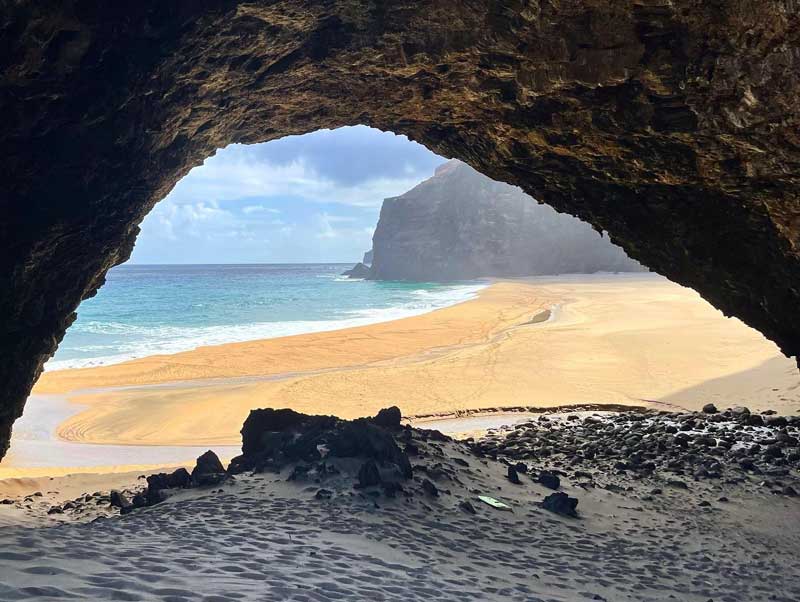
The word Honopū stands for conch in the Hawaiian language, and the area is named after the distinctive conch shell-shaped arches of the area, which typically produce conch-shell like sounds while the powerful sea wind blows through them. Because of the mysterious mass exodus of the inhabitants of the region in the mid-19th century, it is often referred to as the valley of the Lost Tribe. Nevertheless, the area is sacred to the locals due to its history associated with an ancient Hawaiian burial site for the royalty on the surrounding cliffs. Strangely, it was believed by the people of the land that, after the death of a chief, his bones gain a supernatural power, and if found by any antagonist, those bones could be used by him against the chief’s tribe. Consequently, the best possible care was taken to maintain maximum secrecy for the burial of the chiefs, and the person entrusted with the responsibility of carrying the bones for burial, had to face death, to ensure the secrecy of the location of the bones. However, as the area is believed to be sacred by the locals, due to the history of an ancient burial place, landing of any aircraft or boat or kayak is not allowed in Honopū Valley or on its beach, making it accessible only by swimming from an offshore vessel or from the adjacent Kalalau Beach. But swimming to the shore from an offshore vessel or from the adjacent Kalalau Beach is very challenging and is recommended only for the strong, confident and experienced swimmers, familiar with rough and turbulent ocean conditions.
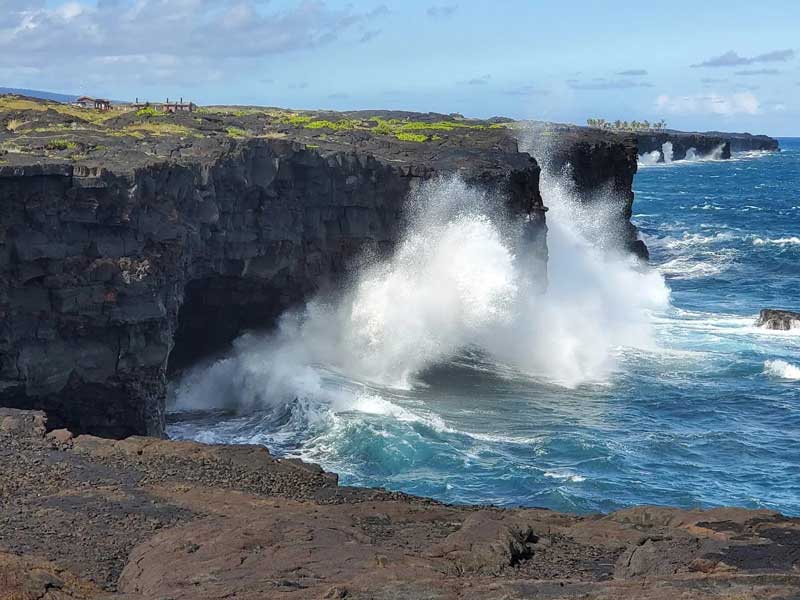
Defined by its dramatic cliffs, secluded beaches and sacred status, the Honopū Arch on Kauai's Nā Pali Coast is rich with several native flora like Ōhiʻa Lehua, a most common species of native Hawaiian flowering evergreen tree, Koa, a valuable Hawaiian tree, used for making furniture, weapon and canoes, Maile, a fragrant, native Hawaiian vine, Māmaki, a species of flowering plant, Olonā, another flowering plant and Aʻaliʻi, a tough, native Hawaiian shrub, famous for its resilience to strong winds, dry conditions. The steep cliffs of the area are crucial habitat for native seabirds, while the marine life includes several fish, turtles, and dolphins, often seen from the glass-bottomed tour boats.
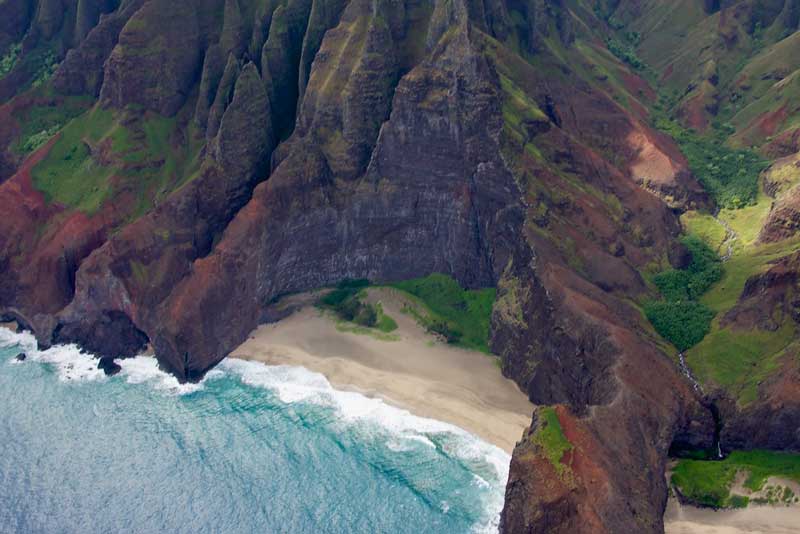
Regarded as a highly sacred site, locally called wahi pana, for serving as ancient burial grounds for Hawaiian royalty, the site is managed by the Hawaiʻi Department of Land and Natural Resources (DLNR), preserving its pristine condition which includes predator control plans to protect endangered native seabirds and rare plant species in the surrounding forests, along with emphasizing respectful viewing, often from a distance via boat or helicopter tours, to honour its cultural legacy.