FREE ASSISTANCE FOR THE INQUISITIVE PEOPLE




















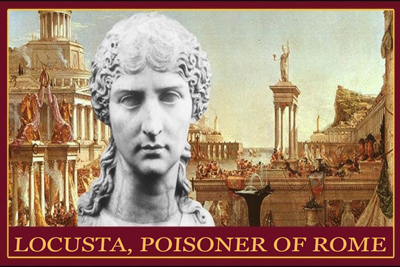
Locusta from Gaul, a maker of poisons during the 1st century Roman Empire, was a rare exception in those days, when women were mostly confined to the home, toiling as maids, as cooks, or as governesses. Active in the final two reigns of the Julio-Claudian Dynasty, and a favourite of Emperor Nero for several years, she was feared and respected for her knowledge of creating fatal poisons from the extracts of the local herbs and toxic plants, as well as her position in the inner circle of the royal court. She was one of the most begrudgingly respected women of ancient Rome, infamous for playing a key role in high-profile political assassinations for more than once, and although she was often described as history’s first serial killer, her motives were entirely mercenary, and unlike serial killers, she derived no thrills from her kills. However, details about her life are somewhat sketchy because of the non-availability of any proper documentary evidence.
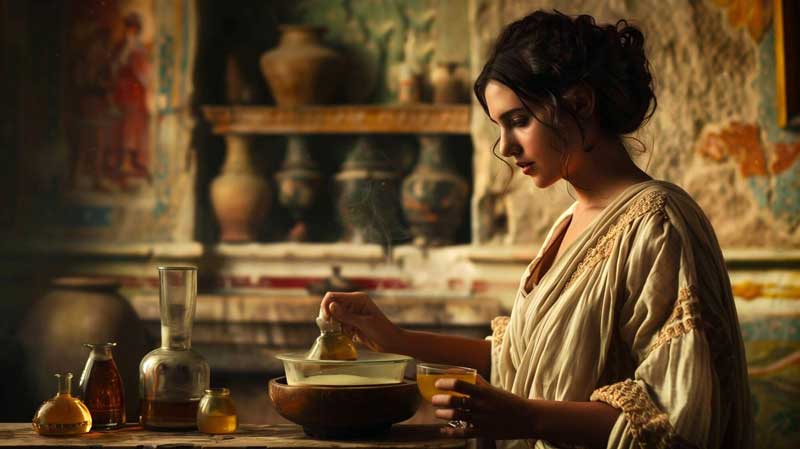
Born in the countryside of Gaul, Locusta had been a lover of plants since her early years, and soon became interested in knowing about the merits and demerits, benefits and dangers of certain plants, and ultimately earned knowledge of creating deadly poisons. As she grew up and moved to Rome to make money for a better livelihood, she surprisingly discovered that the quickest way to achieve her goal would be to use her knowledge of toxicology, and to provide people with poison, in a city, where greed and ambition were rampant, and everyone had plenty of enemies.
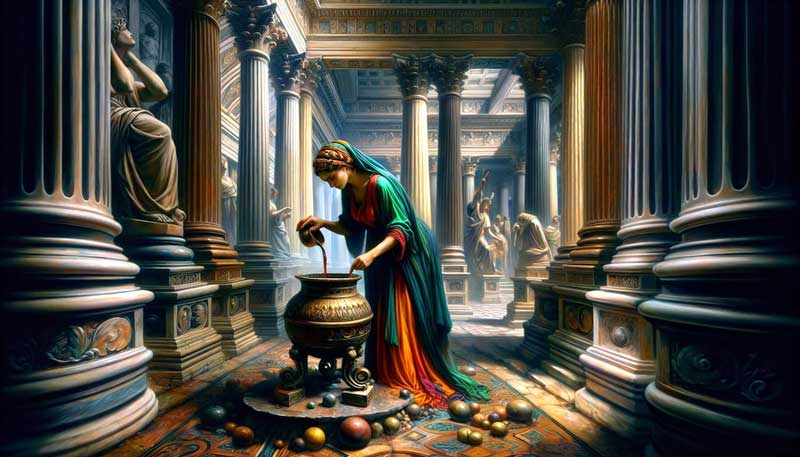
The information about Locusta’s skills of providing poison soon reached Empress Agrippina the Younger, and she employed Locusta to murder her husband Claudius, to ensure her son Nero inherited the throne. Accordingly, Locusta supplied a lethal poison which was carefully mixed with a dish of mushrooms, a favourite dish of the emperor, resulting in the assassination of Claudius on 13 October 54 AD. Legend says, being a cautious man, Claudius always had a feather on the table while taking food, and in case of any doubt of a possible poisoning, he used to put the feather down his throat to induce vomiting to throw out the poisonous food from his stomach. However, the trick did not work, as the feather was also taken care of, and was soaked in poison. Nevertheless, historians are not very sure about the involvement of Locusta in the matter, but it is generally agreed that Claudius was almost certainly poisoned and during that time, Locusta was the best source in Rome for procuring poison.
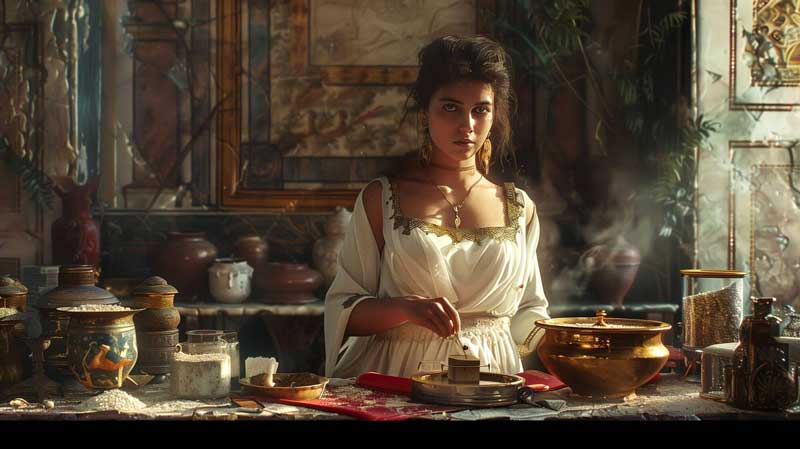
After the death of Claudius, Nero became the emperor of Rome, while Locusta was imprisoned by state authorities for multiple poisonings in Rome. Nevertheless, Agrippina the Younger spared her from execution to use her expertise, and later, she also worked under Emperor Nero. However, Agrippina the Younger soon fell out with her son, as she expected to rule as co-ruler behind the scenes, but Nero wanted total, independent control, and as their relationship frayed, Agrippina allegedly threatened Nero to support Britannicus, Nero’s step brother. Sensing a possible threat, Nero decided to eliminate Britannicus, and instructed Locusta to do the needful.
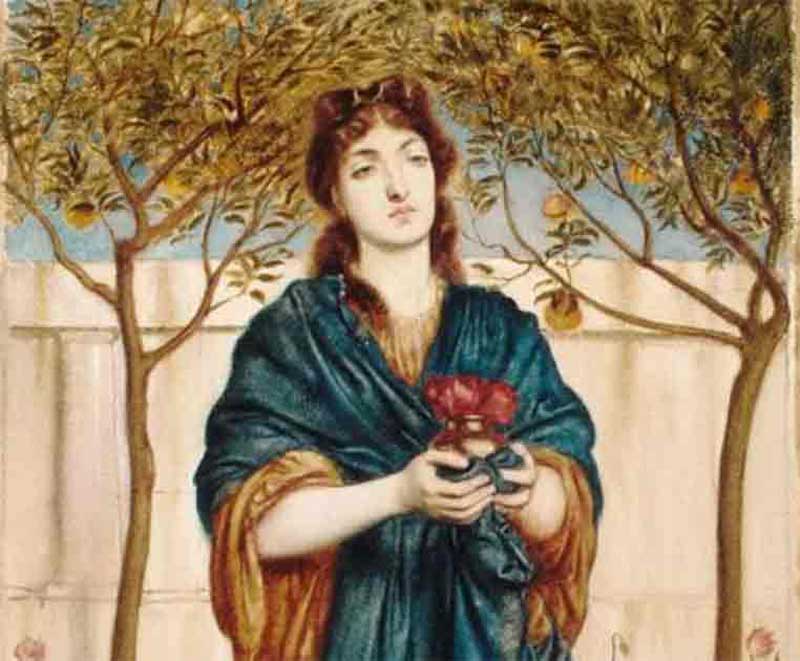
However, the plan for the murder needed to be significantly skilful, because as a precaution, food and drink for serving Britannicus were always first checked by a food taster. To bypass the food taster safely, a harmless, hot drink was first tested, but since Britannicus found it too hot, cold water laced with a fast-acting poison, supplied by Locusta, was added to cool it, and as Britannicus drank the poisoned liquid, he lost his voice and collapsed in convulsions, when Nero assured the panicked guests that it was merely an epileptic seizure, a condition that his brother often suffered from since infancy. However, soon after the incident, the body of Britannicus was rushed to a hurried and simple cremation that very night to hide the evidence of foul play
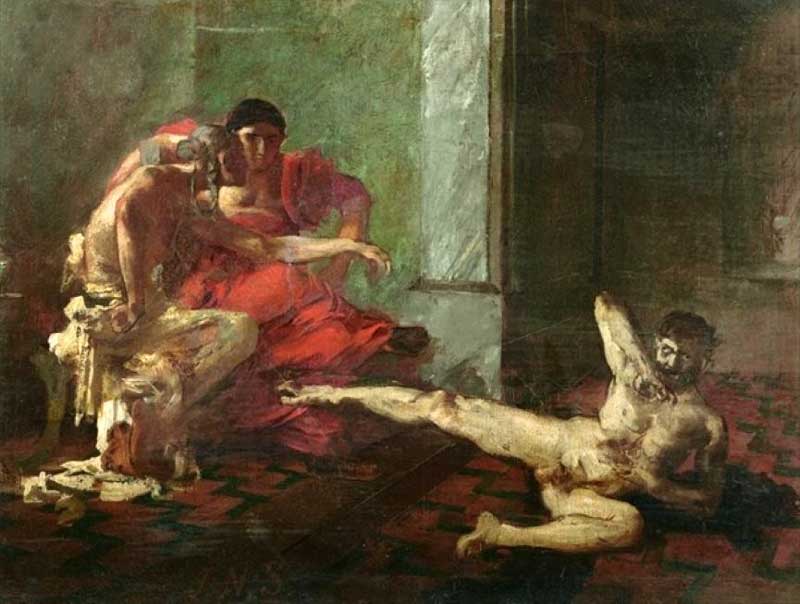
Following the successful murder of Britannicus in 55 AD, Locusta was richly rewarded by Emperor Nero with large country estates, along with full pardon for the many poisonings she had committed. In addition, she was also appointed as the Imperial Poisoner with full Imperial protection. But her contentment did not last long, as in 68 BC, the citizens revolted against Nero, the Praetorian Guard stopped supporting him, and the Senate declared him a public enemy. The apprehensive situation forced Nero to leave Rome, but finding no way to escape, he finally committed suicide on 9 June 68 AD. Ironically, he lacked the courage to consume the poison supplied by Locusta, which he kept in a golden casket, and carried it with him as a backup for a quick exit. Instead, he ultimately made himself stabbed with the physical help of his private secretary, Epaphroditus. By that time, the Roman authorities had rounded up Locusta alongside other prominent henchmen of Nero's tyranny, and finally, Locusta was executed in late 68 or early 69 AD on the orders of Galba, the new emperor. Historical records note that she was led through the city in chains, exposed to public humiliation, before being put to death, though the precise method is not detailed in surviving mainstream accounts.