FREE ASSISTANCE FOR THE INQUISITIVE PEOPLE















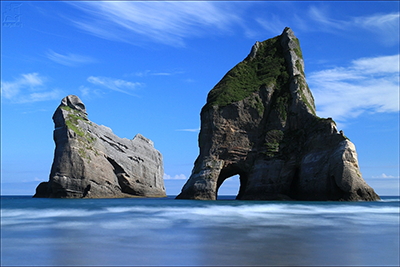
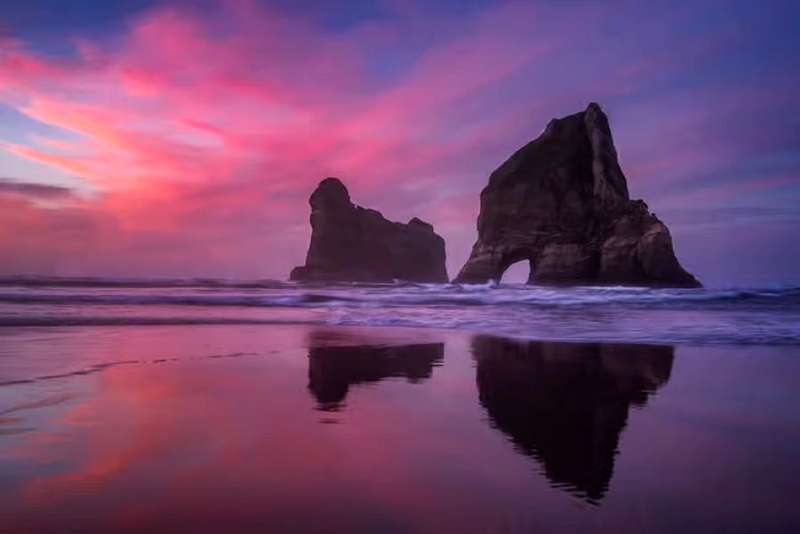
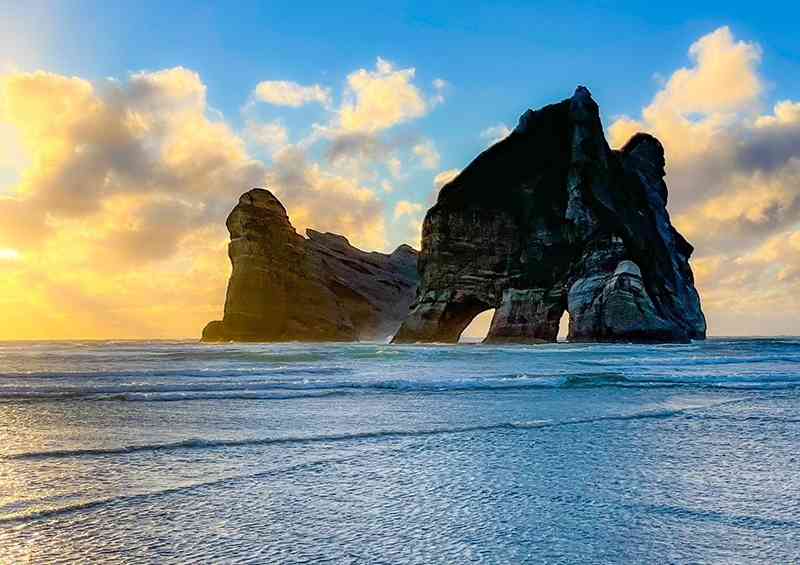
The Archway Islands, featuring three distinct natural arches visible from the shore, are four wind-and-wave-carved rock stacks off Wharariki Beach at the northern tip of New Zealand's South Island, a spectacular destination famed for the towering Southern Alps, crystalline glacial lakes, and dramatic fjords. The larger island of the Archway Islands contains two arches on its beach-facing side, and is often photographed together from a specific angle, while the third is on a smaller, adjacent island. Situated within a short 20-minute scenic walk through farmland and sand dunes from the end of Wharariki Road in Puponga, the appearance of the islands shifts dramatically depending on a vantage point. Notably, the Wharariki Beach and the Archway Islands are part of the Puponga Farm Park, as is Cape Farewell and the land surrounding the bottom end of the Spit, a protected coastal area managed by the Department of Conservation, and contribute to one of New Zealand's most spectacular shorelines, characterised by caverns, rock pools, and abundant wildlife including seals.
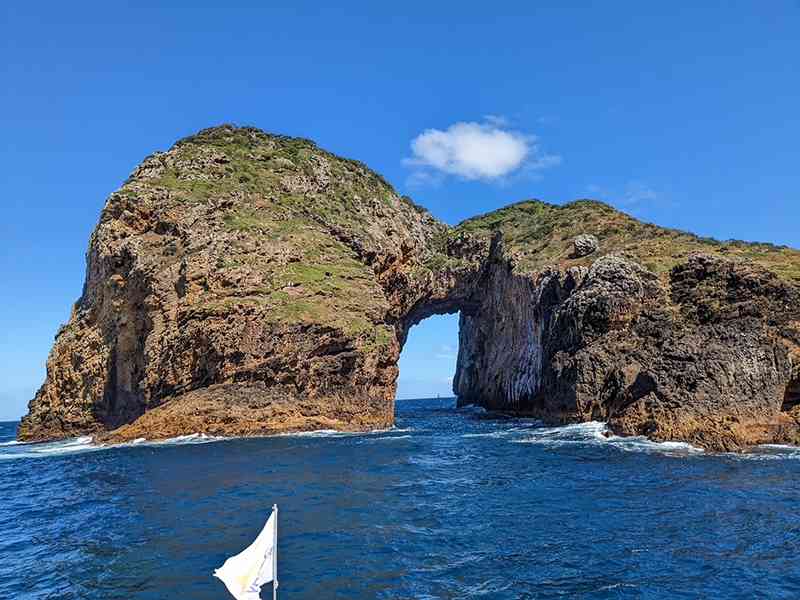
The Archway Islands, located just west of the northernmost point of the South Island, Cape Farewell, and at the end of Wharariki Road, are a group of four rock stacks or small islands, with the largest one measuring only about 980 by 660 feet (300 by 200 m), generally not cut off by the sea, and is closest to the mainland and adjoins Wharariki Beach; while the second island lies around 490 feet (150 m) offshore and is relatively flat and vegetated. The remaining two islands, containing two natural rock arches, are typical rock stacks, with the larger one only 217 feet (66 m) tall. Incidentally, the name the Archway Islands, originating from the distinctive natural rock arches formed by coastal erosion on the islands, was formalised and gazetted only on 14 November 2013, when the New Zealand Geographic Board officially named 133 places.
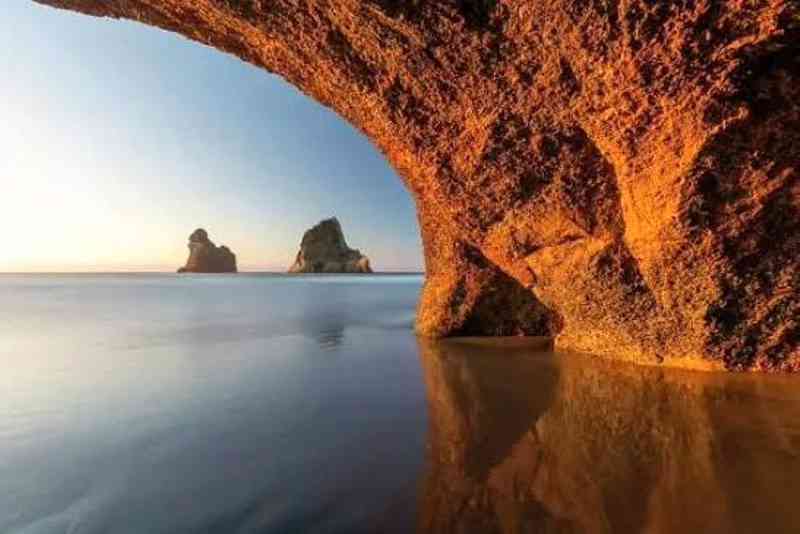
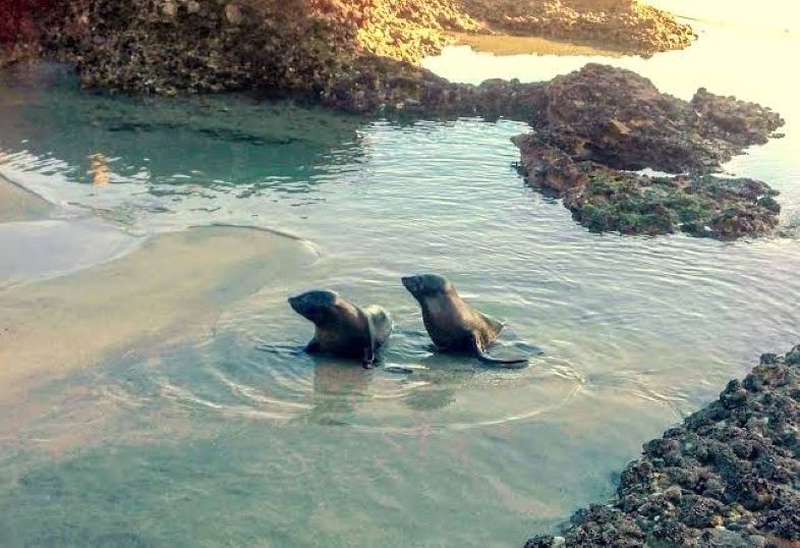
The Archway Islands support a notable assemblage of coastal flora including pingao grass, which stabilises sand dunes and contributes to habitat formation for invertebrates and ground-nesting birds, with restoration efforts emphasising its planting to replace invasive species like marram grass. The rocky coves of the islands serve as major breeding colonies of New Zealand fur seals, established since the early 1980s, providing a key hauling-out and pupping site that enhances marine mammal diversity in the region. During low tide, visitors can walk right up to the shallow sea pools where newborn pups often play while the mothers forage at sea.
The Archway Islands contribute to the Farewell Spit ecosystem, and its critical wetland supports over 90 bird species, including migratory waders and declining blue penguins in nearby coastal zones. Apart from that, several seabirds also use the islands and nearby areas as rookeries, which include the white-fronted terns, with approximately 35 pairs recorded, while black-backed gulls, while other species like Caspian terns frequent the adjacent areas.
Visiting the islands is best at low tide to safely access the islands via the exposed sandbar and explore the surrounding caverns and dunes, as high tide isolates the islands and increases risks from surging waves. However, safety precautions are essential as the unstable cliffs may suddenly erode, and swimming is discouraged due to strong currents and abrupt changes of weather. Entry to the Puponga Farm Park and the beach is free, with no permits required for day visits, but there are no on-site facilities such as toilets or shelters.