FREE ASSISTANCE FOR THE INQUISITIVE PEOPLE














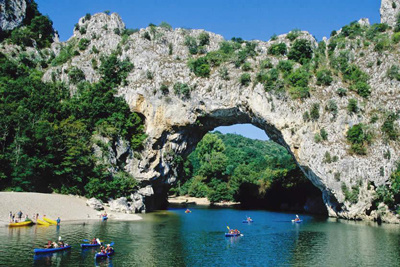
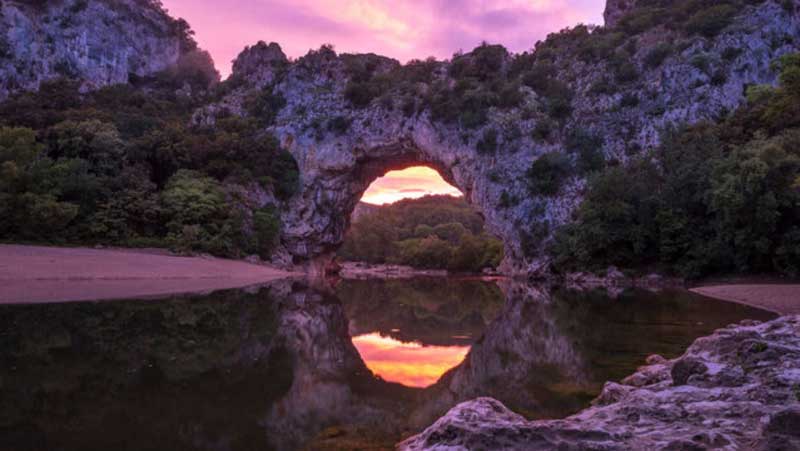
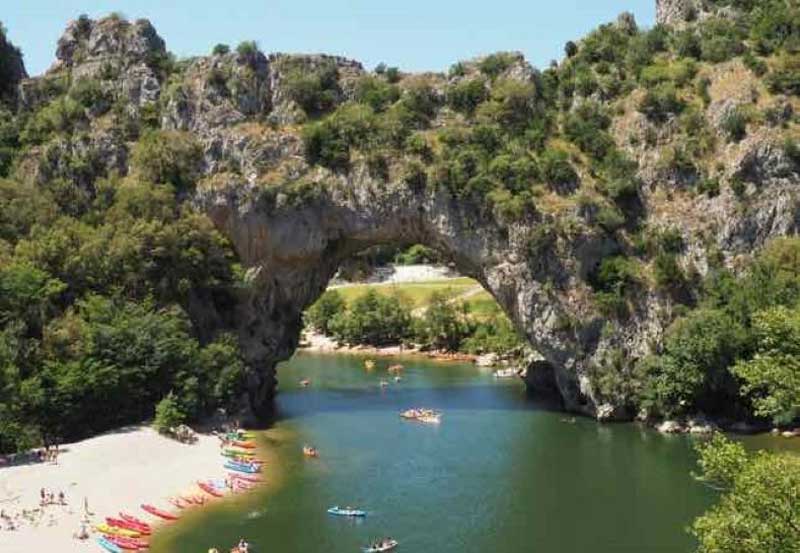
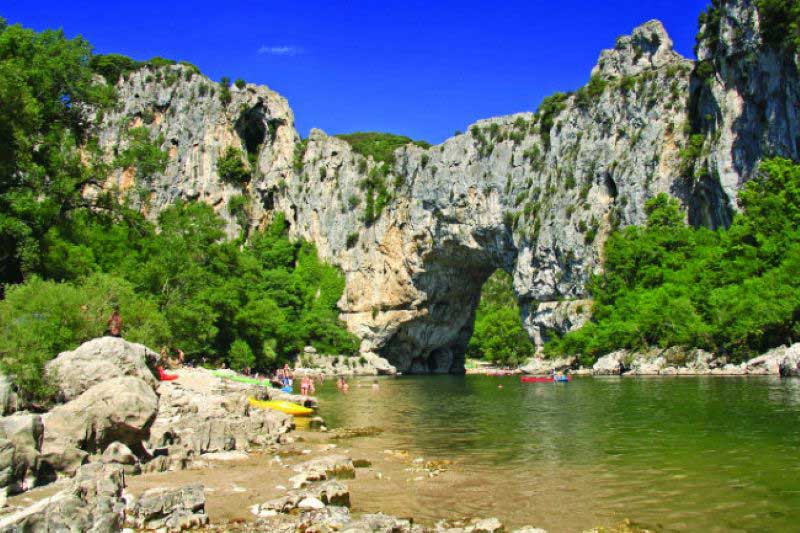
Vallon-Pont-d’Arc, a village in southern France’s Ardèche department, is named after La Pont d’Arc, a huge, natural rock arch, formed where the Ardèche River has carved a dramatic canyon through a limestone plateau. Usually described as the natural entrance to the Ardèche Canyon, the massive 194 feet (59 m) wide and 112 feet (34 m) high at the top of the opening, La Pont d’Arc is a true geological curiosity, formed around 124,000 years ago as a result of the collapse and erosion of the massive limestone rock. The huge natural arch, sculpted by the River Ardèche over thousands of years, is one of the geological gems of the region with its extraordinary dimensions, and is undoubtedly the most famous symbol of Vallon Pont d'Arc, as well as a popular haunt for tourists for its impressive canoeing and kayaking area. Enriched with its fascinating history, La Pont d’Arc is classified as a Grand Site de France, a label of excellence awarded to natural and cultural sites in France, and is also one of the most photographed natural monuments of the country.
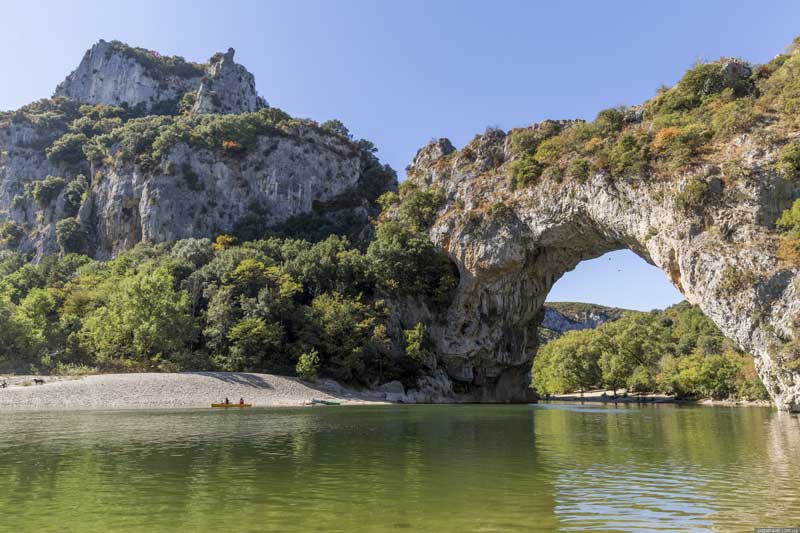
The site is accessible on foot from several nearby parking lots and is also an ideal starting point for Downhill Mountain biking, while the sandy beaches that line the Ardèche River at the foot of the Pont d'Arc are popular bathing spots. However, canoeing and kayaking adventure in the Ardèche, from the mythical Pont d’Arc to the spectacular landscapes of the Gorges of the Ardèche national nature reserve, is an experience of a lifetime. The other attractions around the area include the Plagnes tunnel, a trail featuring a disused railway line through illuminated tunnels with changing colours of lighting, providing a unique visual experience.
Visitors may also enjoy the viewpoint of a settlement, named Labeaume, offering panoramic views of the river and the village, with typical terraced houses lining cobbled streets and small arched passageways, providing a perspective over the charming village nestled along the Beaume Gorges. The area is mostly popular for summer activities, including the Labeaume en Musiques festival, often held at the foot of the cliffs, in the hanging gardens or in the village square.
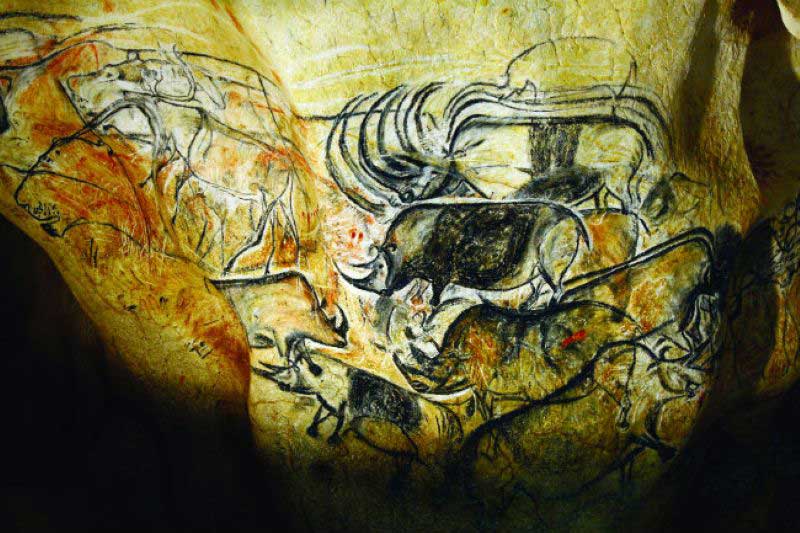
However, the most interesting spot in the near vicinity of the arch is the Chauvet-Pont-d'Arc Cave or Chauvet Cave, containing one of the earliest known, about 30,000 years old, Palaeolithic or old stone age cave paintings, located near the commune of Vallon-Pont-d'Arc on a limestone cliff above the former bed of the river Ardèche, in the Gorges de l'Ardèche, which is locally known as the European Grand Canyon. Discovered on 19 December 1994, it is considered one of the most significant prehistoric art sites in the world, and was enlisted in the UNESCO World Heritage Art Site on 22 June 2014. But the cave has been sealed off to the public since 1994, as the admission of visitors on a large scale led to the growth of mould on the walls that started to damage the invaluable paintings. Nevertheless, a replica of the Chauvet Cave was opened to the public on 25 April 2015, in a circular building, a few kilometres from the cave, which is the largest cave replica ever built worldwide.