FREE ASSISTANCE FOR THE INQUISITIVE PEOPLE













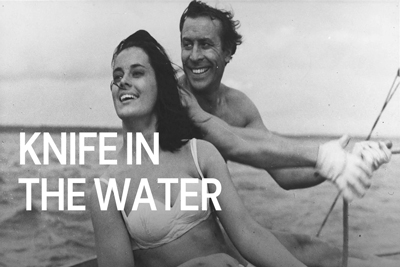
Knife in the Water (1960), a Polish psychological thriller film, the first feature-length film directed by Roman Polanski, based on the often intertwined human emotions like passion, desire, sexual jealousy, and the resulting complex behavioural responses like violence and cruelty, is considered one of his best-reviewed works. However, Knife in the Water is atypical from other thrillers, as it represses the usual violence promised by the thriller, and ends its narrative in a scene of total stasis, which is opposite to violence. Featuring only three characters, a married couple, Andrzej and Krystyna, and a young male hitchhiker, whom the couple invited on their yacht for a brief retreat, along with the boat, and a vast expanse of sea up to the horizon, the film plunges into dramatic convolutions that build an ambiguous tension while revealing the deep psychological complexities of the characters. Spurring a number of escalating confrontations between the couple, and also between Andrzej and the hitchhiker, the film is also regarded as one of the masterpieces of Polish cinema, and also the first Polish movie to be nominated for an Academy Award for Best Foreign Language Film.
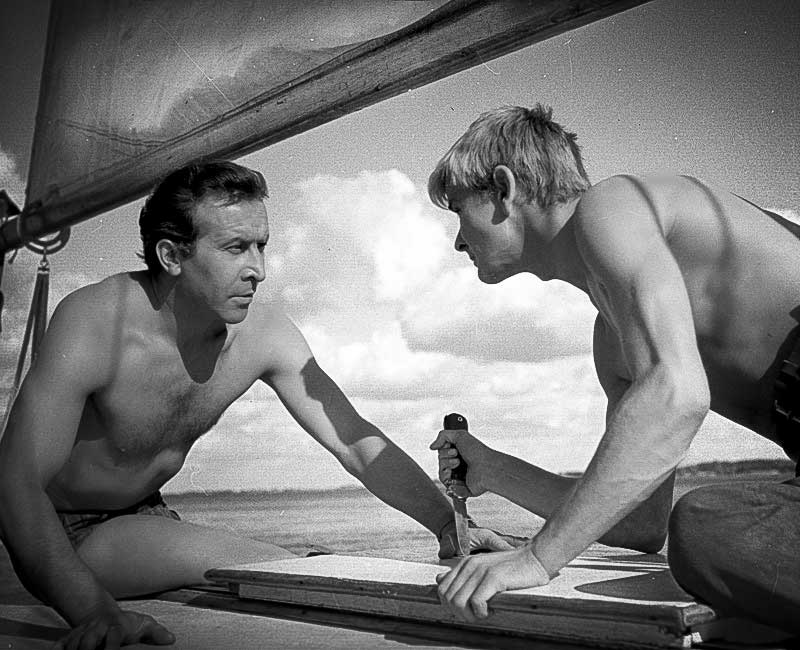
Although initially the hitchhiker was spontaneously invited as a plaything for the wealthy couple, eventually he sparked a sense of insecurity in Andrzej that transcends class boundaries, as both men were vying for the attention of Krystyna. Adding to the tension as well is the suggestion that Krystyna herself may not necessarily belong in this upper stratosphere of society, having married into money rather than being born into it. Their marriage is at a stage where familiarity breeds contempt, a contempt which is outwardly shown only behind closed doors and only when an incident of some sort sets off one or the other. The egotism of her rich husband is as plainly evident to her as the hitchhiker’s jealous desire to become him, constantly drawing them into contest over that all-important knife, the huge knife the young man carries on his person, the phallic icon of masculinity, which far outweighs its physical danger, chillingly sinking a rocky marriage before it gets the chance to take a life. The dangerous game of Five Finger Fillet that the hitchhiker plays with the knife is surely an impressive feat of dexterity too, and although Andrzej puts an end to it with apparent concerns of ruining the deck, his competitive side soon emerges when they take turns throwing it at the wall. However, the lingering close-ups of the knife’s movement that Polanski uses to create suspense, reflects his intention to serve it symbolically as an integral role in the climax.
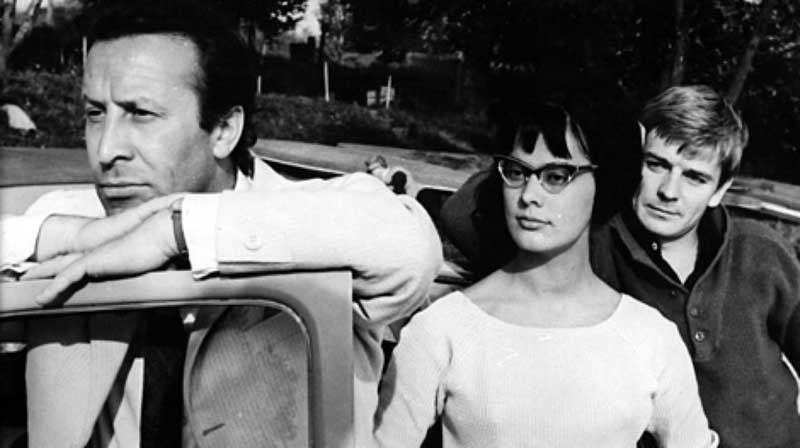
The film starts with the scene of a couple, Andrzej and Krystyna, driving through the countryside on a Sunday on their way to the lake to embark on an overnight sailing excursion, when they almost run over a young male hitchhiker, who was standing in the middle of the road. Annoyed by his irresponsible act, Andrezj furiously retorted that if he had performed that silly stunt a half a mile back, he would have been dead, snidely getting a dig in at his wife’s driving, and although Krystyna did not reply and kept her calm, her silence clearly indicated the prevailing tension between the couple and the slow deterioration of their marriage. Exasperated by her demeanour, Andrezj practically dragged the young hitchhiker into the car, despite their antagonism, offering him a ride as far as the marina, and after arriving at the lake, he invited the younger man, whose name we never learn, to accompany them in sailing, instead of leaving him behind. The young man, in his turn, agreed to accept the offer, although he had no idea about sailing. However, with the progress of the sailing trip, the antagonism between the two men began to increase again. The hitchhiker's pocket knife, seemingly his most prized possession on his person, became a symbol of power struggle between the two men, as both of them strived to be the alpha male, contending for the favourable attention of Krystyna.
With the appearance of the young hitchhiker in the life of the couple, Polanski began a series of subtle but dangerous games in the film, involving a power struggle of class distinction, a struggle between the haves and have-nots, along with sexual competition, hyper-masculinity, and the slow but steady deterioration of a marriage. Andrezj belonged to the upper middle class, and financially well off in a country that was still under the harsh Communist regime with most compatriots struggling in their everyday life. But the young man is a commoner, probably a student, or a former student, or perhaps a drifter who wants what Andrezj has; money, power and a very attractive, sexy, young woman. Fuelled by the mocking jabs of the drifter, his minor rebellions, and flirty pursuit of Krystyna, who alternates in the middle between amusement and apprehension, Andrezj felt threatened by him, and taunted him back, gave orders on the boat, treating him as a subordinate.
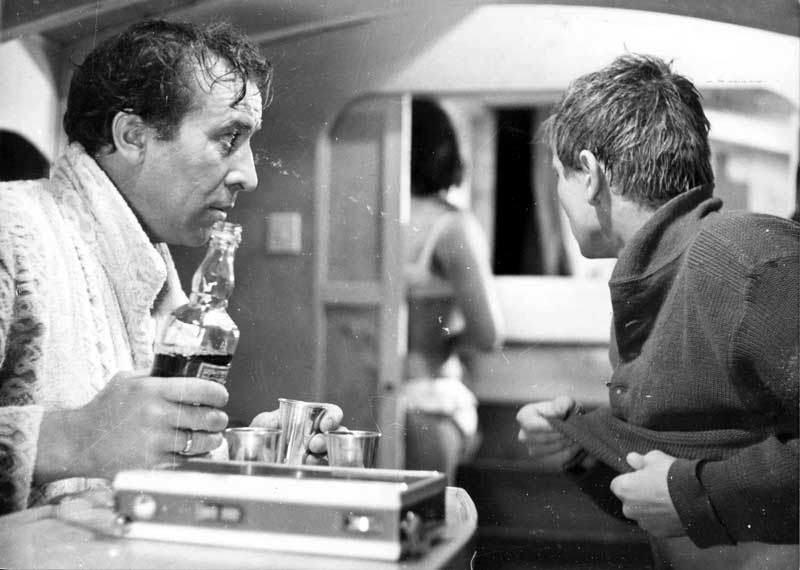
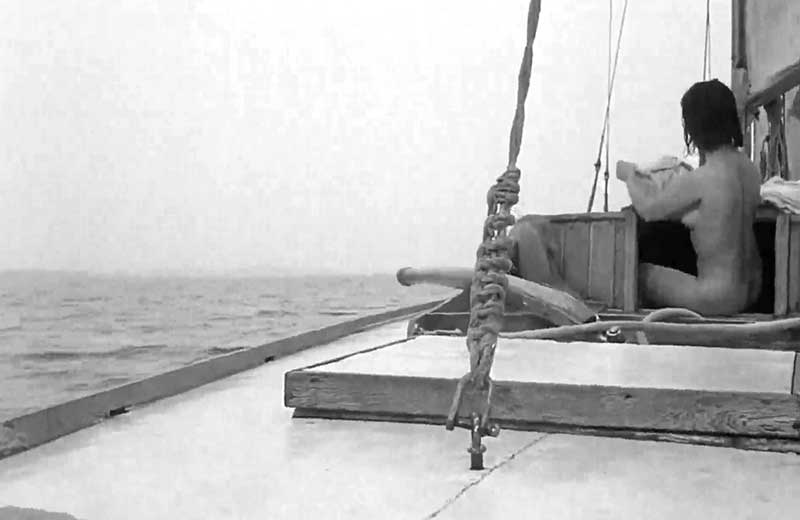
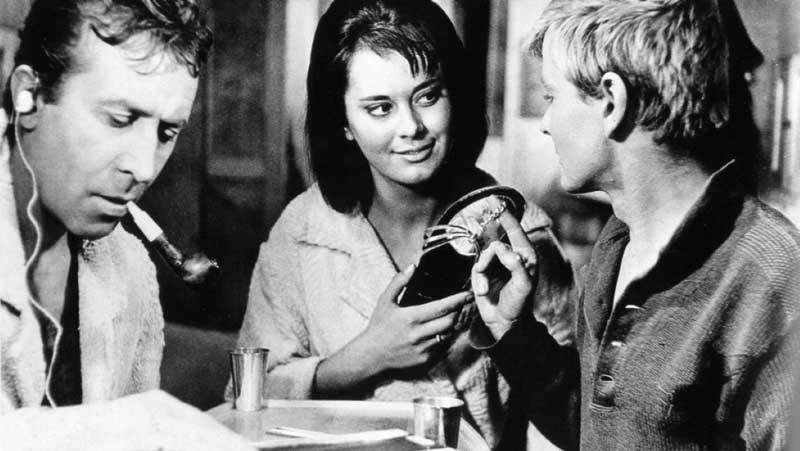
Notably, while the three protagonists were on board of the yacht, Polanski intimately focused on their bare skin from low camera positions, while high angles alternately lay their half-naked bodies out on the deck, like sacrifices prepared on an altar. Krsytyna was mostly seen dressed in a skimpy bikini, and once the young drifter caught a furtive side view of her removing the bikini top. Nevertheless, the three played a game of pickup sticks, while Krsytyna sang a song for the two, and offered the young man her shoe with a knowing smile. Eventually, when they got the boat back to deeper water, the wind had stopped and the three spent the night quietly. But the next day a fight ensued between Andrzej and the hitchhiker, when the latter fell into the water. With no sign of him resurfacing, the couple assumed the worst, as the drifter earlier mentioned that he could not swim, Krsytyna dived into the lake to find and rescue the man, if possible. However, after failing in her mission, she swam back to the yacht, expressed her hatred towards Andrzej, and called him a murderer, while Andrzej swam to shore to fetch the police, after briefly considering covering the tracks of his apparent murder. However, the nameless young man did not drown, and all the time he was hiding behind a buoy, and when he became sure that Andrzej was nowhere on the scene, he came out of his hiding, swam to the yacht, to find a naked Krsytyna drying off with a towel. Consequently, they readily enjoyed sex, off-screen, and thus the young man took his revenge by winning the sexual favour of the rich man’s wife.
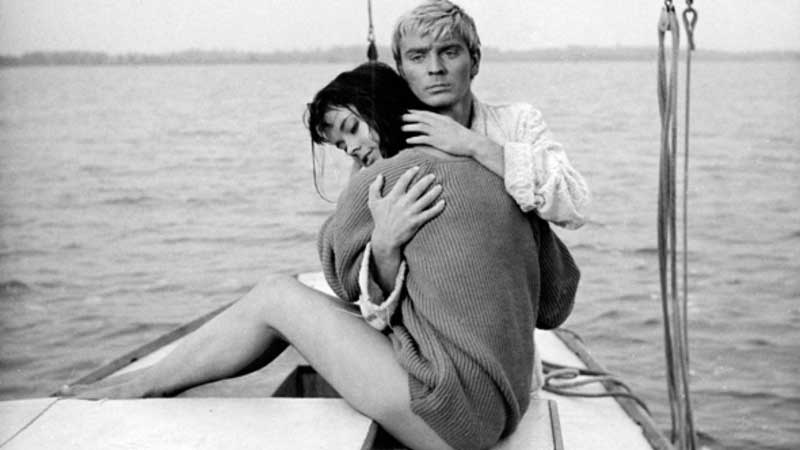
As Krystyna sailed back to the dock, the man jumped off the yacht and took his way before the arrival of Andrzej and assuming his charges. Andrzej wanted to report to the police about the missing of the young man, when Krystyna retorted about his return and also confessed her infidelity. That was too much for Andrzej, and he realised that his image of masculine ego and financial power had been completely shattered in the eyes of his wife, his jealousy was exposed, and his insecurity was evident. At a road intersection, he took his car to a complete standstill, as reluctant to continue forward as he was scared to move back.
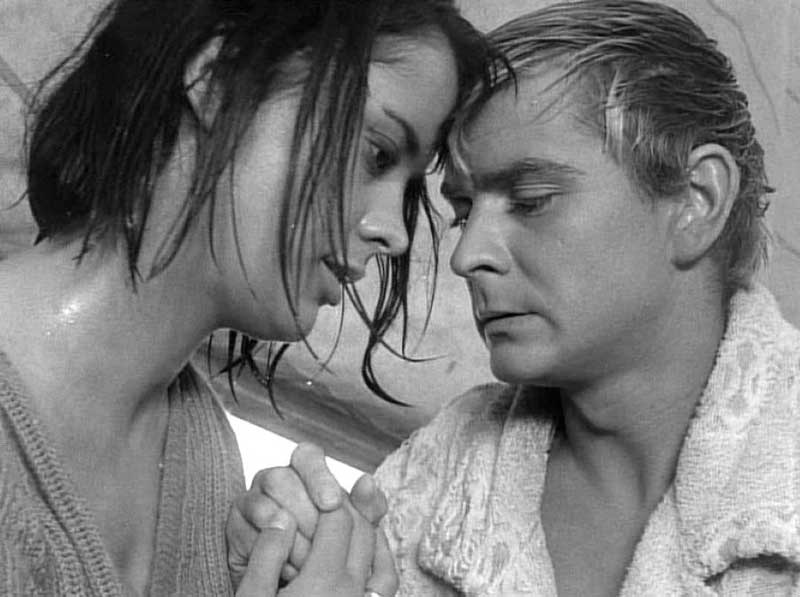
Knife in the Water (1962), containing more than enough tension and dialogue that cuts deep, like the huge knife the young man carries on his person, launched Polanski’s career as an international filmmaker who would later enrich the world cinema with some of the finest, most tense and gripping thrillers. However, although the film generally earned favourable reviews in the United States, the Polish Government found it frivolous and was surprised by the reception it would receive overseas. Nevertheless, in addition to the Academy Award nomination for Best Foreign Film, it also earned a BAFTA nomination for Best Film from any Source, and won the FIPRESCI Prize at the Venice Film Festival in 1964.