FREE ASSISTANCE FOR THE INQUISITIVE PEOPLE





















Filmed in the great tradition of Italian neorealism, and harshly criticized upon its release in Italy for obscenity, Mamma Roma (1962), an Italian drama film written and directed by Pier Paolo Pasolini, depicting the story of a forty-five-year-old Roman prostitute who dreams of a better life, offers an uncompromising look at the struggle for survival in postwar Italy, where poverty, moral deterioration, and social barriers foil even the most determined hopes. With poetic direction and uncompromising honesty, it is a raw, compassionate film about the cost of dreams in an unforgiving world, a powerful commentary on class, redemption, and the illusion of social mobility, offering a glimpse at a most controversial director in the process of finding his style. The haunting, neorealist drama, exploring the contemporary daily life and struggles of Italians in the post-war period, and anchored by a towering performance from Anna Magnani in the role of a not so young adult Roman prostitute, is a raw and compassionate film about the cost of dreams in an unforgiving, cruel world.
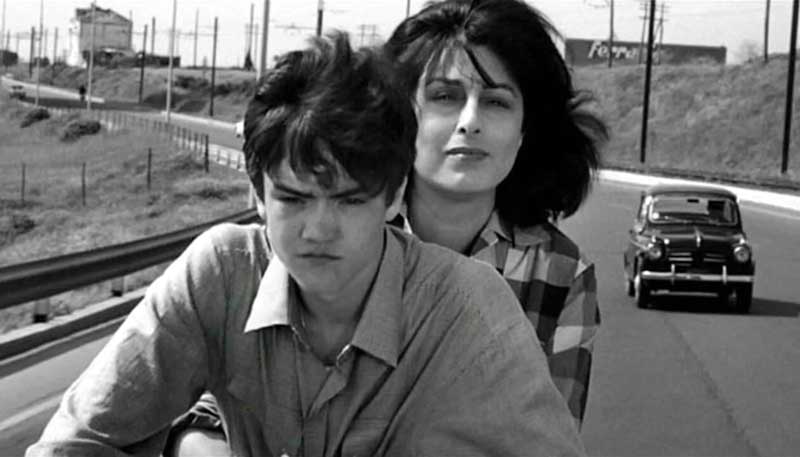
Based on the true case of Marcello Elisei, who had died in prison, Mamma Roma, Pasolini’s second feature, is both an extension of the postwar neorealism of Rossellini and De Sica, in which Anna Magnani portrayed one of the great roles in her career. However, as Pasolini was not happy with Magnani's interpretation of the title role, he expanded the role of Carmine, Mamma Roma's former pimp and lover, played by Franco Citti. The filming began on 9 April 1962, but unfortunately it was temporarily suspended when Franco Citti was arrested for a petty crime. Nevertheless, filming took place in the Parco degli Acquedotti, a public park, part of the Appian Way Regional Park, located to the southeast of Rome, where Pasolini’s camera often followed the mother and her son coolly, from medium-long distance, lost or shrunken in a harsh, cruel and terribly unforgiving city.
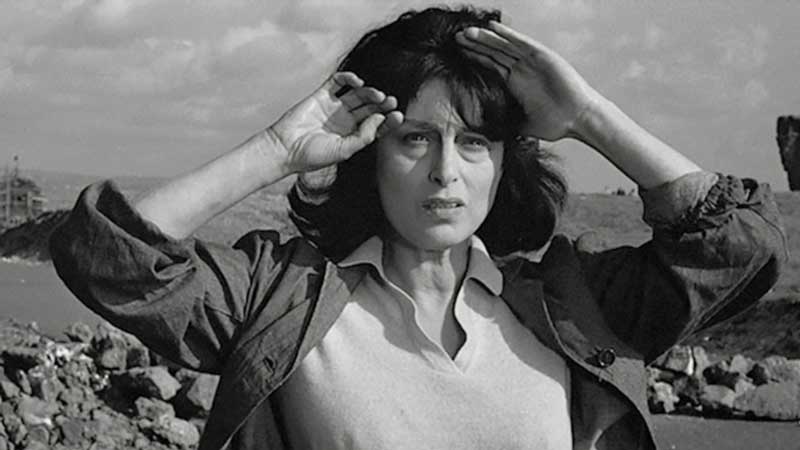
Roma’s efforts to become respectable from prostitution consist of simply hawking fruits and vegetables from a street waggon, and going to Mass, though Pasolini viewed her attempt to find a place in a rapidly changing society as an expression of moral decay, because the consumerism of the prevailing society made her life a bitter struggle for longer moments of joy than the few she gets to experience. When she visits a priest for advice, and he tells her that she cannot make something out of nothing, she readily draws on the tricks of the very underworld she has struggled to escape to get what she wants for her son. Roma is a fiery, proud, vulnerable woman whose dreams are both noble and naive. She wanted to promote herself and her son into the middle class, but the weight of her past and the harsh realities of her world kept both the mother and the son dragging down, and despite her fierce maternal love and resilience, she failed to shield Ettore from her former life, leading to tragedy.
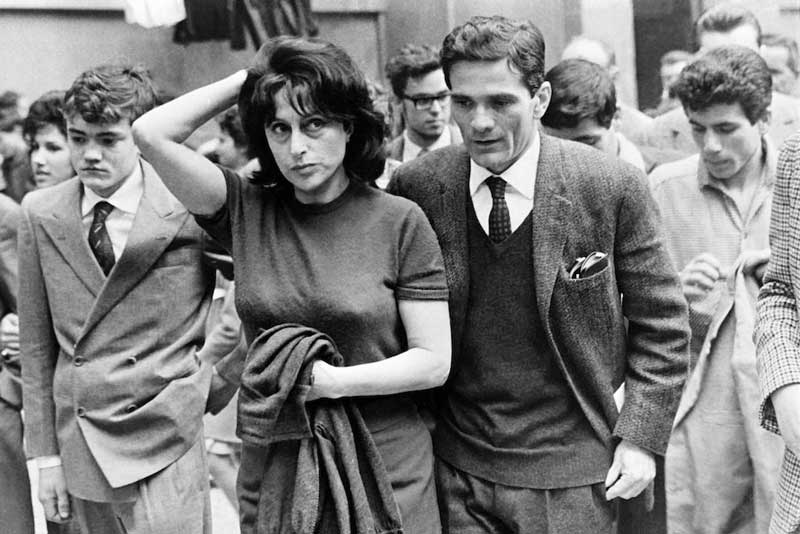
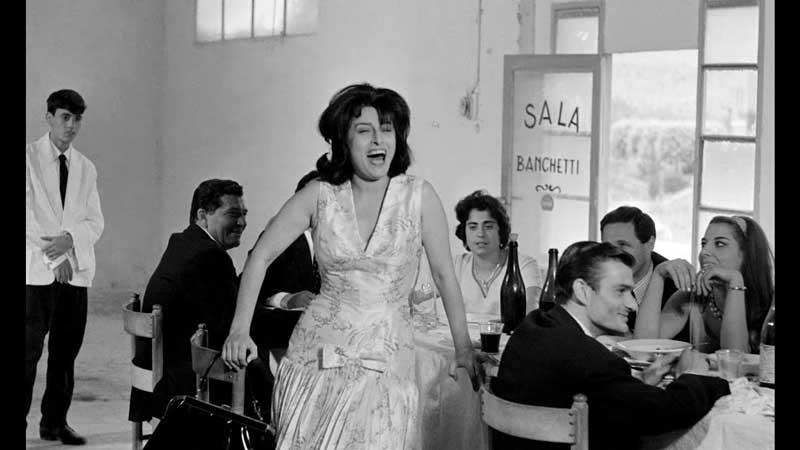
The film begins with the rather funny scene of chasing pigs into the wedding reception of Carmine, Roma’s pimp and former lover, after which Mamma Roma became drunkenly engaged in a musical contest with the bride and groom, loudly laughing on the edge of a cackle, before swiping her veil. Later, it was also revealed in her expansive, chatty dialogue that she was married twice, to an elderly fascist and then the criminal father of her 16-year-old son, Ettore. That was her last rural fun-filled celebration, before giving up her life as a prostitute and bringing her son from the countryside to live with her in the city. By that time, the carefree, undaunted, and determined woman, the middle-aged former streetwalker Mamma Roma could manage to save up and buy an apartment, and hopes Ettore to attend a good school, train for a good job, meet a kind woman, and marry. Becoming free from her disgusting pimp and ex-lover Carmine, after his marriage, she has decided to completely give up her past life of a whore, and is bent on making an honest living by hawking fruits and vegetables from a street waggon stall.
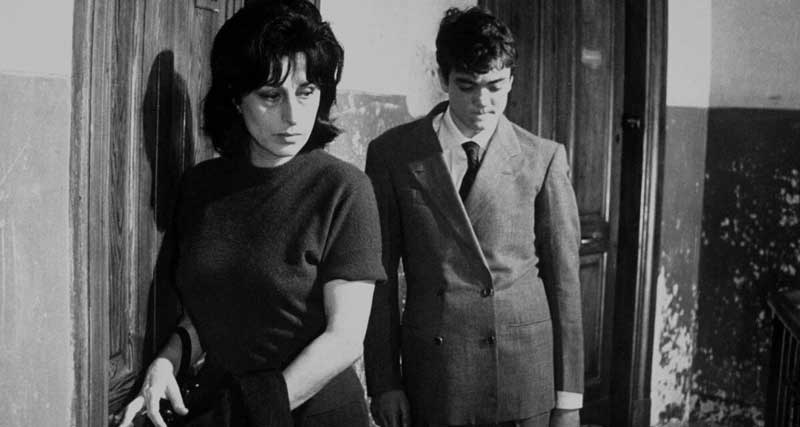
However, we are not aware whether Carmine is the father of Ettore. Carmine never claimed to be his father, but he accused Mama Roma of seducing him when he was a simple country boy, and she was already forty. But once during her delusive night-world promenades, she said that her husband, presumably a young man, was the father of Ettore, who was arrested right after their wedding, leaving her a virgin at the altar, although at an earlier point she described her forced marriage as a teenager in a fascist girl's uniform to a man over sixty, who outlived both her parents, made money by securing public housing contracts, and then left them unfinished. Nevertheless, Mamma was eager to give Ettore a better life and found him a job as a waiter by blackmailing a small Italian restaurant owner. But Ettore was basically lazy, did not like to study or work, hangs with idle youths, and starts to fall for a twenty-four year old single mother Bruna, known to be an occasional streetwalker. Mama tried to pull him back from his thieving friends and from a possible firm grip of Bruna, but he was caught during the theft of a tiny radio and ultimately died in a prison hospital. Mamma Roma wanted and tried her best to upgrade herself and her son into the middle class, but her past and the harsh realities of life forced her back to her inescapable identity of a sex worker, spurred by Carmine’s reentry in her life. However, instead of showing reluctance to return to her early life and becoming pensive, the first of two long single-shot scenes of the film, Pasolini’s camera showed her walking confidently along a nocturnal road, shouting merrily with her colleagues, and inviting possible customers in a jolly and enthusiastic mood.
Mama Roma was nominated for three awards at the Venice Film Festival, and won two, which include the Best Actress Award for Anna Magnani. However, immediately after its premiere at the Venice Film Festival on 31 August 1962, a local cop filed a complaint against the film, charging it with obscenity and contrary to public decency, although the complaint was turned down by a magistrate five days later. Mama Roma also caused a minor riot when a group of neo-Fascist students invaded the Quattro Fontane Cinema in Rome on 22 September 1962, on the night of its Roman release, and Pasolini was confronted with protesters, getting involved in a scuffle. Ridiculously, Mamma Roma became the target of attack for both the Right and the Left activists, though for opposite reasons. As a result, the film flopped at the domestic box office, and the scandal made Pasolini a large public figure and a large public target.