FREE ASSISTANCE FOR THE INQUISITIVE PEOPLE










La Dolce Vita (1960), a sexy, surreal masterpiece of modernity, is widely hailed as one of the most important and one of the first of several acclaimed collaborations between the Italian film director Federico Fellini and the most iconic Italian film actor Marcello Mastroianni, representing the alter ego of the director. The film depicts the fruitless journey of seven days and nights of Marcello Rubini, a disillusioned tabloid journalist and gossip writer trapped in a life of empty nights and lonely dawns, played by Marcello Mastroianni, who is too weak to remove himself from the nightly temptations of booze, easy women, and exotic fun through the sweet life of Rome in search for love and happiness, symbolising a compelling indictment of the decadence of modern life. The movie explores Rome in a hysterical, but somehow desperate mood, during the economic and cultural revival in which the country was eagerly trying to forget the nightmare of fascism, and on the way to start all over again, in a maddening rush towards modernity and excitements, which include the movies, music, fashion and style. It is as if Rome’s new contemporary sexiness and hedonism has revived the spirit of pre-Christian Rome and pagan ritual, which coexists with a secret urge to come out of the prevailing boredom and fear.
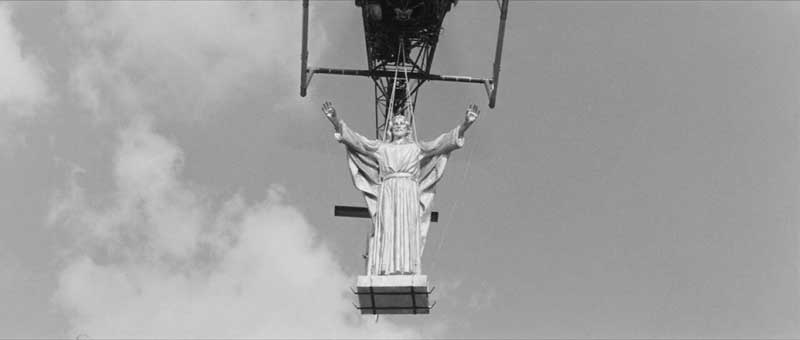
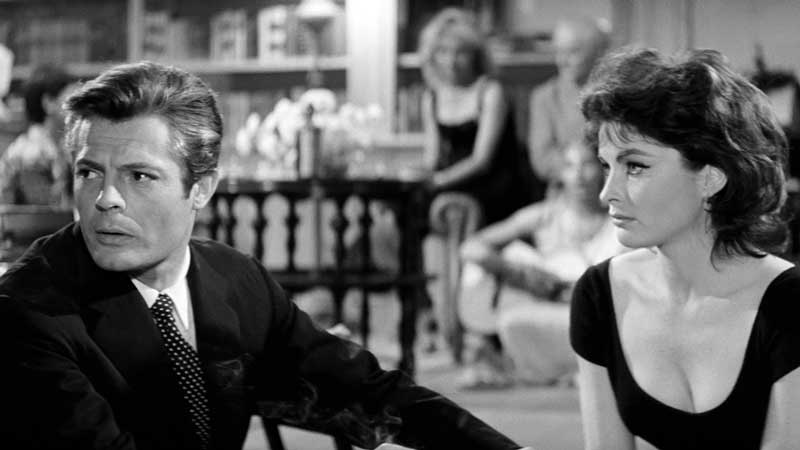
The screenplay of La Dolce Vita, consisting of a prologue and seven major episodes, is interrupted by an interval and an epilogue. The film begins with a statue of Jesus Christ being transported by a helicopter motoring over the ruins of ancient Rome, followed by Marcello Rubini's news helicopter, proceeding into the city, which is seen hovering over a group of bikini-clad women sunbathing on the rooftop of a high-rise apartment building. The sequence caused controversy in several countries, while the Vatican condemned it, demanding its outright ban. Nevertheless, Marcello Rubini is a handsome and jaded gossip journalist whose job is to try to catch celebrities in compromising or embarrassing situations, tends to get quite close to his subjects, especially when they are beautiful women. Basically, he is a womaniser whose affairs drive his unstable regular girlfriend Emma, the only woman who truly loves him, played by Yvonne Furnaux, to despair. Apart from that, there are at least two more women whom he actively pursues, the buxom film star Sylvia, played by Anita Ekberg, and Maddalena, a kindred spirit, played by Anouk Aimee.
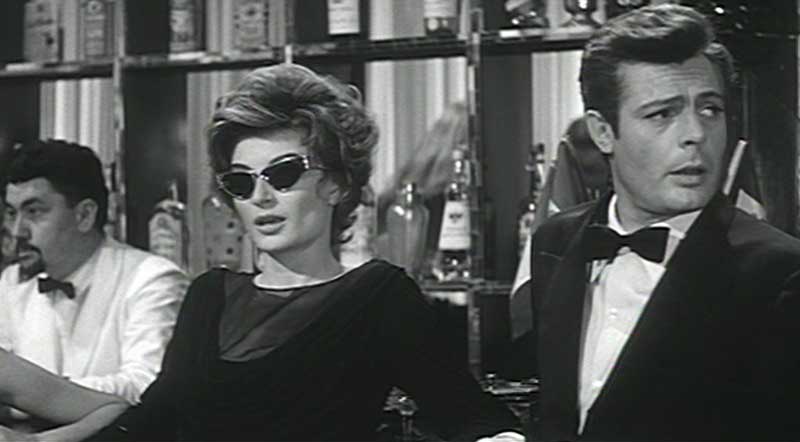
La Dolce Vita depicts seven nights and seven dawns in the life of Marcello that take place on the Seven Hills of Rome, which probably represents the seven deadly sins and the sequences leap from one visual pageantry to another, following Marcello as he chases down stories and women. On first night, he meets Maddalena, a beautiful and wealthy promiscuous society beauty, in an exclusive nightclub, picks up her and they made love in the wretched apartment of Ninni, a sex worker whom they had given a ride home in Maddalena's expensive Cadillac, but did not give the woman 2000 lire in the morning which she hoped. After staying out all night with Maddalena, Marcello returns to his apartment early in the morning, only to find that his fiancée, Emma, has overdosed. Despite passing the last night with another woman, he became seriously concerned about Emma and repeatedly assured her of her early recovery, while rushing her to the hospital. However, while waiting eagerly for her recovery, Marcello tries to make a phone call to Maddalena.
In the next sequence, Marcello arrived the airport, along with a horde of news reporters and photographers, assigned to cover the arrival of Sylvia, a sexy voluptuous beauty, a famous Swedish-American actress. Marcello was immediately consumed with desire, as soon as she stepped out from an Alitalia jet with a regal wave of a palm, a ditzy turn of the lips, with the hint of promiscuity hidden behind cat’s-eye sunglasses. However, during Sylvia's press conference, Marcello called home to assure Emma that he is not alone with Sylvia, and recommended Sylvia's producer to arrange a tour for Sylvia to St Peter's. During the proposed tour, Marcello followed Sylvia inside St Peter's dome, while a news reporter complained that it is difficult to follow Sylvia as she is as swift as an elevator, and none of them could match her energetic climb up the numerous flights of stairs. Nevertheless, Marcello manoeuvred forward to be alone with her when they finally reached the balcony, overlooking St Peter’s Square.
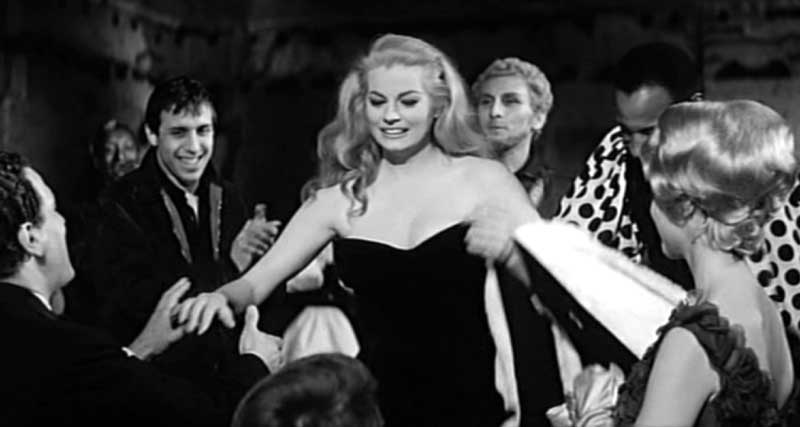
Later, he also followed her in a nightclub, and into the Roman night, where wild dogs howl and she jokingly howls back. His pursuit ends at dawn when she wades into the famous Trevi Fountain, clad in a long, elegant, strapless, black dress, like a mythological wood nymph, traversing a brook, and creating the most memorable iconic scene of the movie. She reached her hand out to feel the rushing water against her skin, while Marcello entered the frame and reached for her face, but did not touch her. They seemed to lose all sense of the surroundings as they focus intensely on each other. But as he slowly moved his lips towards hers, the fountain stopped working as the sun comes up, signalling the end of the magic spell of the night, and making perhaps the greatest non-kiss in the history of cinema.
The sequence is complimented with a later one about the vision of the Virgin, reported by a group of children. Marcello races to the site to find a crowd of the devout, surrounded by TV cameras, centred on an idealized woman and the hope that she can solve every problem. However, the children lead the faithful to a chase, just like Sylvia, played by Anita Ekberg led Marcello around Rome. They see the Virgin here, and then there, while the lame and the blind hobble after them and their grandfather begs for tips. But like the previous sequence, everything collapses in a drained dawn.
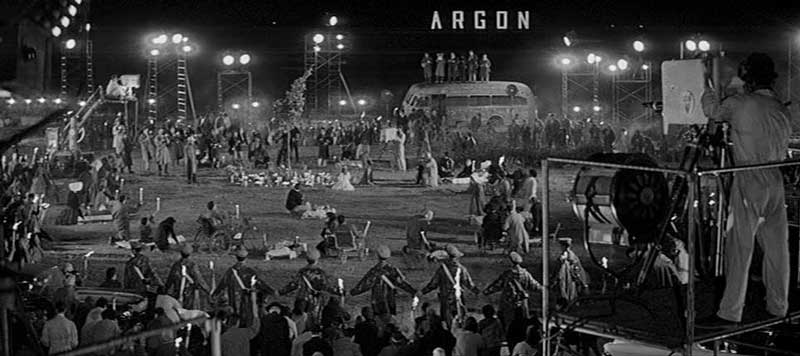
However, perhaps the most important episode in the film involves Steiner, who lives with his beautiful wife and two perfect children in an apartment filled with art, and presides over a salon of intellectuals, poets and folk singers. Marcello meets him on the third day sequence in a church, where Steiner shows off his book of Sanskrit grammar, after which they go up to play the organ, offering up a jazz piece before playing Bach. On the fourth night sequence, Marcello and Emma attend a gathering at Steiner's home, which seemingly delighted Emma. However, outside on the terrace, Steiner confesses Marcello that he is torn between the security that a materialistic life affords and his longing for a more spiritual albeit insecure way of life. Later, on the seventh dawn sequence, when Marcello and Emma are asleep in bed, tenderly intertwined, Marcello on receiving a phone call rushes to the Steiners' apartment only to learn that Steiner killed himself, after killing his two children.
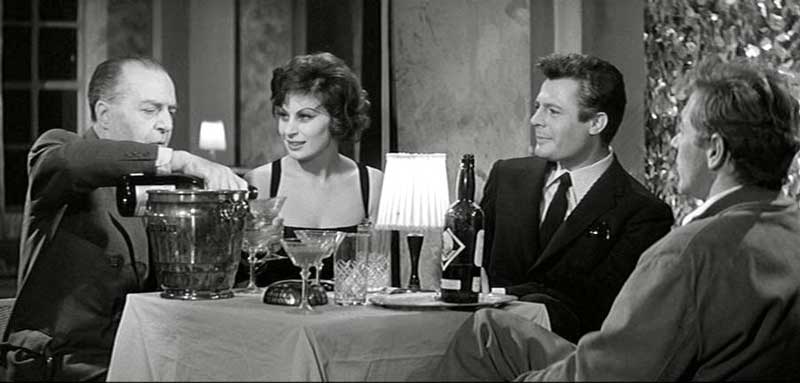
Apart from the above, La Dolce Vita contains many more memorable moments, which include among others, the echo chamber, the Mass at dawn, the final desperate orgy, and the adolescent waitress from the seaside restaurant in Fregene, calling Marcello from across an estuary, but their words are lost by the gust of the blowing wind, and the crashing waves. It also contains the touching sequence of Marcello’s father, a travelling salesman, who joined his son on a tour of the night. In a club, they saw a gloomy clown leading a lonely balloon out of the room with his trumpet. There, in the same club, Marcello’s father, filled with champagne, grew bold with a young woman who owed Marcello a favour, only to fall ill and leave, grey and ashen, again at the break of dawn.
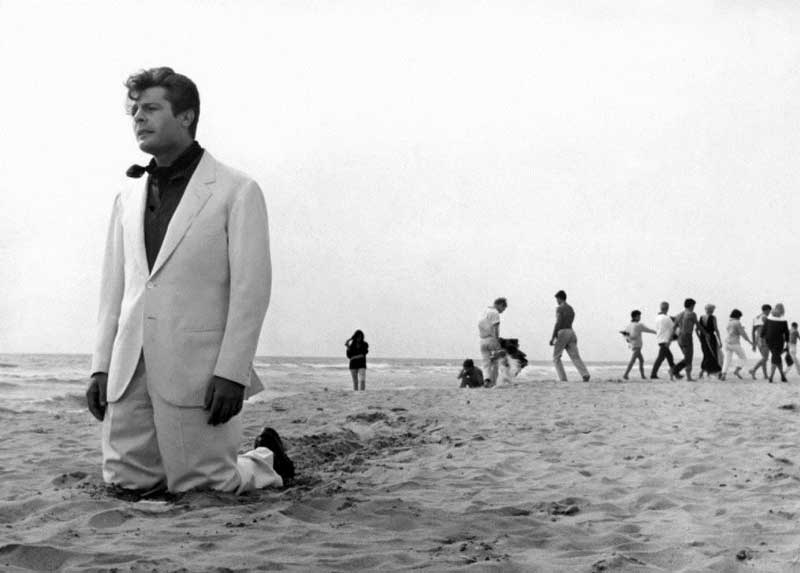
La Dolce Vita is a film about the discontentment and the consequent disappointment, caused by chasing a non-existing presumed reality, which Fellini explored through the three lenses of love and lust, wealth and luxury, celebrity and fame. While Sylvia shows us what he adores, Emma shows us what he despises, Maddalena shows us what he relates to, and his father shows us his future. Regarded as a masterpiece of Italian cinema and one of the greatest films ever made, the film won the Palme d’Or at the Cannes Film Festival and the Academy Award for Best Costumes, along with nominations for three more Oscars, which include Best Director Award for Federico Fellini.