FREE ASSISTANCE FOR THE INQUISITIVE PEOPLE






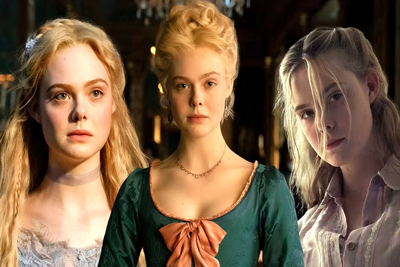










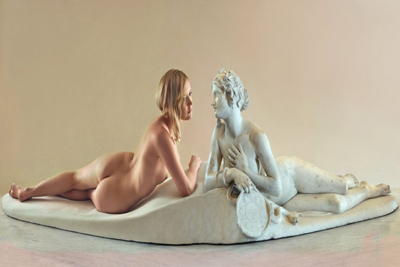
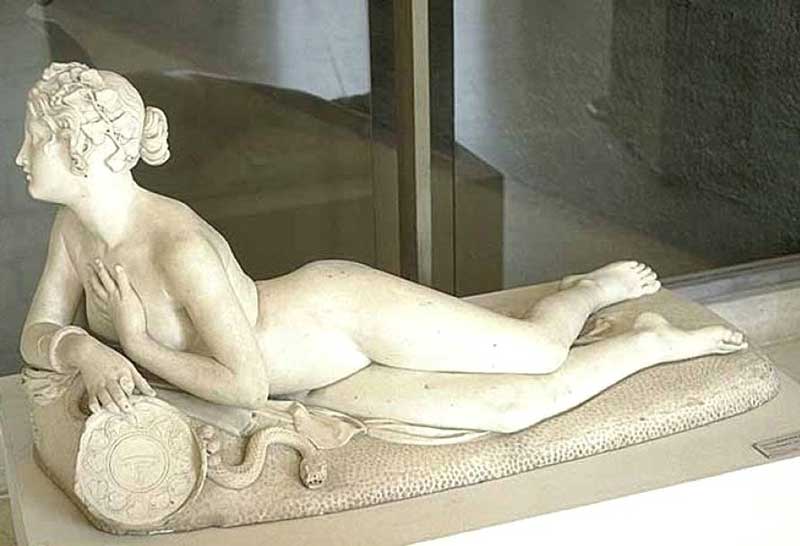
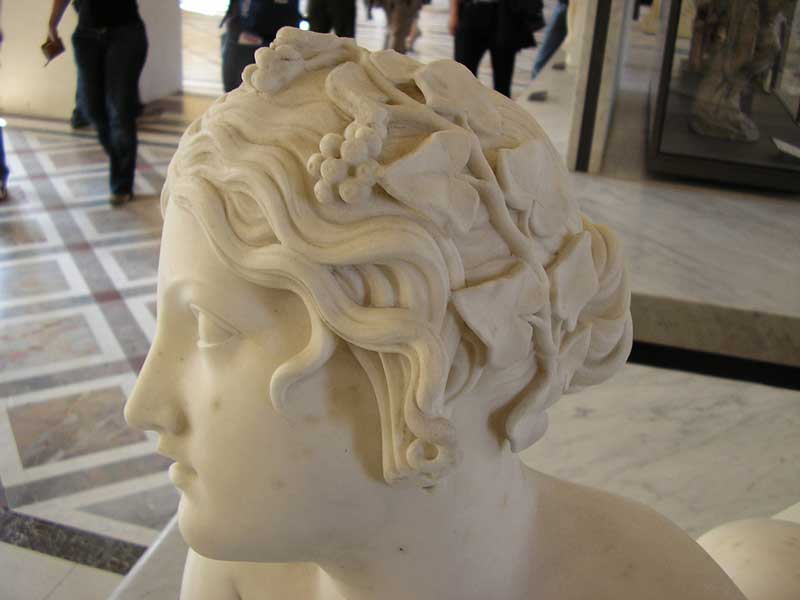
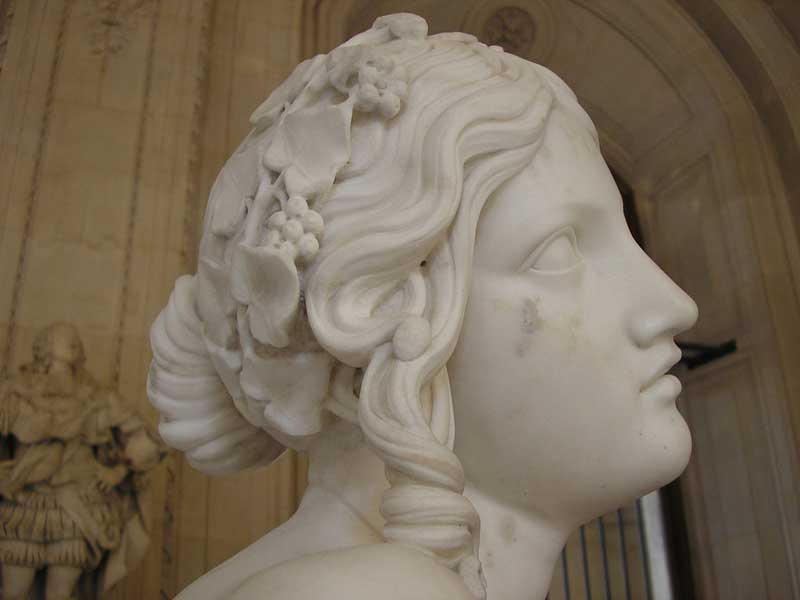
Commissioned by the Duke of Devonshire, Dirce, also known as Bacchante at Rest or Recumbent Bacchante, is a celebrated 1834 neoclassical masterpiece, a marble sculpture by the Italian artist Lorenzo Bartolini that depicts a beautiful, life-sized nude woman reclining on a draped cloth, adorned with a crown of grape leaves and holding a tambourine, while a small snake is seen slithering away from her arm.
In Roman mythology, the Bacchantes were nymphs, dedicated followers of the Greek God Dionysus (Roman God Bacchus), the god of wine, winemaking, revelry, festivity, vegetation, theatre, religious ecstasy and ritual madness, and as ardent followers, the Bacchantes embraced Bacchus' intoxicating power through ecstatic rituals that dissolved the boundaries between the mortal and divine. Always depicted naked or scantily clad, wearing a crown of flowers, dancing or playing music, the bacchantes were known for their wild, uninhibited dances and chants, often performed in forests and mountains.
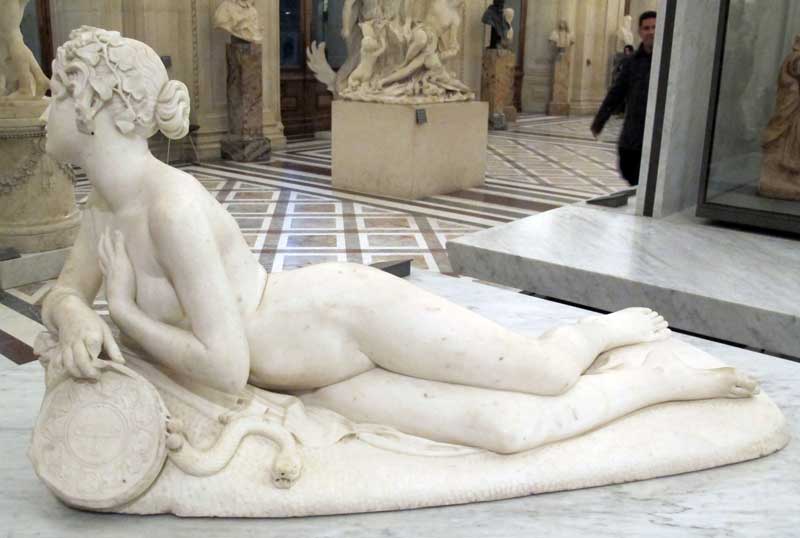
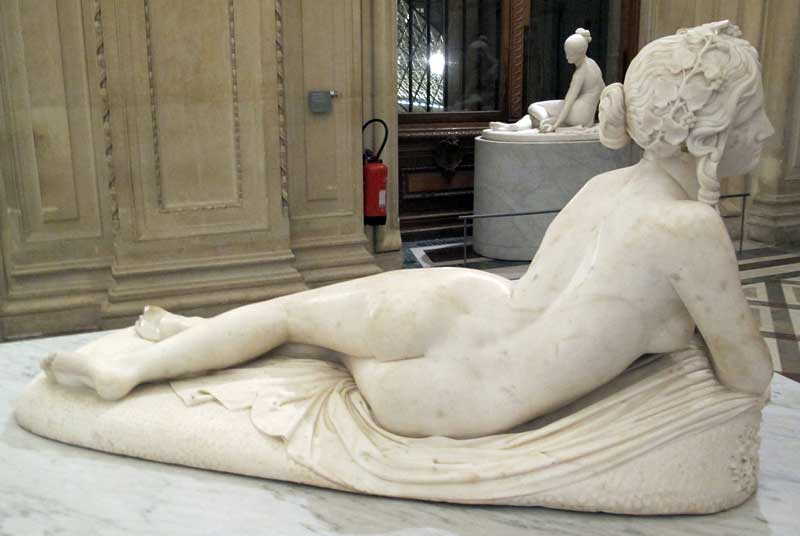
Incidentally, in Greek mythology, Dirce, the cruel, jealous queen of Thebes and wife of King Lycus, best known for ruthlessly tormenting her niece, Antiope, was ultimately punished and killed by Antiope’s sons. However, in a fascinating creative twist, Bartolini combined this mythological figure with the iconography of a Bacchante, a follower of Dionysus, and crowned the figure with vine leaves and grapes, and included a tambourine and a snake slithering from her.
Born on 7 January 1777, Italian sculptor Lorenzo Bartolini, regarded as one of the great sculptors of Europe, was a controversial and polemical artist, who infused his neoclassicism with a strain of sentimental piety and naturalistic detail, which is evident from his sensual work, Nymph with a scorpion. For Napoleon, his great patron, he executed a colossal bust, and despite local opposition, he remained as the quasi-official portrait sculptor to Bonaparte’s, until after the fall of Napoleon. His works are varied and include the group of Charity (1824), the Hercules and Lichas and Faith in God, while his creation, Monument to Maria Luisa di Borbone, is a marble statuary group depicting the former Duchess, is located in the piazza in front of the Ducal Palace of Lucca.
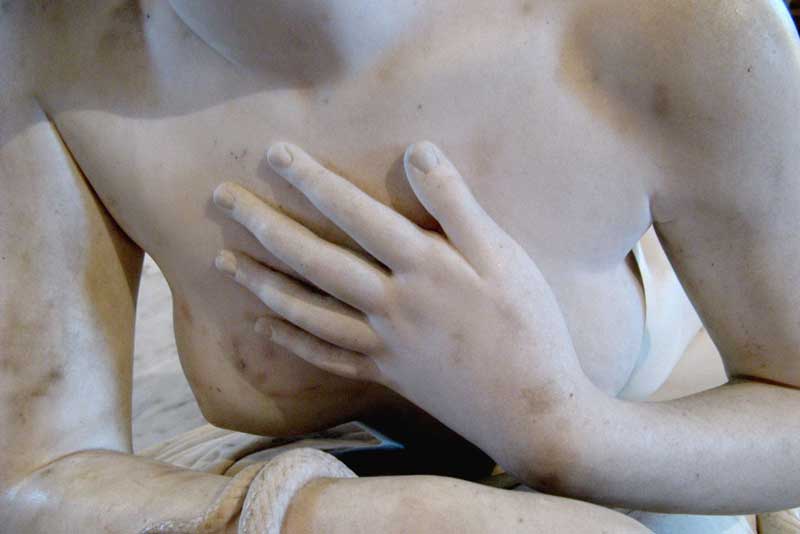
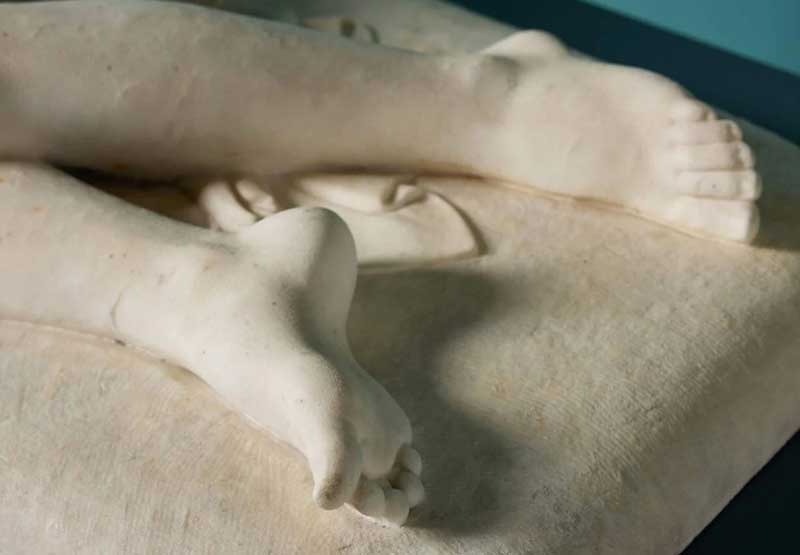
In Dirce, also known as Bacchante at Rest or Recumbent Bacchante, Bartolini is celebrated for inserting rigid neoclassicism with naturalistic detail and sentimental piety, which is highly visible in the emotional, afflicted expression of her face and the realistic tension of her elongated, resting body. Instead of falling into the strict aesthetic constraints of Antonio Canova, Bartolini drew heavy inspiration from the Italian Renaissance. The masterfully carved life-size reclined nude is currently housed at the Musée du Louvre in Paris, while the original plaster model can be found in the Gipsoteca, a gallery dedicated to displaying plaster cast sculptures, at the Galleria dell'Accademia in Florence, Italy.