FREE ASSISTANCE FOR THE INQUISITIVE PEOPLE








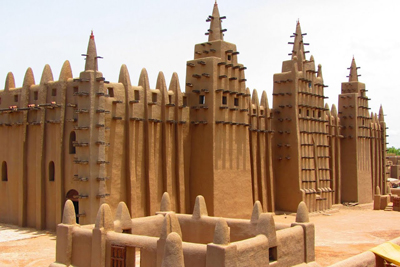
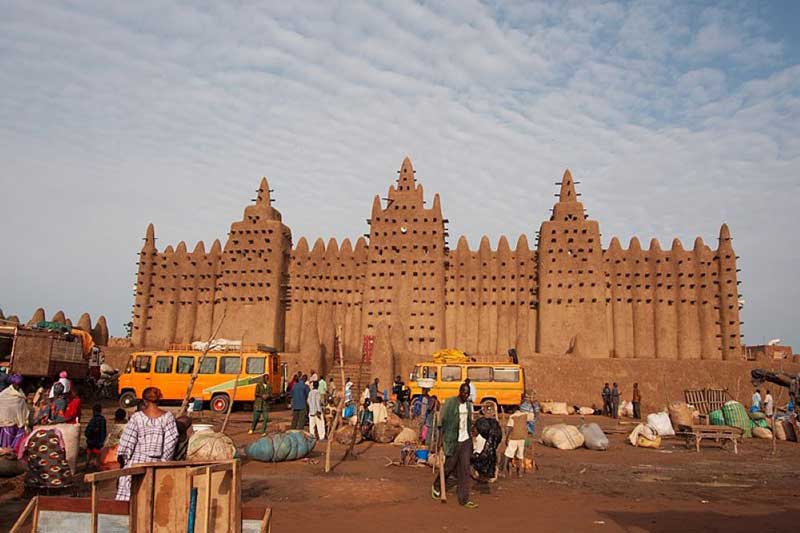
Located in the arid hinterland of the scorching Sahara Desert, on the flood plain of River Bani in southern Mali, the 65 feet (20 m) tall Great Mosque of Djenné, built on a platform, is one of the finest examples of Sudano-Sahelian architecture. The massive abode building, made of sunbaked mud bricks called ferey, anda mud based mortar, is coated with a mud plaster, which gives the building its smooth, sculpted look.

Reckoned as one of the most famous landmarks in Africa, the mosque was designated a World Heritage Site by UNESCO, along with the old towns of Djenné, in 1988. However, the current building of the Great Mosque is its third reconstruction, completed in 1907, while the first mosque on the site was built around the 13th century, which fell into disrepair during the 19th Century.
Perched on a floodplain between the Niger and Bani rivers, Djenné is one of the oldest towns in sub-Saharan Africa, probably founded between 800 and 1250 BC and flourished between the 13th and 18th Centuries as a key transport hub, closely linked with Timbuktu. During those days, goods such as salt, gold, and slaves that moved in and out of Timbuktu passed through Djenné and Islam was introduced to the region through the trading caravans, which had been practiced from the beginning of the 13th century. Gradually, Djenné became a centre of Islamic scholarship and the first Great Mosque, constructed around the 13th century, became one of the most important buildings in the town, as well as the epicentre of the religious and cultural life of the country.
Although the actual date of construction of the first mosque on the site of the current mosque is unknown, it is estimated that it was built around the 13th century, probably between 1200 and as late as 1330.

However, it is mentioned in Abd al-Saidi's Tarikh al-Sudan, a West African chronicle written in Arabic in around 1655 that King Koi Konboro, Djenné’s twenty-sixth ruler and its first Muslim sultan, pulled down his palace to construct a new one and constructed a mosque on the site of his old palace. Later, his successors surrounded the main building of the mosque with a wall and added two towers to it. After that, the expansion of the mosque compound continued over the centuries, and it is believed that by the 16th century, it became big enough to accommodate half of the population of Djenné.
However, the French explorer René Caillié was one among the early Europeans,who travelled to Djenné in 1827/1828 and visited the Great Mosque. He mentioned the crumbling condition of the structure in his travelogue and apprehended that unless the structure is immediately re-plastered, its exterior would melt in the rainy seasons.

As the mosque is located in the transitional zone between the Sahara and the humid savannahs to the south, its mud structure requires periodical re-plastering and it seems from his accounts that his visit took place in a period when the mosque had not been re-plastered for many years and several rainy seasons had probably washed away all the plaster. Finally, when Seku Amadu, the founder of the Massina Empire in the Inner Niger Delta, conquered Djenné during the Tukulor War, he closed the dilapidated old mosque and built the second mosque to the east of the existing mosque between 1834 and 1836. This second structure of the Great Mosque was more massive than the first one, featuring low towers and devoid of any ornamentation.
Djenné was subsequently captured by the French forces led by Louis Archinard in April 1893 and they built a school after demolishing the mosque built by Seku Amadu. The French journalist Felix Dubois, who visited the town at that time, mentioned in his book that at the time of his visit, the interior of the original ruined mosque was used as a cemetery. Nevertheless, the French administration in the town arranged for the rebuilding of the original mosque and the third iteration of the Great Mosque was completed in 1907, by using the forced labourers, procured from the adjacent villages by local French Colonial authorities, who worked under the direction of Ismaila Traoré, head of Djenné's guild of masons.
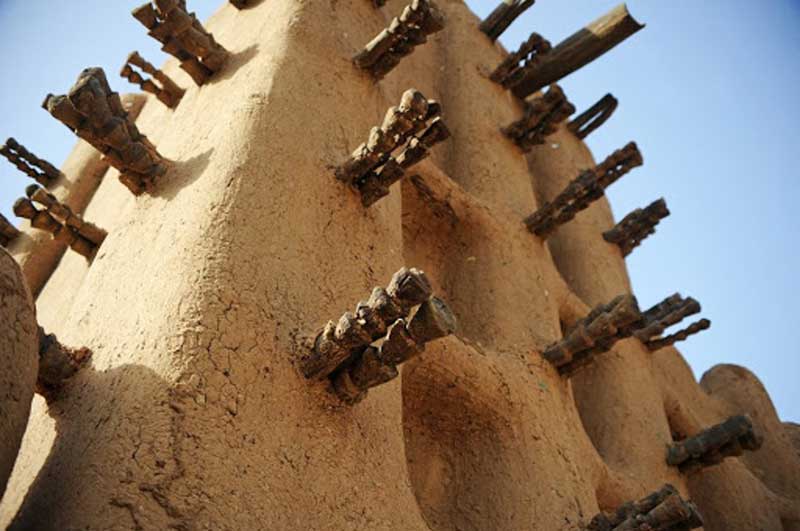
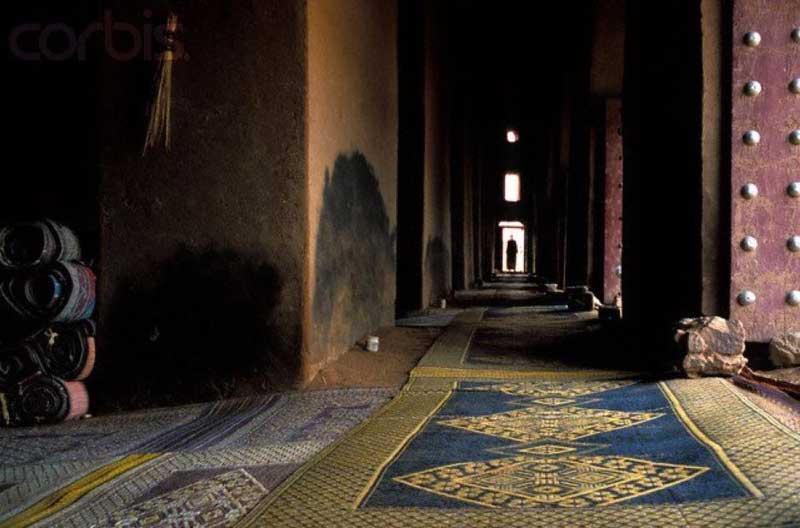
The current building of the Great Mosque of Djenne was built on a platform measuring around 246 feet X 246 feet (75 m X75 m), raised by about 10 feet (3 m), as a safety measure against the floods of the Bani River, which is accessible by six sets of stairs, each decorated with pinnacles. While the main entrance is on the northern side of the building that has a distinguishable trapezoidal outline, the façade includes three minarets and a series of typical columns. The thick walls of the mosque, varying between 16 inches and 24 inches with the height of the walls, are made of sun-baked earth bricks, called ferey, produced by the masons by mixing tons of mud, sand, rice-husks, and water. After the completion of the construction, the outer walls of the building were coated with mud plaster which gives the building its smooth, sculpted look.In addition to that, lots of rodier palm sticks, known as torons, were inserted at regular intervals on the outer face of the walls to reduce cracking caused by frequent drastic changes in humidity and temperature and also to serve as readymade scaffolding for the subsequent repairing and re-plastering. A lattice of 90 internal wooden columns supports the earthen roof of the building, equipped with several holes covered by terra-cotta lids, which help to provide the flow of fresh air in the interior.
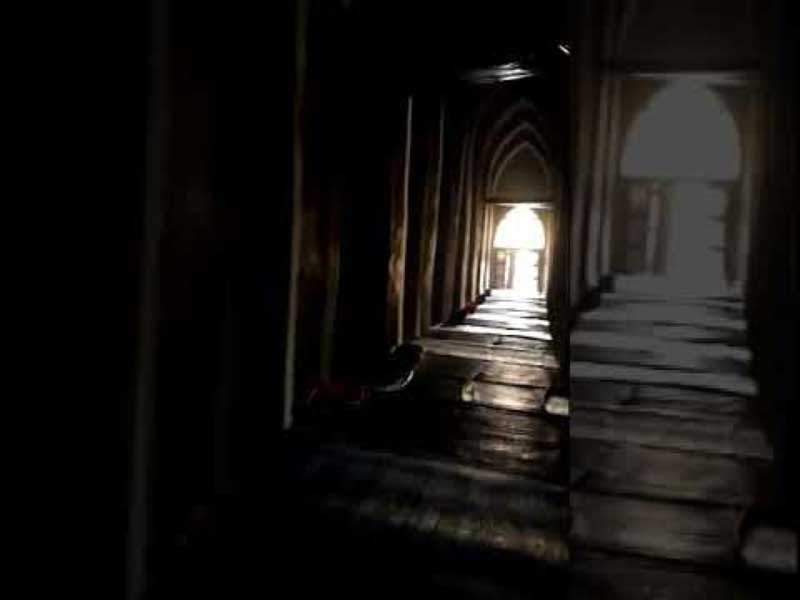
The floor of the prayer hall, measuring about 85 by 164 feet (26 by 50 m) and occupying the eastern half of the mosque, is composed of sandy earth, while the earthen roof of the building is supported by nine interior walls, which are pierced by pointed arches that reach up almost to the roof. The Qibla or the prayer wall, facing towards Mecca and overlooking the city marketplace, is dominated by three large towers or minarets jutting out from the main wall with their cone shaped spires or pinnacles topped with ostrich eggs, symbolising fertility and purity in the Malian region. The three towers in the Qibla wall do not contain stairs linking the prayer hall, but each of them has a traditional niche or Mihrab. The interior courtyard, measuring 66 feet X 151 feet (20 m × 46 m) and located to the west of the prayer hall, is surrounded on three sides by galleries, among which the western gallery is reserved for women.
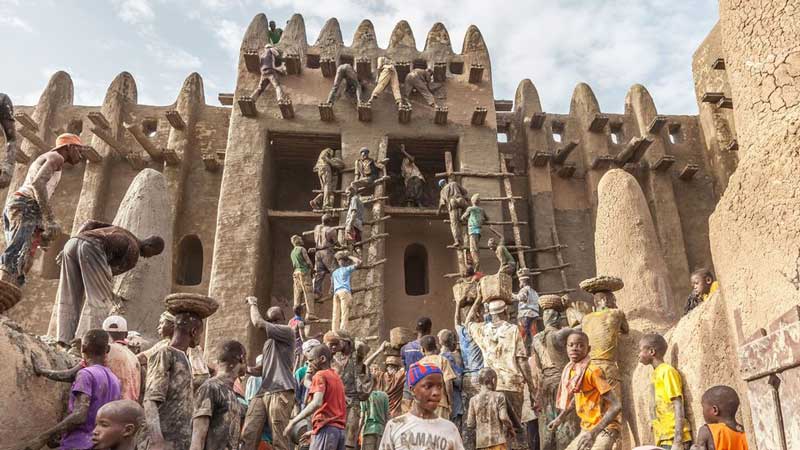
To save the building from the brief, but brutal rainy season in the country during July and August, each year in April its walls are reconstructed with mud in an epic one-day event called the Crépissage, which is treated as a festival and celebrated faithfully by the community. On the night before the rebuilding the locals take part in a carnival of singing and dancing known as La Nuit de Veille or the Waking Night, when the moonlit streets of Djenne becomes saturated with chants and drum beats, until a whistle at the crack of dawn signals the beginning of the most important event on the calendar.