FREE ASSISTANCE FOR THE INQUISITIVE PEOPLE



















The Kanamara Matsuri Festival, also known as the Festival of the Steel Phallus, is celebrated annually on the first Sunday in April, at Kanayama Shrine in Kawasaki, just south of Tokyo. Made of old stone and boasting a small but pretty network of traditional orange torii gates, the humble penis venerating shrine, built around 698 AD has stood the test of time. From the 17th to the 19th century, the shrine was popular among the prostitutes, who frequented the site to pray for either protection or cure from sexually transmitted diseases. It also became a sacred site for the couples, especially the newly married, who would pray for the harmony in married life, fertility, easy delivery and prosperity. The traditional festival at the shrine focusing on sexual health had fizzled out by the end of the 19th century. In 1970, the festival was resurrected by Hirohiko Nakamura, the chief priest of the shrine at the time, though on a fairly small scale and at night. However, after more than 40 years of its new beginning, the popularity of the festival skyrocketed in 2012, when Matsuko Deluxe, an outspoken advocate of sex positivity and LGBTQ rights, name-checked the festival. Since then, it became a fixture on the world festival circuit, attended by around 50,000 people each year.
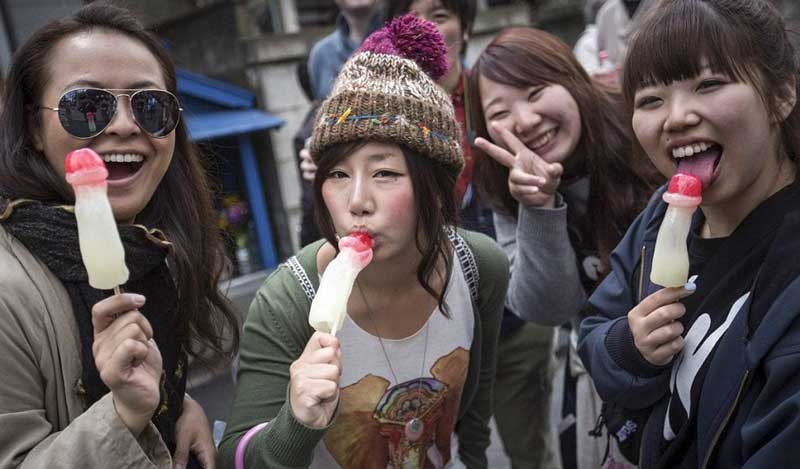

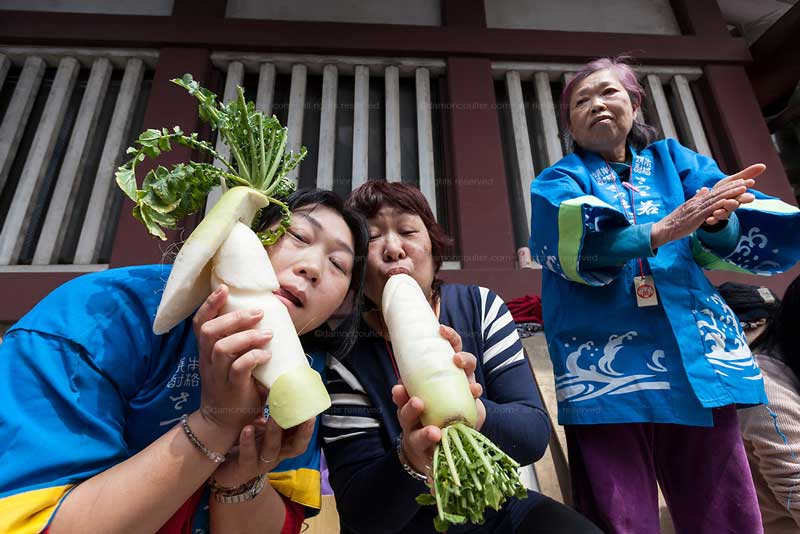
With the phallus as the central theme, which is vividly reflected in the mikoshi parade of portable shrines, along with various illustrations, candies, hats, candles, lollipops, carved vegetables and other decorative items, the Kanamara Matsuri is an open festival of celebrating sex, fertility and creation of life. Although the Japanese society is orthodox about sex, the festival is spontaneously attended by all the members of a family, irrespective of age and sex.
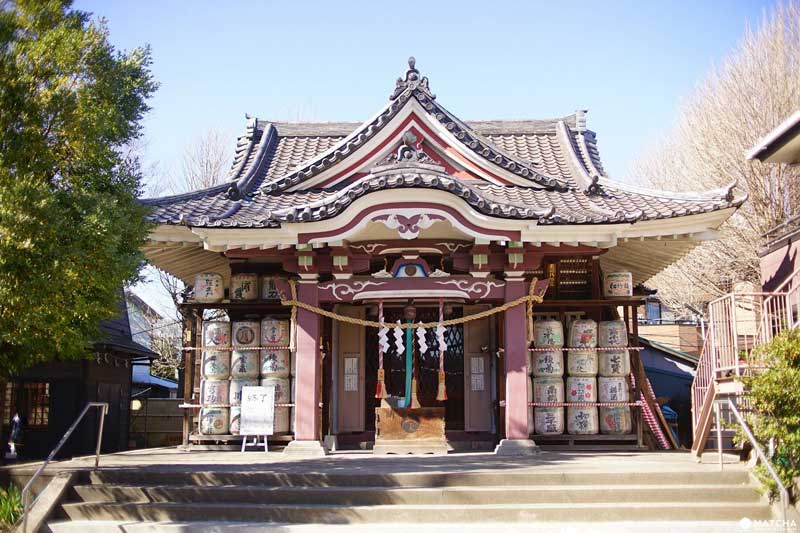
The origin of the shrine can be traced back to an ancient Japanese legend. According to the legendary story in Ainu language, a vicious sharp-toothed jealous demon, which was rejected by a young woman, hid inside her vagina and to take revenge in a ghastly way, bit off the penises to castrate two young men on their wedding nights. After the two consecutive grisly incidents, the girl sought help from a blacksmith, who made an iron phallus that broke the demon’s teeth. After that, the iron phallus was enshrined at Kanayama Shrine in Kawasaki.
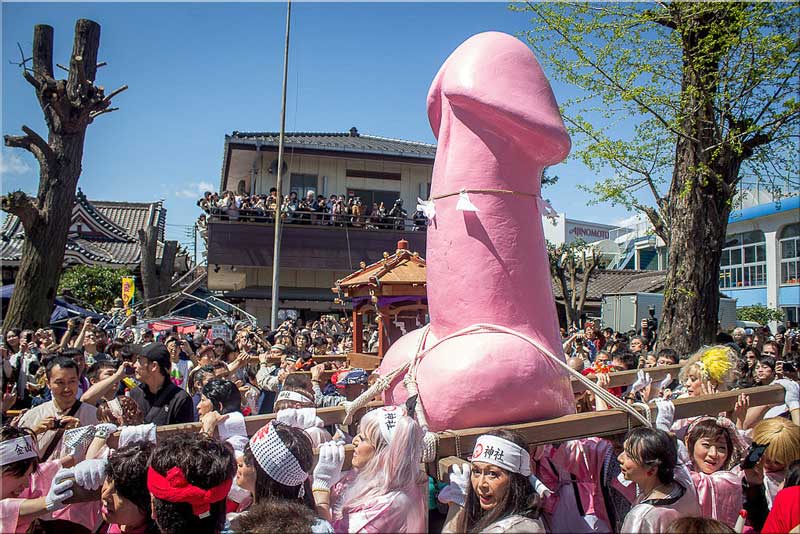
Like many other festivals around the world, the main event of the Kanamara Matsuri festival is a procession of mikoshi, which are portable shrines, containing a variety of huge phalluses that can be seen bobbing over the heads of the crowd as they are carried along the packed street. The procession starts from the court of the Kanayama Shrine around noon and finishes there, taking more than an hour to complete the trip.

The procession or parade features three portable shrines, called mikoshi and each mikoshi is carried by a group of people in traditional dress. The parade is pioneered by Kanamara Funamikoshi, a boat-shaped roofed portable shrine containing a large black iron phallus and carried by a group of strongly built men and women. It is followed by the Elizabeth Mikoshi, the uncontested star of the show, donated and named after Elizabeth Kaikan, a drag bar in Tokyo. It contains a gigantic pink phallus, often draped in the ropes, locally known as Shimeanawa and folded paper or shide, indicating a holy object in Shintoism and usually protected by a lacy canopy. In the beginning, only the club members used to carry it, but now they have allowed the members of the local Mikoshi Association to carry it. However, according to a strange rule, the male carriers should be dressed as a woman, while the female carriers must dress up as a man. The last portable shrine in the parade, the oldest of the three, Kanamara Omikoshi is a large square roofed mikoshi that contains a comparatively small phallus in the middle.
During the street parade of the penis containing floats, the crowd consisting of both the men and women, the young and old enjoy phallus-themed candy and lollipops and enthusiastically pose with penis-shaped sculptures, don penis beaks and some even playfully straddle a giant wooden phallus. Apart from mass celebration the festival also raises awareness about safe sex practices and funds for HIV charities.
On the day of the festival, the people may also visit the exhibition hall within the shrine grounds or buy penis-shaped souvenirs and food from the numerous food stalls. The exhibition hall contains a collection of images, objects and books related to other traditions of sexuality.